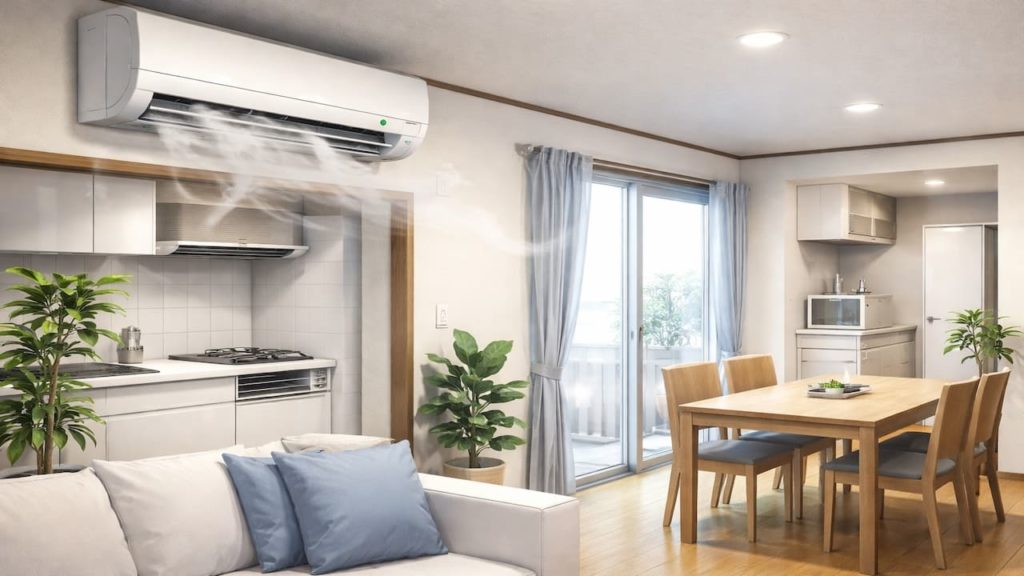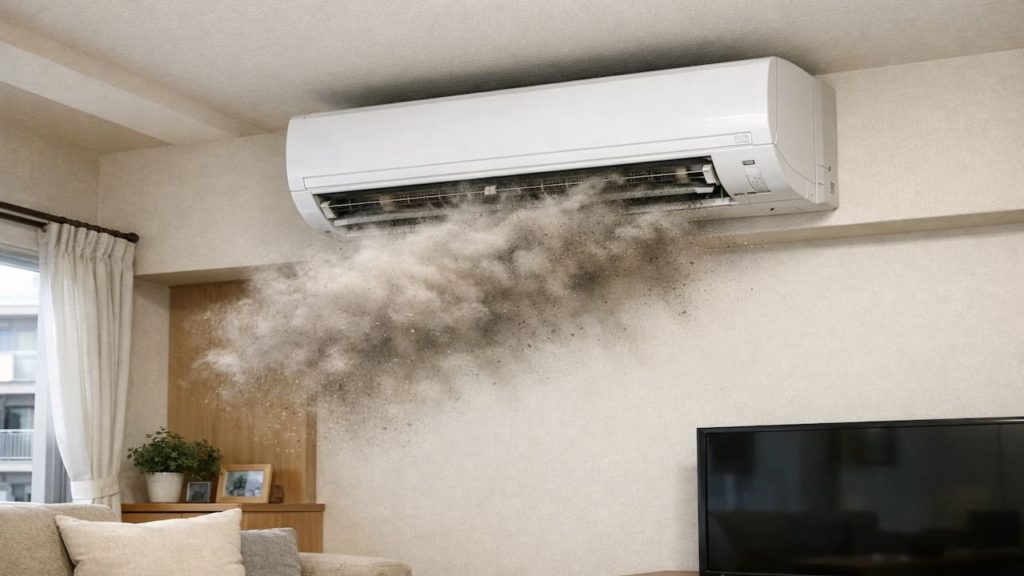
Your aircon starts up after a long break, and suddenly it blows dust into the room. It feels gross and a bit worrying.
After downtime, loose dust inside the unit can lift off at once, especially in Japan’s compact apartments with closed windows. The fix is usually cleaning order and a controlled restart, not panic.
In this guide, you’ll learn how to stop dust blowouts after downtime. You’ll check the fastest causes first, then set a simple routine that keeps the air clean.

Hi, I’m Ken — I’m Japanese, and I live in Malaysia long-term, so I explain everyday life in Japan from a practical ‘from abroad’ perspective.
I hold a building design qualification and I’ve been on site for 20+ years across hundreds of jobs. I turn Japan’s unspoken rules into simple checks, so you can avoid costly mistakes and take the next step with clear actions that feel safe.
1. Aircon blowing dust: 5 checks
Dust blowouts usually come from filter and outlet buildup.
When an aircon sits unused, dust settles on the filter, louvers, and the first parts of the airflow path. First blast. In Japan homes, fine dust plus indoor laundry lint can build up quietly during downtime. Start with safe checks that reduce dust release before you run it hard.
Dirty filters reduce airflow and can worsen performance, so cleaning is a core first step. According to energy.gov.
- Remove filters and check dust thickness first
- Vacuum intake grill using soft brush attachment
- Wipe louvers gently with damp microfiber cloth
- Check blower area with flashlight for clumps
- Run fan only mode to purge loose dust
You might think the aircon is “dirty inside forever.” Not always. In Japan’s tight rooms, most dust that blows out is sitting right at the front, waiting for airflow. Do these checks, then test again before you assume deeper contamination.
2. Stop dirty air after long downtime
Restart slowly so dust does not launch at once.
After cleaning the front surfaces, your restart method matters. Controlled start—no turbo. In Japan apartments, the first strong blast can shake loose dust like a rug snap, then it circulates in the whole room. Use fan-only first, then cooling at medium fan, and keep doors closed so you can judge air quality honestly.
Basic troubleshooting steps often begin with cleaning filters and checking airflow before deeper service. According to daikin.com.
- Start with fan mode for 10 minutes
- Switch to cool mode at medium fan
- Aim louvers upward to avoid face blasting
- Place a fan to mix air gently
- Ventilate briefly after purge if weather allows
You may want to open windows wide right away. In Japan pollen seasons or near roads, that can add more particles. Purge first, then decide how to ventilate based on your local air and your housing setup.
3. Why dust blows out after a long break
Downtime lets dust settle where airflow later hits hardest.
Cause 1 is filter overload, where the first airflow shakes loose a top layer of lint. Cause 2 is louver and outlet grime, where dust sits on damp surfaces and lifts when the air turns on. Cause 3 is internal moisture and mild mildew film, which traps dust until it dries and flakes. Dust backlog. In Japan’s seasonal humidity swings, this cycle happens faster than people expect.
- Check if dust appears only first 5 minutes
- Inspect louvers for gray film and specks
- Notice sour odor mixed with dust clouds
- Look for black specks on nearby white walls
- Compare dust with fan mode versus cool mode
You might blame “bad aircon design.” Most units behave the same when they sit unused, especially in Japan homes with limited ventilation. The real fix is removing loose dust and drying the damp spots so new dust does not stick again.
4. How to keep the air clean for the next restart
Prevent dust blowouts by ending each use dry.
After you stop the blowout, focus on prevention so you do not repeat this next month. Simple habit. In Japan, humid evenings can leave the indoor coil damp, which becomes a dust magnet. If you buy basic supplies like microfiber cloth and a small brush, plan ¥100–500 for basic supplies, then keep everything gentle and renter-safe.
- Run fan mode 15 minutes after cooling
- Clean filters monthly during heavy use weeks
- Wipe louvers lightly before long shutdown periods
- Keep furniture away from intake for breathing
- Use dehumidify briefly on sticky rainy days
You may think this is overkill for a small Japan apartment. It is not, because dust and moisture scale up fast in compact spaces. If dust still blows after this routine, next is a professional deep clean of blower and drain areas.
5. FAQs
Q1. Is dust blowout dangerous or just annoying?
Usually it is just loose dust getting lifted, but it can irritate allergies. In Japan pollen seasons, treat it seriously and do a controlled purge.
Q2. Why does it happen only on the first day?
Loose dust sitting near the outlet gets cleared by the first strong airflow. After that, it looks “fixed” until the next long downtime.
Q3. Should I use a spray cleaner inside the unit?
No harsh chemicals are needed for most dust blowouts. Focus on filters, louvers, and drying, because sprays can push grime deeper or leave moisture behind.
Q4. What if I see black specks on the wall?
That can be dust mixed with damp residue and it can stain paint. Clean the louvers and run fan mode, then wipe the wall before it sets.
Q5. When should I call a technician?
If dust keeps blowing every day, or you also get strong odor and weak airflow. Also call if you suspect water pooling or drain issues after restarting.
Pro's Tough Talk

I’ve spent 20+ years working around Japanese homes, so I’ve seen what tends to work—and what tends to go wrong—in everyday use. I’ve been on site for 20+ years. I’ve worked on hundreds of jobs. During Japan’s humid tsuyu season, dust sticks, sleeps, then explodes on restart.
Cause 1: the filter is a lint mattress, and the first airflow flips it like a bedsheet. Cause 2: the louvers are a dusty curtain, and the jet rips it open like a stage reveal. Cause 3: the inside stayed damp, so dust glued itself on and now flakes off. That moment you turn it on and tiny specks sparkle in the sunbeam. That moment you wipe the vent once, feel proud, and the next blast proves you wrong.
Pull the filters and vacuum the intake now.
Run fan mode to purge for 10 minutes today.
End every cooling session with fan dry this weekend.
Clean the front path first then restart gently. If you did this and it still fails, next is a professional blower and drain-area deep clean. That’s the point where access beats effort.
Come on.
If your plan is “blast it harder,” enjoy your personal indoor dust festival.
Summary
Start with filters, intake, and louvers, then do a fan-only purge before strong cooling. First blast control.
Keep the unit dry after use and clean filters on a simple schedule, because moisture makes dust stick in compact housing. If dust keeps blowing daily, it needs deeper cleaning.
Do one gentle clean and one controlled restart today. Once the airflow path is clean, your Japan room feels fresh again without that dirty puff.