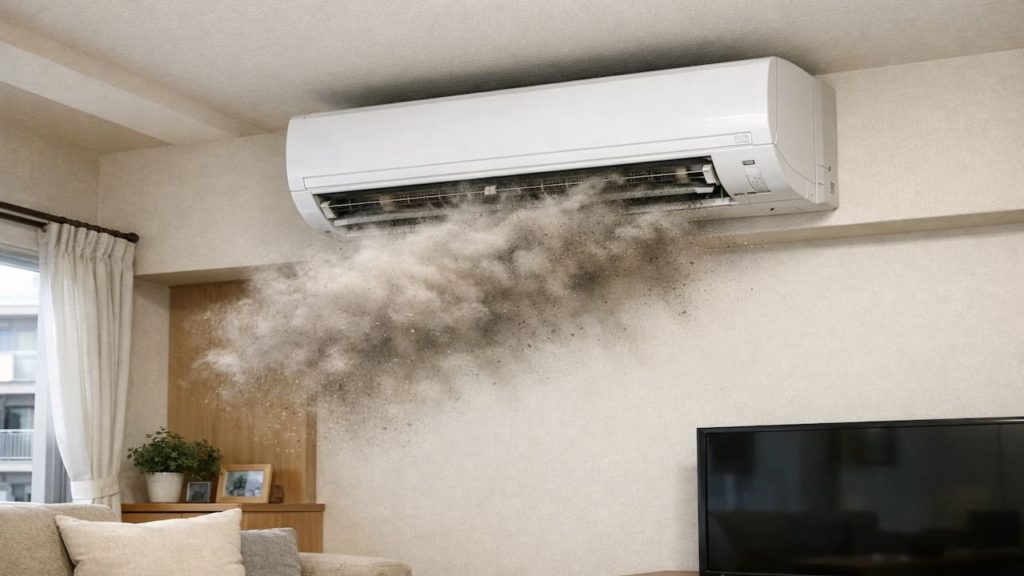
Your aircon keeps turning off, and the room never stays comfortable. It can feel random, even when you do nothing.
In Japan homes, timers, sensors, and shared circuits can cause surprise shutoffs. Humid summer load also exposes weak airflow and weak power.
In this guide, you’ll learn 5 checks that stop sudden shutoffs safely and how to separate timer, sensor, and power causes. You will know what to fix first.

Hi, I’m Ken — I’m Japanese, and I live in Malaysia long-term, so I explain everyday life in Japan from a practical ‘from abroad’ perspective.
I hold a building design qualification and I’ve been on site for 20+ years across hundreds of jobs. I turn Japan’s unspoken rules into simple checks, so you can avoid costly mistakes and take the next step with clear actions that feel safe.
1. Aircon keeps turning off: 5 checks
Most sudden shutoffs are caused by settings or airflow stress—not instant “unit failure.”
Start with the controls, because Japan remotes can hide OFF timers and sleep schedules. Next, confirm airflow is not choking the unit, since humidity can push it into protection shutdown. If the unit overheats or senses abnormal conditions, it may stop to protect itself. Quick checks beat guessing.
Room air conditioners can shut down if sensor position is wrong or airflow is restricted. According to energy.gov.
- Cancel OFF timer and SLEEP modes completely
- Clean filter and confirm strong airflow output
- Check indoor unit intake grille for dust
- Confirm set temperature is not too low
- Run cooling thirty minutes and note stop time
You might assume a refrigerant problem, but settings and airflow issues are more common. If shutoffs happen at a consistent time, suspect timer behavior first. If shutoffs happen after airflow weakens, suspect filter and heat stress. Pattern first.
2. Fix sensor, timer, and power issues
Fixing shutoffs means proving which trigger is firing—sensor, timer, or power.
Timers shut the system off cleanly, while power problems look like a reboot or dead unit. Sensor issues often cause short runs, then a stop, especially in Japan’s humid season when coil temperature swings. Use a simple reset only after you record what happens, so you do not erase clues. Calm diagnosis.
Basic troubleshooting includes power cycling at the breaker and allowing protection delays. According to Daikin.
- Check timer icon on remote display carefully
- Point remote at unit and retry from close range
- Power cycle breaker off then on after twenty minutes
- Wait three minutes before restarting after stop
- Inspect power plug seating and socket looseness
You may want to mash buttons, but that creates confusion. If the unit stops and immediately refuses restart, protection delay is likely. If the unit loses all lights, power supply is likely. Keep it simple and separate each cause.
3. Why the aircon shuts off unexpectedly in Japan rooms
Unexpected shutoffs happen when the unit senses unsafe conditions—heat, ice, or bad readings.
In Japan apartments, the indoor unit often sits close to curtains and shelves, so airflow can recirculate and overheat. High humidity increases coil load, and drainage issues can trigger safety behavior. A misread temperature sensor can also stop cooling early because it thinks the room is already cold. Small room, big effect.
- Check curtain or shelf blocking air intake
- Look for ice forming on indoor coil area
- Confirm outdoor unit has clear exhaust space
- Check drain line flow and indoor dripping signs
- Watch for blinking timer light after shutdown
You might blame “weak aircon,” but the environment often pushes it into protection. If the outdoor unit is boxed in on a balcony, heat rejection suffers and shutdowns can follow. If the coil starts icing, the unit may stop to protect the compressor. Fix the conditions, not the mood.
4. How to stop sudden shutoffs safely
Stabilize airflow and power first then retest one clean hour—that tells you the next move.
Do a controlled test with no other big appliances on the same circuit, because Japan rentals often share outlets. Replace remote batteries if the display is weak and clean the filter, then run cooling with steady settings; ¥100–500 for basic supplies usually covers batteries and a dry wipe cloth. Keep doors and windows consistent, so the sensor reads normally. One clean run.
- Plug into wall outlet and remove extensions
- Set fan to auto and avoid max cold
- Clean filter and dry it fully before use
- Run cooling one hour and log exact shutoff
- Call service if lights blink with error pattern
You may want to keep changing settings, but that hides the cause. If the unit runs fine with stable power and clean airflow, the issue was external. If you did this and it still fails, next is a technician check for sensor placement, control board, and drainage safety switches. Clear escalation.
5. FAQs
Q1. How do I know if the timer is turning it off?
Timer shutoffs follow a repeatable schedule—the stop time is oddly consistent. Cancel OFF timer and sleep modes, then watch if the pattern disappears.
Q2. Why does it shut off more in humid weather?
Japan humidity increases load and can trigger protection behavior if airflow is weak. Clean filters and keep the outdoor unit clear so it can reject heat.
Q3. It turns off and will not restart immediately, is it broken?
Not always, because many units have a short protection delay after stopping. Wait a few minutes, then retry with stable settings.
Q4. What does a blinking timer light usually mean?
It can indicate an error state depending on the model. Note the blink pattern and check your manual or call support with the pattern.
Q5. When should I stop using it and call a pro?
Stop if you smell burning, see repeated breaker trips, or notice water leaking indoors. Also call if shutoffs persist after airflow and power checks.
Pro's Tough Talk

I’ve spent 20+ years working around Japanese homes, so I’ve seen what tends to work—and what tends to go wrong—in everyday use. In tsuyu humidity, the unit hits its limits faster than you expect. So the “random shutoff” is usually the unit protecting itself.
Three causes, cold and simple. Timer and remote settings shut it off cleanly, like a bouncer tapping your shoulder and ending the party. Airflow stress and overheating shut it off to survive, like a runner hitting the wall and collapsing. Power dips or loose plugs cut it off abruptly, and the control resets like a laptop with a shaky charger.
Cancel every timer setting right now.
Clean the filter and clear airflow paths today.
Plug direct to the wall and run one clean hour this weekend.
Stop guessing and prove the trigger with one controlled test. If you did this and it still fails, next is a technician check for sensors, drainage safety, and electrical connections.
Come on. You cancel nothing, it shuts off again, and you act surprised like it is a ghost. You keep using a wobbly outlet, then blame the aircon when it taps out.
Summary
Use the 5 checks to separate causes: timer settings, airflow stress, sensor misreads, drainage warnings, and power stability. Japan apartments amplify small issues through tight layouts and shared circuits.
Stabilize the basics first, then run one clean hour test with consistent conditions. If the shutoff still repeats, treat it as a real fault and escalate with your notes.
Cancel the timer and clean the filter today. That one combo fixes a surprising number of “turning off” cases without drama.