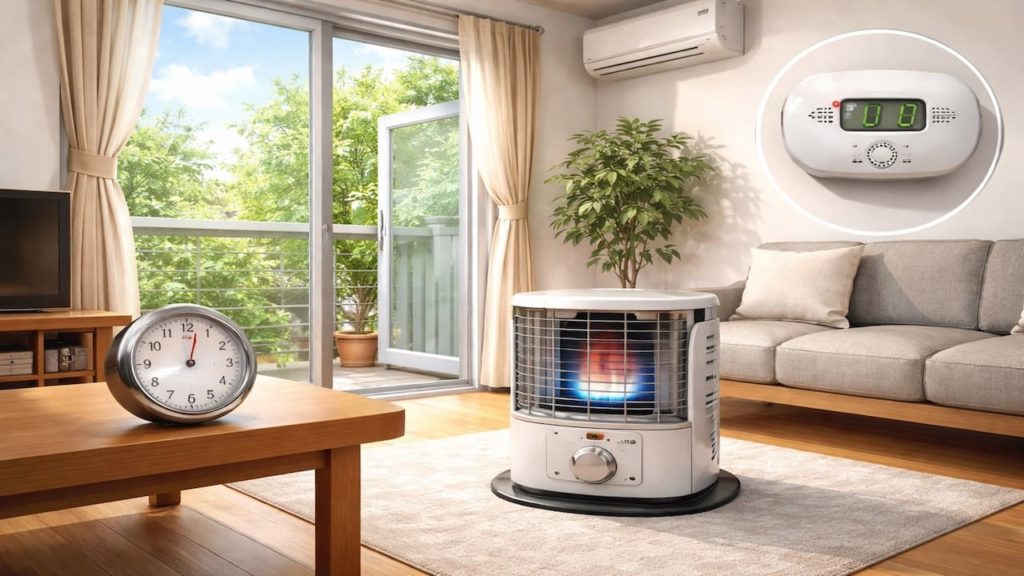
You use a kerosene heater for fast warmth, but the room air makes your head feel heavy. You want heat without that dull “something is wrong” feeling.
Headaches usually come from ventilation timing, a flame that is burning dirty, or early CO buildup you cannot smell. In Japan, winter rooms stay shut tight, so small mistakes stack quickly.
In this guide, you’ll learn how to avoid headaches while using a kerosene heater. You’ll set vent timing, tune the flame, and place a CO alarm so Japanese home heating feels normal again.

Hi, I’m Ken — I’m Japanese, and I live in Malaysia long-term, so I explain everyday life in Japan from a practical ‘from abroad’ perspective.
I hold a building design qualification and I’ve been on site for 20+ years across hundreds of jobs. I turn Japan’s unspoken rules into simple checks, so you can avoid costly mistakes and take the next step with clear actions that feel safe.
1. Avoid headaches when using a kerosene heater 5 tips
The fastest fix is treating air like part of heating—especially in Japan’s closed winter rooms.
Headaches are a warning, not a personality trait, and you should not “push through.” Kerosene heaters consume oxygen and can produce irritants if combustion is weak or the room is sealed. In Japan, small apartments and sliding doors make it easy to trap stale air. Comfort depends on habits, not power.
Oil heater safety guidance in Japan stresses regular ventilation and stopping use if you feel unwell. According to pref.iwate.jp.
- Open a window two fingers every hour
- Run heater on low steady flame setting
- Place CO alarm near sleeping height zone
- Keep door gap for gentle air exchange
- Stop use if headache starts suddenly indoors
You might think a small headache is just dry air — it can be a real warning. Vent first, lower the flame, and take it seriously. Japan winter living rewards boring routines.
2. Vent timing flame tune CO alarm
Short planned venting beats big panic airing in Japan, because you keep warmth while resetting the air.
Vent timing matters more than you expect, since the room can feel “fine” until it does not. A dirty burn creates odor and irritation even without obvious smoke, especially when curtains and rugs hold scent. CO alarms do not replace ventilation, but they catch what your nose cannot. Japan apartments often hide airflow problems behind closed interior doors.
METI advises seasonal safety checks for oil heaters, including preventing dangerous situations before daily use. According to METI.
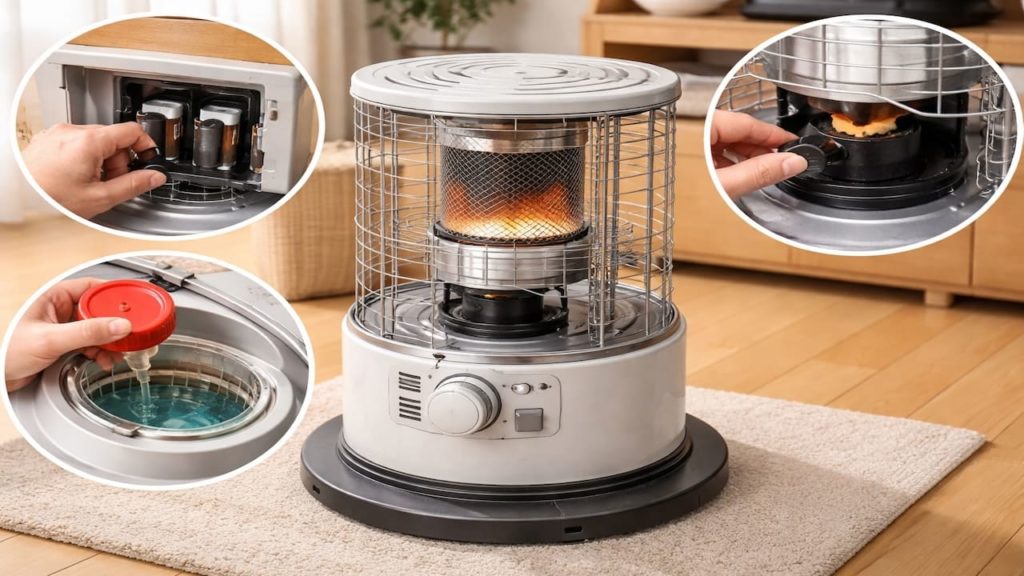
- Check fuel cap gasket for soft seal
- Wipe tank base and tray after refuel
- Store pump in sealed bag after use
- Vent for one minute after every refill
- Keep can upright on a spill tray
You may want to crank heat and “just ventilate later” — that is when headaches sneak in. Use short vents on schedule and keep the burn clean. Calm control wins.
3. Why kerosene heater headaches happen
Headaches happen when your room becomes a sealed loop during Japan’s winter season.
There are three common pathways: not enough fresh air, incomplete combustion, and irritation from fuel residue or dust. You can feel fine at first, then get hit after an hour because your room air changed slowly. In Japan, compact rooms and floor living put your body right where stale air collects. Reality check.
- Notice headache with nausea after heater use
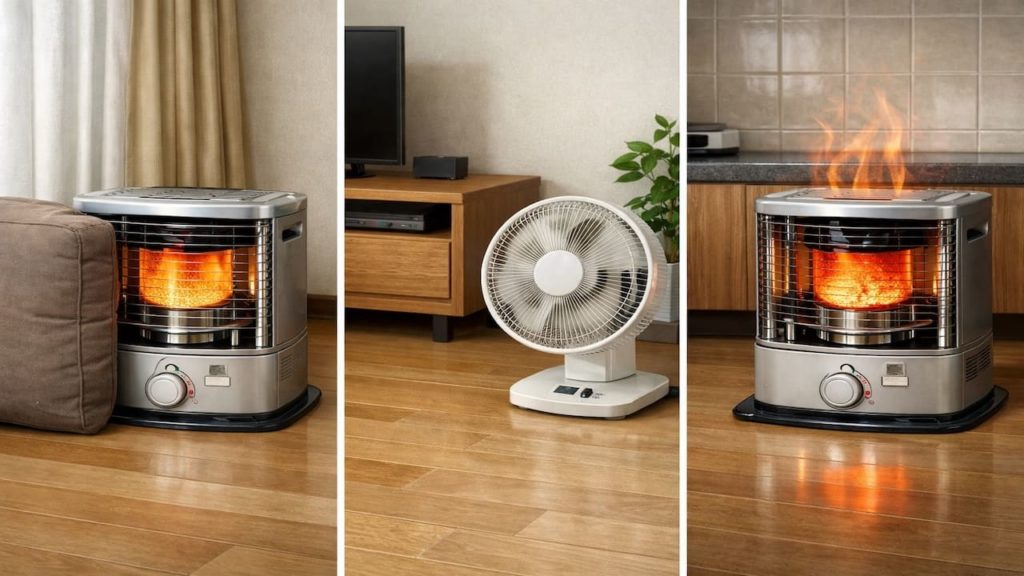
- Watch flame color for dull orange tips
- Smell air near heater for sharp sting
- Check window condensation rising during long burns
- Track room time closed without ventilation breaks
You might blame the heater brand or your building insulation. Often it is the pattern: closed room, high flame, no vent, and a slow drift into bad air. Fix the pattern first.
4. How to prevent headaches step by step
Use this routine and you keep heat while keeping your head clear in a Japanese home.
Start with a vent rhythm, then tune the flame, then add a CO alarm as backup. ¥2,000–6,000 covers many basic CO alarms, and that is cheap insurance in Japan’s tight winter rooms. Keep the heater on a low steady burn and avoid blasting fans at the unit. If headaches happen, do not “test it again” right away.
- Turn heater off and air room immediately
- Set vent timer for one minute hourly
- Adjust wick height to steady blue edge
- Place fan low to mix floor air
- Test CO alarm button before first winter night
You might worry that venting wastes heat — it wastes less than feeling sick all evening. If you did this and it still fails, next is stop using the heater and get it inspected or replaced. Decision time.
5. FAQs
Q1. How often should I ventilate with a kerosene heater?
Use short vent bursts on a schedule, not one big airing after you feel bad. In Japan winter, a one minute window crack each hour is a practical baseline.
Q2. What flame look should I aim for?
A stable low flame that does not flicker wildly is the goal. If it looks weak or sooty, lower it and check the wick and airflow.
Q3. What should I do if I suddenly get a headache?
Turn it off and leave the room for fresh air right away. If symptoms are strong or do not improve quickly, seek medical help and do not relight.
Q4. Is a CO alarm required if I ventilate?
Ventilation is still the main tool, but alarms add backup for what you cannot smell. In Japan’s compact homes, that extra warning layer matters.
Q5. Can fuel smell alone cause headaches?
Fuel odor and residue can irritate, and it often signals drips or poor combustion. Fix the cap gasket, wipe drips, and keep the tank area clean.
Pro's Tough Talk

I’ve spent 20+ years working around Japanese homes, so I’ve seen what tends to work—and what tends to go wrong—in everyday use. Japan winter apartments trap air, so headaches show up fast. I’ve been on site for 20+ years. I’ve worked on hundreds of jobs.
Cause 1: you run it in a sealed room like grilling fish in a closet, then wonder why your head complains. Cause 2: the flame is dirty, so you are basically sipping exhaust through a straw. Cause 3: you skip the boring vent rhythm, so the room slowly flips from cozy to gross without warning. You keep gaming for “just one more match” while the window stays shut. You wake up with a dull head and blame the weather, not the heater.
Turn the heater off and crack a window now.
Stop trying to outsmart oxygen today.
Install a CO alarm and test it this weekend.
This is the whole point: air management is part of heating. If you did this and it still fails, next is stop using the heater and get it inspected or replaced. Do not bargain with symptoms.
Yeah, your room is not a submarine. If your plan is “I’ll ventilate when I feel bad,” your head will keep filing complaints.
Summary
Headaches usually come from bad vent timing, a dirty burn, or early CO risk in a sealed room. Japan winter homes make those issues feel stronger.
Use short vent bursts, keep the flame low and steady, and add a CO alarm as backup. If headaches return after the routine, stop use and move to inspection.
Tonight do hourly vent rhythm plus low steady flame—then decide based on symptoms, not hope. Keep browsing other heater habits that fit Japanese apartment life.