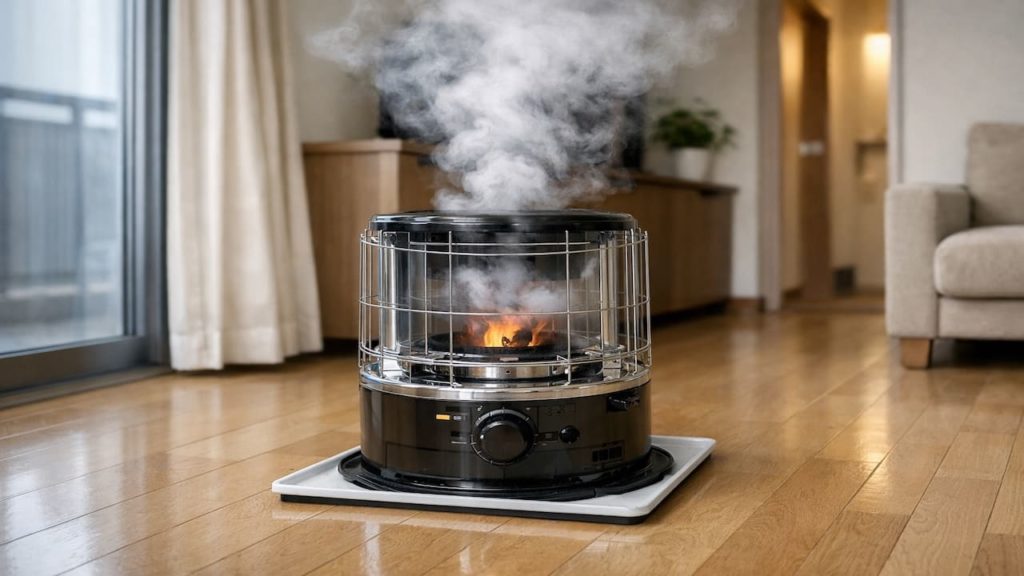
Mornings are rushed, and a kerosene heater feels like the fastest comfort button. But one sloppy step can leave smell, soot, or a scary flare.
Japan homes heat unevenly in winter because drafts sneak in and rooms are compact. A repeatable routine matters more than “being careful”.
In this guide, you’ll learn a morning start routine that lights clean and stays stable. You’ll top up fuel safely, wipe the right spots, and ignite without rushing the flame.

Hi, I’m Ken — I’m Japanese, and I live in Malaysia long-term, so I explain everyday life in Japan from a practical ‘from abroad’ perspective.
I hold a building design qualification and I’ve been on site for 20+ years across hundreds of jobs. I turn Japan’s unspoken rules into simple checks, so you can avoid costly mistakes and take the next step with clear actions that feel safe.
1. Morning start routine for a kerosene heater 5 steps
Do the same 5 steps every morning and the heater behaves.
In Japan winter apartments, the first minute decides if you get clean heat or lingering odor — especially with tight ventilation and close furniture. Start by clearing dust and confirming the unit sits flat. Keep flammables away, and don’t refuel while burning. Then watch the flame for a short stability check before you walk off.
Season-start checks like dust removal, safety devices, and proper installation are emphasized for oil heaters. According to meti.go.jp.
- Set heater on firm flat floor surface
- Clear dust from intake and top vents
- Check safety shutoff lever moves smoothly
- Confirm fuel level and cap tightness
- Ignite and watch flame for one minute
You might think this is too much for a weekday. But mornings are when you’re half-awake, and that’s when mistakes happen. Keep the order, keep the room calm, and you get safe heat with less stress.
2. Fuel top up wipe and ignite
Top up only when it is off and cool so spilled fuel never meets heat.
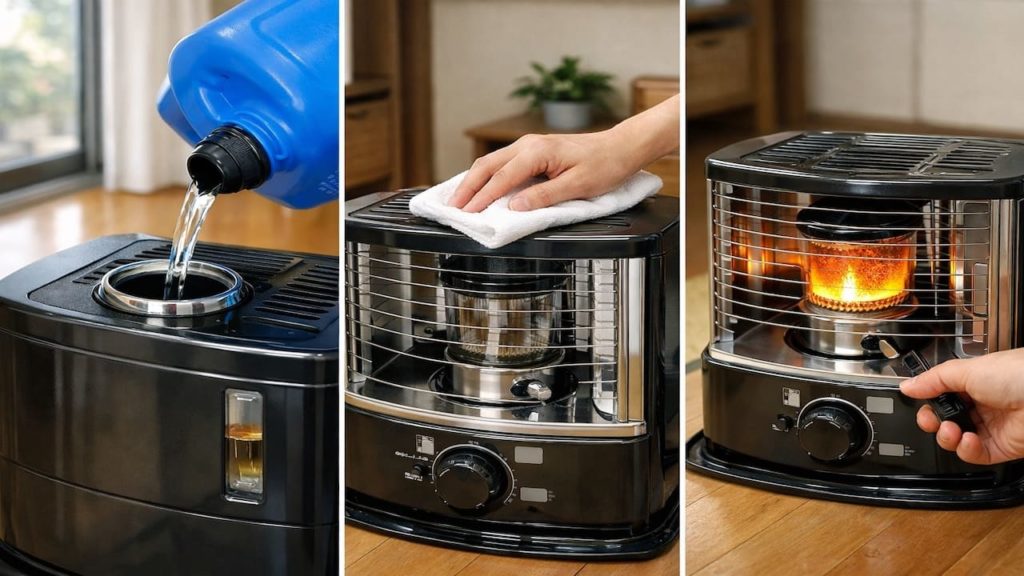
Japan’s dry winter air makes smells spread fast, so even small drips feel huge — and they are a real risk. Refuel in a safe spot, avoid overfilling, then wipe the tank, tray, and any drips immediately. Make sure the cap is tight and the tank is seated correctly. Only then ignite with a steady hand.
Many heater manuals warn to wipe spills and secure the tank cap before operation. According to toyotomi.jp.
- Turn heater off and let it cool
- Refuel with funnel to avoid fuel splash
- Wipe tank and tray with dry paper towels
- Seat tank and tighten cap without force
- Ignite then lower flame after warm up
Some people refuel “just a little” while it is warm. That’s the shortcut that turns a quiet morning into panic. Keep fueling separate from burning, and your ignition gets cleaner too.
3. Why morning ignition gets messy in Japan homes
Morning problems come from haste plus airflow.
When you’re rushing, you twist the knob too far, then the flame surges before the chamber is ready — and Japan rooms often have sudden drafts from doors and vents. A slightly tilted base can also make the flame unstable. Old fuel or a dirty wick adds odor and smoke, which people mistake for “normal startup”. Morning trap.
- Keep heater away from door draft lines
- Close unused room doors before ignition
- Crack a window briefly to refresh air
- Start at mid setting then adjust slowly
- Wait before relighting after a failed start
You might blame the heater or the weather. But most mornings, it is your routine and the room setup. Fix the environment first, then judge the machine.
4. How to ignite without flare when you are rushed
Use small controlled moves and stop if anything looks wrong.
In Japan winter mornings, you want fast warmth without blasting the flame — that’s how flares and smell start. Keep a wipe kit nearby, and do a quick check before ignition. Basic supplies like towels or a small funnel are usually ¥100–500, and everything else is habit. Build a “start zone” that stays clear every day.
- Place a heat guard or barrier around heater
- Keep curtains and laundry one meter away
- Ignite then pause before touching any knob
- Lower flame once room feels evenly warm
- Ventilate one minute if odor appears
You might think “I can fix it by turning it up”. That often makes the flame louder and dirtier. If the start looks unstable, shut it down and reset calmly instead of forcing it.
5. FAQs
Q1. How long should I watch it after lighting?
Watch the flame for about one minute and confirm it stays steady. If the flame surges or smells sharp, turn it off and restart after cooling.
Q2. Can I top up fuel every morning?
Only if the heater is off and cool, and you can wipe any drips immediately. If you cannot refuel safely, do it later when you have time.
Q3. Why does it smell worse in the morning?
Cold starts burn less cleanly at first, and drafts change the flame shape — Japan’s tight rooms make that smell hang around. A short planned ventilation break helps more than cranking the flame.
Q4. What if the igniter fails and I try again?
Wait a moment, confirm the chamber is seated, and keep the setting moderate. Repeated rapid relights can create odor and unstable flames.
Q5. When should I stop and not use it today?
If you see flame outside the body, notice fuel leaks, or get headaches, stop and ventilate. Then inspect fuel handling, wick condition, and your room airflow.
Pro's Tough Talk

I’ve spent 20+ years working around Japanese homes, so I’ve seen what tends to work—and what tends to go wrong—in everyday use. Morning lighting is where people get cocky, then get surprised. The heater is not your coffee machine.
Cause 1: you rush the knob and the wick overfeeds. Cause 2: you refuel sloppy, leave a drip, then pretend it will “air out”. Cause 3: drafts hit the flame, so it hunts and smokes like a tired chimney.
Clear the area now. Wipe every drip today. Start slow and watch the flame this weekend.
Make mornings boring and you’ll get clean heat without drama. If you did this and it still fails, next is replacing the wick or having the unit checked.
Tsukkomi: Stop poking it like a toaster. You know the scene: one hand on the knob, the other holding a sock, and you “just try again”. Keep that up, and your heater will start judging you back.
Summary
Use the same five steps: stable base, dust check, safe fuel handling, wipe drips, then a short flame watch. That is the clean morning start.
If the flame is unstable or the smell is sharp, shut it down and reset instead of forcing it. If repeats still fail, the next move is wick or inspection.
Do the routine once today and repeat it tomorrow. Once it is automatic, you can move on to the next winter comfort habit on this site.