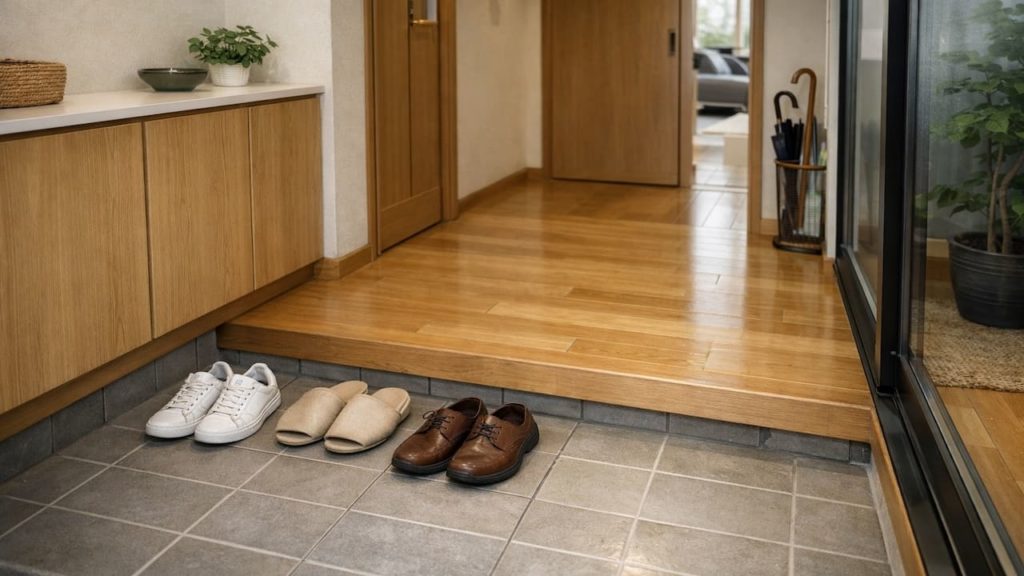
You look at your genkan and think, “Rack or closet, which one actually works?”
In Japan, entries are tight, shoes get wet often, and storage mistakes turn into odor fast. Rainy season humidity sits in the lowest air layer, and closed cabinets can trap it all day. But open racks can look messy if your routine is busy or family-heavy. Small space pressure.
In this guide, you’ll learn how to choose rack or closet using 5 checks that match Japan’s weather and the way you really live.

Hi, I’m Ken — I’m Japanese, and I live in Malaysia long-term, so I explain everyday life in Japan from a practical ‘from abroad’ perspective.
I hold a building design qualification and I’ve been on site for 20+ years across hundreds of jobs. I turn Japan’s unspoken rules into simple checks, so you can avoid costly mistakes and take the next step with clear actions that feel safe.
1. Genkan rack vs closet: 5 checks
Pick storage based on drying speed first.
In Japan’s rainy season, shoes often come home damp even without puddles. If moisture stays inside, odor and mold risk climb quickly in a small genkan. A rack usually dries faster, while a closet hides clutter better. Routine fit.
- Count pairs you rotate in one week
- Measure genkan width and door swing space
- Check drying time after a rainy commute
- Note who needs seated shoe changes daily
- Decide how often you clean the floor
You might think looks matter most, but smell is the real mood killer. A rack looks open—yet it can keep shoes dry and calm. If drying is slow, even a “pretty” closet becomes a damp box.
Shoes are usually removed in the genkan in Japanese homes. According to Japan-guide.com.
2. Choose storage that fits your routine
Match storage to how you enter and exit daily.
A closet works when you put shoes away the same way every time. A rack works when you need “drop and dry” after rain or sports. In many Japan apartments, the genkan is narrow and shaded, so habits matter more than furniture. Daily flow.
- Choose rack when shoes return wet often
- Choose closet when you need visual calm
- Choose rack when kids change shoes quickly
- Choose closet when dust builds near door
- Choose rack when you ventilate the entry daily
Some people try to force a closet because it looks tidy, then they leave wet shoes inside anyway. That turns into odor and sticky humidity in summer. A rack can still look neat if spacing is consistent — and it saves work later. Japan homes reward simple routines.
3. Why shoe storage fails in a humid genkan
Closed air plus wet soles creates a slow stink cycle.
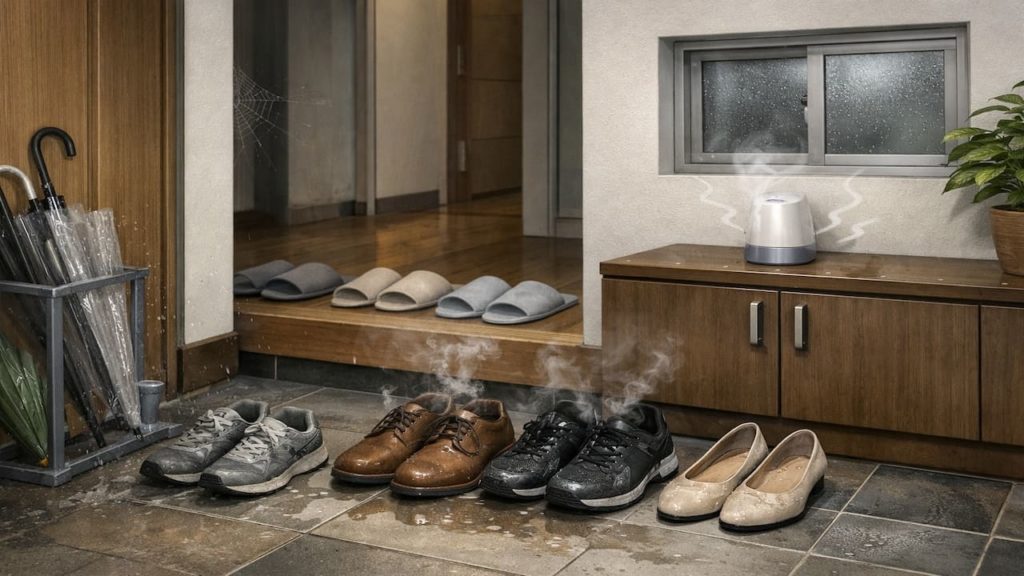
In Japan’s tsuyu and humid summer, moisture comes in on soles, umbrellas, and bags. If storage is sealed, humidity stays trapped, and bacteria keeps working in the lining. Mold also likes dark corners behind a cabinet wall. Damp loop.
- Check cabinet back wall for damp feel
- Wipe genkan floor before storing wet shoes
- Pull insoles out to expose inner fabric
- Leave finger space between each shoe pair
- Open storage doors for 5 minutes daily
You might blame “old buildings,” but even new places trap moisture when airflow stops. A rack can fail too if shoes are stacked tight with no gaps. Fix the air path first, then storage becomes easier. Humidity control is the quiet boss.
4. How to choose rack or closet in 10 minutes
Use one quick test: can your wet shoes dry overnight?
Do the test after a rainy day, not on a perfect sunny day in Japan. Put a damp pair in your current setup and check the next morning for smell and cold wet lining. If you decide to buy, a basic rack or slim cabinet often lands around ¥2,000–20,000 depending on size and material.
- Place one damp pair in your storage
- Check odor level in the morning quickly
- Check floor wet marks near storage area
- Try door open drying for 30 minutes
- Choose the setup with less daily effort
Some people want a “best” answer for every home, but routines differ. If your life is fast and rainy, pick airflow and convenience. If your life is calm and consistent, pick hidden storage and a strict dry-first rule. Japan living is a systems game.
5. FAQs
Q1. Is a rack always better for odor control?
Not always. A rack helps drying, but it can collect dust if you never wipe the area. In Japan apartments near the door, dust and grit build fast.
Q2. Can I use a closet if I remove wet shoes first?
Yes, if you truly dry them before storage. The problem is the “just this once” habit on rainy nights. In humid summer, one damp night can linger.
Q3. What is the simplest rule to follow?
Never store shoes while they feel cool and damp. Cool lining usually means moisture is still inside. In Japan’s rainy season, that one rule prevents most smell.
Q4. What if my genkan has no window?
Borrow airflow from another room for a short time. A small fan aimed low can help drying even in tight layouts. Many Japanese entries are windowless.
Q5. Which is better for families with kids?
A rack is often easier because kids can see the target and move fast. If you choose a closet, keep shelves low and labels simple. Wet school shoes are common.
Pro's Tough Talk

I’ve been on site for 20+ years. I’ve worked on hundreds of jobs. Japan’s rainy season turns the genkan into a damp pocket, and shoe storage choices decide if that pocket stays clean.
Three causes. One, you hide wet shoes in a closet like it’s a magic freezer. Two, you pack shoes tight, so air can’t reach fabric. Three, you ignore the floor puddle, and the cabinet drinks it like a sponge.
Three steps. Test drying overnight after a rainy day. Pick the option that needs less babysitting. Then commit to one habit: dry first, store second.
A closet is a box, not a dryer. A rack is a drying tool, not a trash pile. Scene one: you open the cabinet and get hit with warm sock air. Scene two: you step into the genkan in socks and it squishes.
If you want your entry to smell “adult,” stop storing wet shoes like a secret.
Summary
Rack vs closet is not about taste, it is about drying and routine. Check space, check frequency, and test overnight drying after rain in Japan.
If odor keeps coming back, your storage is trapping moisture. Add airflow, add spacing, and stop putting damp shoes away “for later.” Later becomes tomorrow’s problem.
Do this today: run the overnight dry test after a wet day and choose the storage that makes your genkan feel clean with less effort.