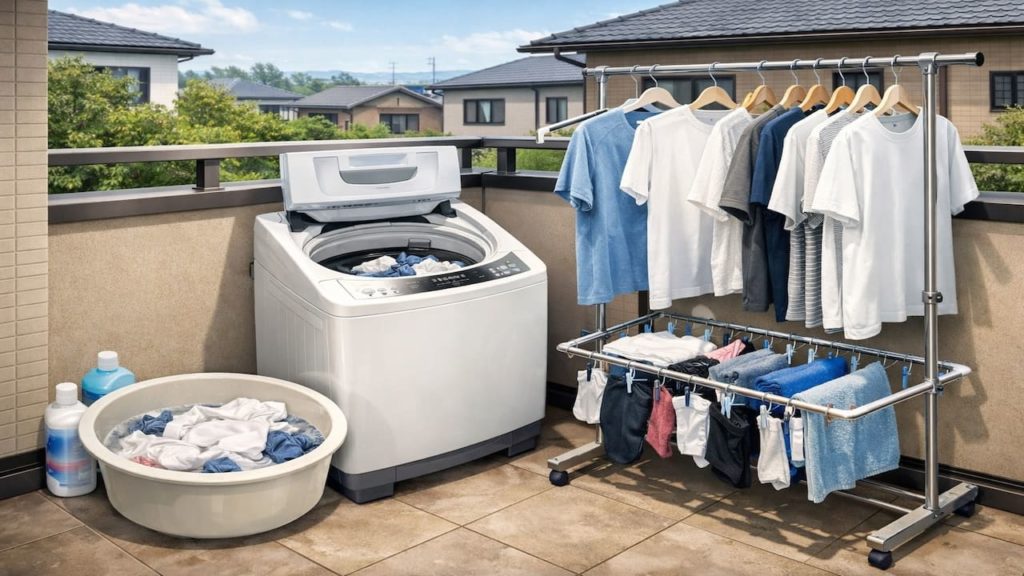
You hang laundry on the balcony, it looks dry from one side, and then you grab it and find damp seams and wet pockets. Uneven drying is the fastest way to waste an afternoon.
In Japan, balconies often create dead-air corners, and humid days can re-damp clothes even after they “seemed” dry. When wind funnels at an angle, one side gets airflow and the other side gets ignored.
In this guide, you’ll learn 5 tips to fix uneven balcony drying by setting gap spacing, flipping sleeves, and adjusting rack layout so air actually reaches the parts that stay damp.

Hi, I’m Ken — I’m Japanese, and I live in Malaysia long-term, so I explain everyday life in Japan from a practical ‘from abroad’ perspective.
I hold a building design qualification and I’ve been on site for 20+ years across hundreds of jobs. I turn Japan’s unspoken rules into simple checks, so you can avoid costly mistakes and take the next step with clear actions that feel safe.
1. Uneven drying with Balcony laundry 5 tips
Uneven drying means airflow is blocked or one-sided.
Most uneven drying is not about the washer, it’s about shape and air routes. If items touch each other, they create a damp bubble in the contact area. If your rack is too close to a wall, the wall side stays cool and damp. In Japan’s humid season, that cool-damp zone can stay all day. Dead air.
- Check seams first not the flat fabric
- Touch cuffs and waistbands for cool damp spots
- See if only wall side stays damp longer
- Look for fabric contact points between items
- Time how long towels versus shirts take
“But the sun is out.” Sun helps surfaces, but seams and folds need air. If air can’t pass, sun alone won’t finish it.
2. Gap spacing sleeve flip and rack layout
Spacing and layout decide which parts get air.
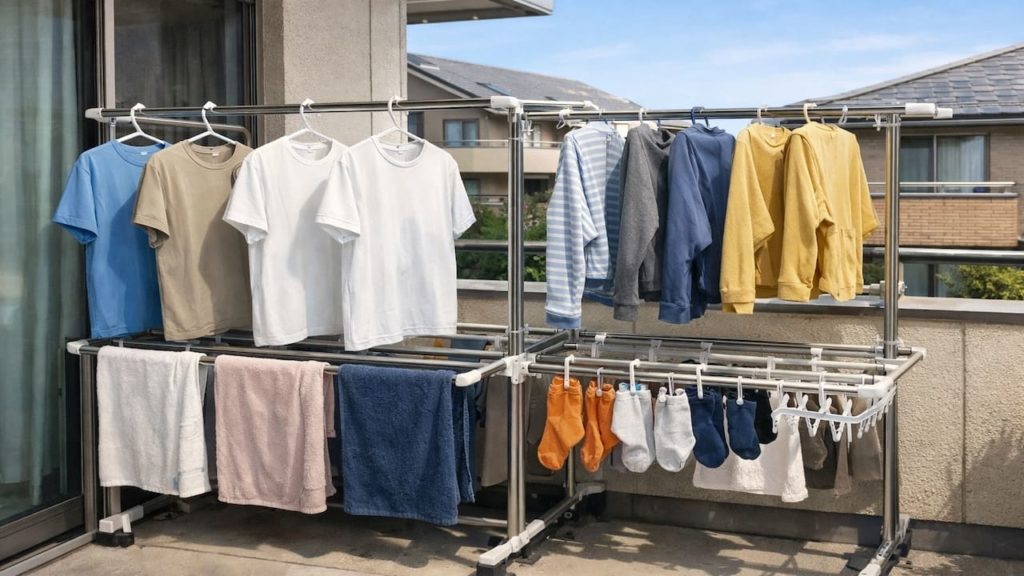
Gap spacing means air can flow between items instead of skimming the front. Sleeve flip matters because sleeves collapse and block airflow through the body. Rack layout matters because the direction of wind and the position of walls create a “good side” and a “dead side.” You want the rack angled so air crosses through, not just hits one face.
- Leave one palm gap between each hanging item
- Keep thick items from touching anything nearby
- Flip sleeves outward so they cannot wrap inward
- Place rack one step inward from railing edge
- Angle rack so wind crosses not hits flat
“I don’t have space for gaps.” Then reduce load size or split into two rounds. One crowded load dries slower than two lighter loads. Every time.
3. Why balcony laundry dries unevenly
Folds trap humid air and stop evaporation.
Evaporation speeds up when moving air carries moisture away from the fabric surface. If your clothes touch or fold, the trapped air gets humid quickly and drying slows. On Japanese balconies, wind often flows along the railing rather than through your rack, so only the front layer dries well. The inside stays damp and cool. Physics.
- Contact points create humidity pockets quickly
- Thick seams hold water and dry last
- Wind hits front and skips the back layer
- Walls block cross breeze and create dead zones
- Late day humidity re dampens partly dry fabric
“So it’s always the balcony.” Not always. It’s usually layout plus crowding. Fix those two, and most balconies work fine.
4. How to get even drying fast
Create a cross-breeze path and rotate once.
Start by spreading items and opening sleeves so air can travel through the body, not just across the outside. Then adjust rack position: move inward and angle it so wind crosses the hang line. If you buy anything, extra clips or spread-arm hangers are usually ¥200–1,200 — cheap insurance against folds. The rest is mostly time/effort and one mid-dry rotation for thick pieces.
- Shake items once to open fibers before hanging
- Spread sleeves and pin them open
- Hang thick items at outer positions for airflow
- Rotate towels and jeans halfway through drying
- Finish indoors before evening humidity climbs
“Rotation is annoying.” It’s the fastest fix when one side dries and the other side stays damp. Do it once and stop checking every 20 minutes.
5. FAQs
Q1. Why are seams and waistbands always the last to dry?
They are thicker and hold more water, and they often sit in folded zones with less airflow. Treat seams like “high-risk damp zones” and check them first.
Q2. How much spacing do I really need?
One palm gap is enough for most items. If towels are touching, they will dry unevenly no matter how sunny it is.
Q3. What’s the best rack position on a balcony?
Place it one step inward from the edge and angle it so wind crosses through the rack. Avoid pushing it tight against a wall where one side becomes dead air.
Q4. What is the fastest fix when one side is dry and the other is damp?
Rotate the item and open sleeves so the damp side faces airflow. This is faster than leaving it out longer and hoping humidity drops.
Q5. When should I finish-dry indoors?
If humidity is high and items stay cool-damp after hours, bring them in and finish with airflow. Leaving them outside longer often increases re-damp and odor risk.
Pro's Tough Talk

I’ve spent 20+ years working around Japanese homes, so I’ve seen what tends to work—and what tends to go wrong—in everyday use. Uneven drying is almost always “you blocked the air,” not “the universe hates you.” In Japan’s humid swings, blocked air gets punished harder.
Three reasons keep showing up. One: you crowd the rack, so clothes kiss each other and trap damp air like a sealed sandwich bag. Two: sleeves fold inward and choke the body airflow, like closing a jacket and asking it to dry. Three: your rack sits wrong, so wind hits the front and ignores the back like it has favorites.
Leave a palm gap between items. Today. Flip sleeves outward and pin them open. This weekend, move the rack inward and angle it so wind crosses through.
If it still dries uneven after spacing, your load is too big for your balcony airflow, so split the load and rotate thick items once mid-dry. If only wall-side areas stay damp, you’re in a dead zone, so shift the rack away from the wall and recheck. Stop waiting for magic air.
Come on.
You know that move where you touch the front and say “dry,” then you touch the waistband and it’s still cold and damp. And the classic sleeve rolled into a tight tube that never dries. Yeah, your setup did that.
Summary
Uneven balcony drying happens when airflow is blocked by crowding, folded sleeves, or a rack placed in a dead-air zone. Check seams first, then fix spacing and shape.
If it keeps happening, angle the rack for cross-breeze, rotate thick items once, and finish indoors before evening humidity re-damps everything. Splitting one crowded load into two usually saves time.
Today, space items with a palm gap, flip sleeves open, and shift the rack inward from the wall. Make airflow reach the damp zones and uneven drying stops wasting your day.