You look at your carport and think, “Will this hold if a typhoon tracks close?” You also worry about loose stuff turning into flying junk.
It might be a few unclipped panels, tired bolts, or clutter you forgot under the roof. In Japan, typhoon season brings sudden wind shifts and sideways rain that finds every weak point.
In this guide, you’ll learn how to prep your carport for typhoon wind without panic. You’ll clear loose items, lock down bolts, check movement, and know when to stop and stay inside.

Hi, I’m Ken — I’m Japanese, and I live in Malaysia long-term, so I explain everyday life in Japan from a practical ‘from abroad’ perspective.
I hold a building design qualification and I’ve been on site for 20+ years across hundreds of jobs. I turn Japan’s unspoken rules into simple checks, so you can avoid costly mistakes and take the next step with clear actions that feel safe.
1. Carport typhoon prep: 5 steps to secure it
Secure a carport by removing fuel for wind and tightening the skeleton.
Typhoon damage is rarely one dramatic snap, it is a chain: wind grabs an edge, vibration loosens fasteners, then something starts flapping. Japan’s humid air also keeps metal and brackets a little slick with grime, so small movement starts easier than you expect—especially at night when you can’t see it well. Think in steps, not in hope.
- Clear everything loose under the roof first
- Check bolts and braces for visible movement
- Lock doors and gates to reduce wind tunnels
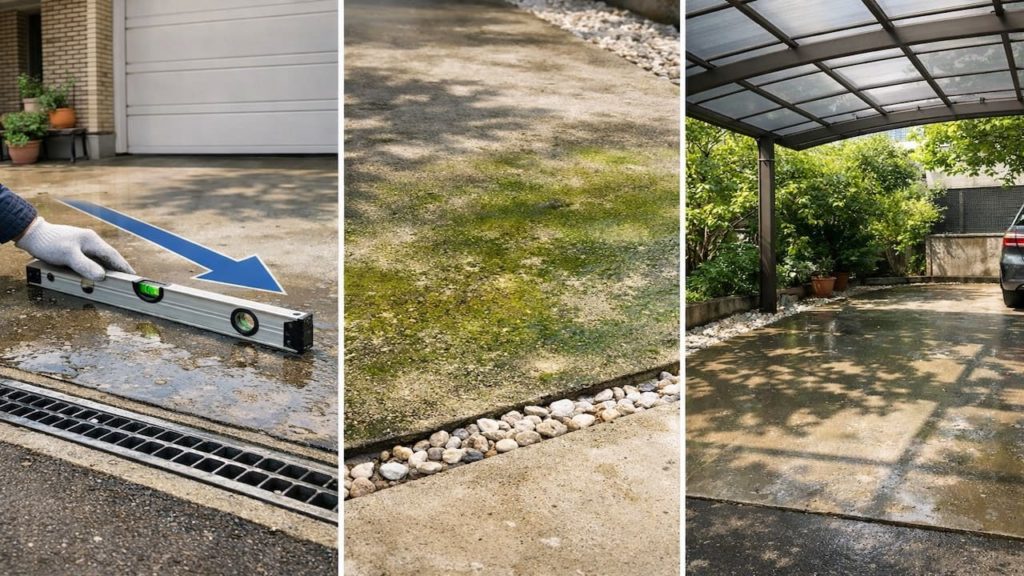
- Clean drains so water does not back up
- Stop outdoor work once gusts begin rising
Some people rush out during the storm to “fix one thing,” then the wind throws debris like it’s aiming. Don’t be that hero. Prep early, then stay put and let the structure do its job.
2. Clear items lock bolts and check
Clear the floor zone and tighten the parts that can chatter.
Start with what the wind can steal: bins, bikes, rakes, cardboard, kid toys, anything light or flat. Then hit bolts, base plates, and braces with a real tool, not fingers—plan ¥500–2,000 for a basic wrench set and a few heavy-duty zip ties if you’re missing them. Also clear gutters and surface drains so rainwater does not pool and push mud into the bases.
Typhoon guidance in Japan puts real weight on securing loose outdoor objects and preparing your home exterior. According to bousai.metro.tokyo.lg.jp.
- Bring light items indoors or tie them down
- Bundle long tools so they cannot whip
- Tighten base bolts and brace connections firmly
- Check roof edge trim for any loose clips
- Clear drain grates so runoff exits fast
People say “it’s under a roof so it’s safe,” but wind gets under roofs too. If something can rattle, it will rattle. Lock it down now, then you’re done.
3. Why typhoon wind makes carports fail in bursts
Gusts fail carports by pumping vibration into joints and panels.
Steady wind is one thing, but gusts slap the roof like repeated punches. That pulse loads one side, then the other, and fasteners start walking out over time—classic. Japan homes also sit close together, so wind can accelerate through gaps and hit the carport from odd angles. Add sideways rain, and your “dry” storage corner becomes a wet weight.
If you want cheap monitoring gear, plan ¥100–500 for marking tape or a paint pen so you can see if bolts shift after the storm. A national safety guide for typhoons also warns about flying objects and the danger of being outside in strong wind. According to fdma.go.jp.
- Look for flapping sounds that signal loose edges
- Check brace joints where vibration concentrates most
- Watch corners where wind can lift panels
- Spot puddles that can soften soil at bases
- Mark bolt positions so shift is obvious
Some folks blame “bad product,” but most failures start as tiny looseness plus repeated gust cycles. If you understand that pattern, your prep becomes simple. Remove lift points, reduce vibration, and keep water moving.
4. How to secure it before a typhoon arrives
Do the work early then stop before conditions turn risky.
First pass is fast: clear, bundle, tighten, confirm drains. Second pass is targeted: check the roof edge, side panels, and any add-ons that act like sails—budget ¥1,000–5,000 for a couple of ratchet straps and rubber padding if you need temporary tie-downs. In Japan, the worst move is rushing outside when the wind is already slamming, so your plan must finish before the mood changes.
- Strap loose items to a solid anchor point
- Tighten braces then recheck after ten minutes
- Remove hanging hooks chains or loose signage
- Check side panels and close any open gaps
- Set a cutoff time and stay inside
Some people want to “just do one more thing” as the gusts rise, but that’s when debris starts flying and footing gets sketchy. If you still hear flapping after your second pass, stop and wait it out. After the storm, inspect in daylight and retighten once more.
5. FAQs
Q1. Should I park the car closer to the house side?
Park so doors and walk paths stay safe, but don’t block drainage or emergency exits. If water will pool near the house wall, move the car away from that line.
Q2. Is it safe to use a ladder to check the roof edge?
No if wind is already picking up or the ground is wet. Do roof-edge checks early, or skip them and stay inside.
Q3. What is the one thing I must remove under the carport?
Anything light flat or long enough to catch wind—that includes cardboard, bins, poles, and loose panels.
Q4. Can I just “tighten everything” once a year?
Better to check before typhoon season and after any big storm. Vibration and water change things over time.
Q5. When do I stop DIY and call someone?
If posts look tilted, base plates shift, or braces are bent after the storm, get it checked. Don’t keep tightening a twisted frame.
Pro's Tough Talk

I’ve spent 20+ years working around Japanese homes, so I’ve seen what tends to work—and what tends to go wrong—in everyday use. Typhoon wind is like a giant hand flicking every loose edge to see what pops. And loose parts act like a loose tooth once they start wiggling.
Three culprits: clutter becomes projectiles, joints vibrate until bolts walk, and water turns the base area soft and sloppy. This isn’t you being careless, it’s the storm doing storm math. Installers aren’t demons either, but they can’t babysit your carport when the gusts hit.
Clear loose stuff now. Today, tighten bolts and braces. This weekend, mark joints and set your cutoff time.
If you hear flapping after prep stop going outside. If posts shift or braces bend, you don’t “muscle through,” you inspect and repair. If you’re unsure, wait for daylight and get a pro to confirm the frame is straight.
You hear banging at 2 a.m. and you want to sprint out in slippers with a flashlight. Then you remember the wind can throw junk like a pitcher.
Really?
Stay inside and let tomorrow-you deal with it, not ER-you.
Summary
Prep a carport for typhoons by clearing loose items, tightening joints, and keeping drains open. Finish early so you are not outside when gusts spike.
If you still hear flapping or see movement, stop and wait out the storm. Afterward, inspect in daylight and fix any tilt, bend, or shifted bases.
Clear the clutter and tighten the key bolts today. Then keep going with nearby home wind-and-water checks so one storm doesn’t create a long repair season.