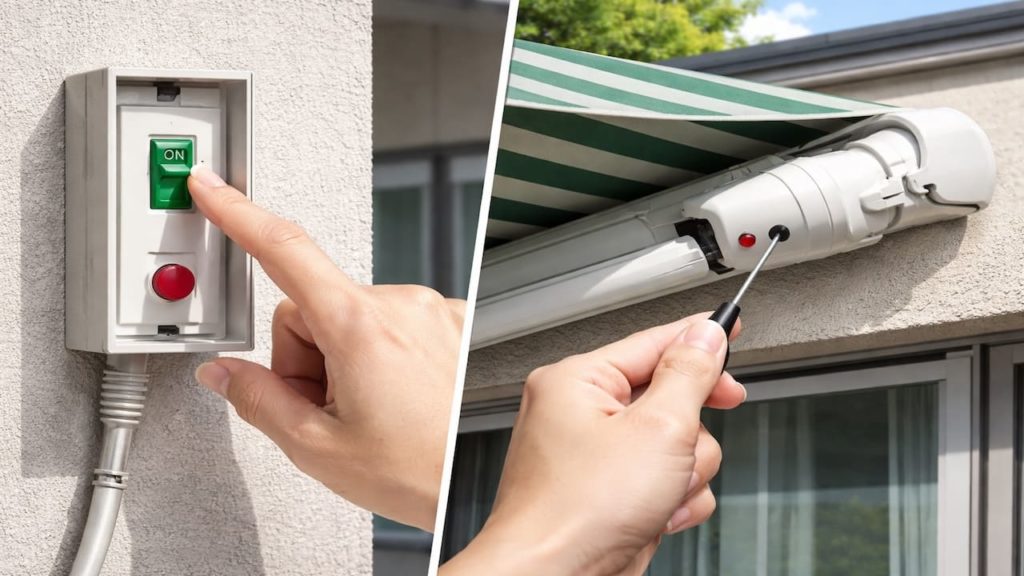
Your awning motor won’t move, and now you’re stuck staring at a silent tube. No hum, no twitch, nothing.
It could be simple power, a safety sensor, a remote issue, or a motor that overheated and locked itself out. Japan’s humidity and sudden rain also push people into rushing retraction, and that can trigger weird stops.
In this guide, you’ll learn what to check first when an awning motor will not move. You’ll confirm power, switches, sensors, and do a safe reset so you do not burn time or break parts.

Hi, I’m Ken — I’m Japanese, and I live in Malaysia long-term, so I explain everyday life in Japan from a practical ‘from abroad’ perspective.
I hold a building design qualification and I’ve been on site for 20+ years across hundreds of jobs. I turn Japan’s unspoken rules into simple checks, so you can avoid costly mistakes and take the next step with clear actions that feel safe.
1. Awning motor won’t move: 5 checks
Start with the fastest checks that change the diagnosis.
When a motor will not move, you want yes-or-no checks, not random button mashing—especially on a Japanese entry where space is tight and you are tempted to rush. Confirm power first, then control, then sensor, then reset, then heat lockout. That order saves time and keeps you from forcing a jam.
- Confirm breaker and wall switch are actually on
- Test outlet with another device to verify power
- Check remote battery and wall controller response
- Look for wind sensor sun sensor or lock mode
- Try a safe power cycle and basic reset
You might think the motor is dead and start shopping. Slow down. Most “dead” motors are just no power, no signal, or a safety mode you forgot existed.
2. Power switch sensor and reset
Power and control issues beat motor failure most days.
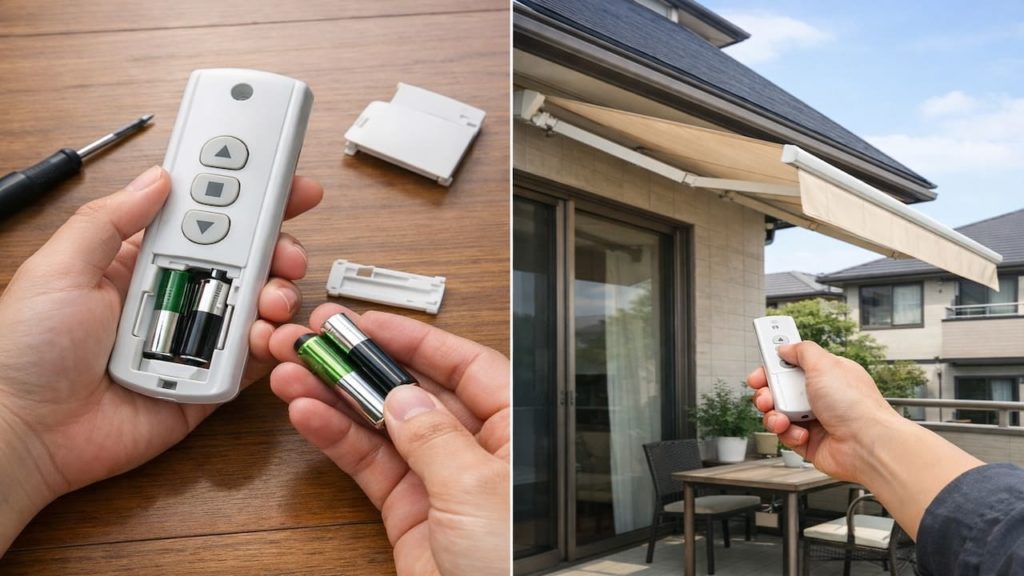
Start at the source: breaker, switch, and plug, because one loose plug can look like a dead motor—classic. Then check the control path: remote battery, wall switch, and whether the motor shows any response. If you have an RTS style remote, a long press should show the remote LED behavior, and unplugging then replugging is a standard recovery step. According to somfysystems.com.
- Flip breaker fully off then back on
- Confirm wall switch is not in off position
- Replace remote battery if LED looks weak
- Disable sensor mode and retry manual control
- Unplug motor for ten seconds then replug
Some people skip straight to “reset everything.” Bad move. Resetting can wipe settings on certain systems, and you still might have a power problem. Prove power and signal first, then reset with intent.
3. Why an awning motor stops moving suddenly
Overheat lockout and jam protection are common culprits.
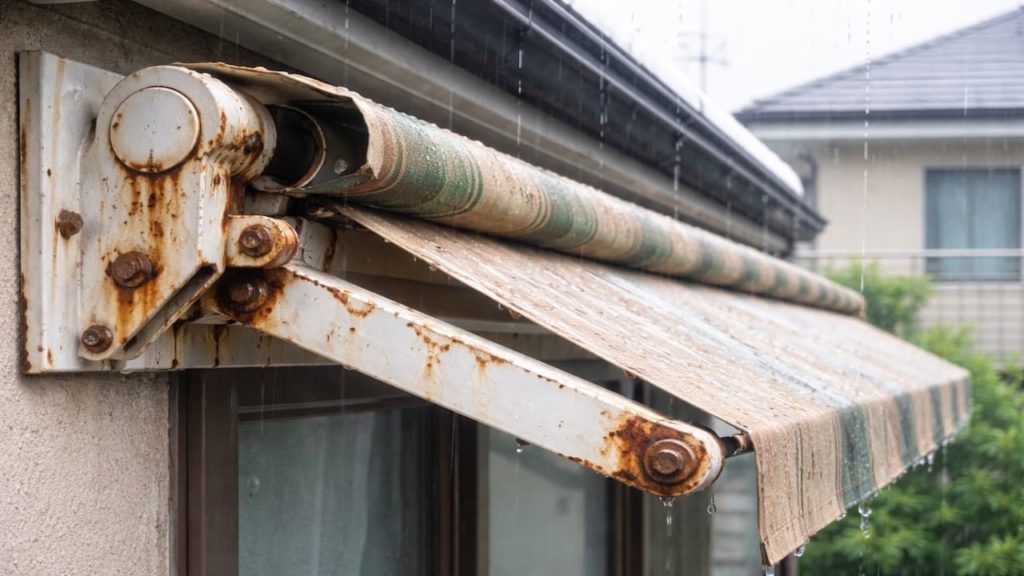
Motorized awnings can stop after repeated cycles, because the motor protects itself when it gets hot. Some troubleshooting guides note the motor may cease function after a few minutes of continuous use and needs a cool-down period. According to automatedshadeinc.com. Another cause is resistance: fabric rolled wet, debris at the front bar, or arms slightly misaligned, so the motor senses load and refuses to move. In Japan’s humid months, damp fabric and grit make load spikes more likely.
- Repeated cycles triggered thermal protection shutdown
- Wet fabric roll increased drag and resistance
- Debris caught at front bar or cassette edge
- Arms skewed and created uneven load path
- Sensor lock mode prevented movement by design
People love to blame “cheap motors.” Sometimes, sure. But protection trips are doing their job. Treat the stop as a warning, not a challenge, and you avoid stripping gears or bending arms.
4. How to restore movement without making it worse
Reset safely only after you confirm the basics.
First, give it time if you suspect heat, then clear resistance and try again with one clean command—no rapid tapping. If it is plug-in powered, do a power cycle. If it is hardwired, use the dedicated switch and follow the maker’s reset steps. Budget-wise, expect ¥500–2,000 for fresh remote batteries and a simple outlet tester, and the rest is mostly time/effort. In a Japanese rainy week, prioritize drying and clearing grit before you cycle it again.
- Wait fifteen minutes to rule out overheating
- Extend manually only if design allows safely
- Clean cassette edge and remove trapped debris
- Power cycle once then try single long press
- Stop if grinding sounds appear during movement
You might think “I’ll keep trying until it moves.” That is how you cook a motor or twist hardware. If it will not respond after the clean checks and one reset attempt, pause and inspect mounting, arms, and wiring instead of forcing cycles.
5. FAQs
Q1. How do I know if it is a power problem or a motor problem?
Plug another device into the same outlet or circuit and confirm it works. If the outlet is dead, the motor is not the suspect yet.
Q2. What is the quickest reset that often works?
Power cycle once and test the remote battery. Many “no move” cases are just a dead battery plus a motor that needed a clean reboot.
Q3. Can a wind sensor stop the motor from moving?
Yes, some setups block movement in certain modes to protect the awning. Check for sensor indicators and disable the mode before assuming a failure.
Q4. Why did it stop after I opened and closed it several times?
Thermal protection is likely. Let it cool, then try one controlled movement—do not spam the button.
Q5. When do I stop troubleshooting and call for service?
If you confirm power, swap the battery, cool it down, clear debris, and it still does not respond at all. Also stop if you smell burning, see damaged wiring, or hear grinding.
Pro's Tough Talk

I’ve spent 20+ years working around Japanese homes, so I’ve seen what tends to work—and what tends to go wrong—in everyday use. When a motor won’t move, people panic and start button-slap therapy. That makes small problems bigger fast.
Three causes, no romance: no power, no signal, or no movement allowed. No power is the boring breaker or plug. No signal is the dead remote battery or a controller that is not paired. No movement allowed is sensor lockout, thermal shutdown, or a jam screaming “stop.”
Right now, test the outlet with another device. Today, swap the remote battery and do one power cycle. This weekend, clean the cassette edge and check arm alignment in daylight.
If the motor is silent after confirmed power it is time for deeper checks. That means wiring, controller, or the motor itself, and you stop forcing it. If it stops mid-move and gets hot, you respect the cool-down and fix the drag, not your patience.
You press the button ten times, nothing happens, then you press it harder like it owes you money. You know the “why is this not working” face in the rain at the genkan. Yeah, don’t be that guy.
Summary
When an awning motor won’t move, start with power, then control, then sensor modes, then reset. That order prevents wasted effort and avoids damage.
If it stopped after repeated cycles, suspect thermal protection and give it time, then clear drag and try one clean command. If it stays silent with confirmed power, move to service-level checks.
Test the outlet and replace the remote battery today. Then keep going through related awning checks so the next issue is smaller and easier.