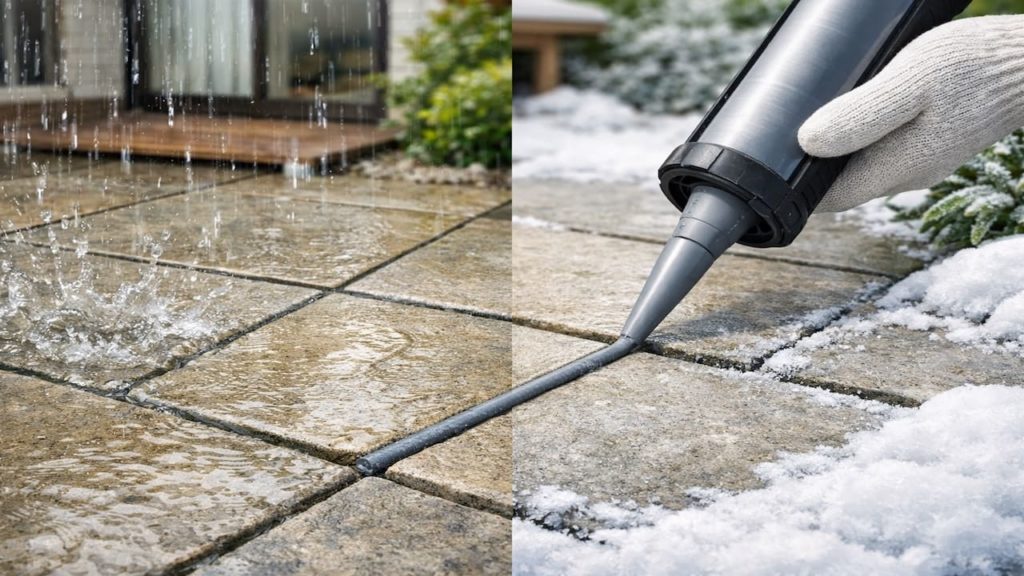
You hose off the deck, it looks fine, then puddles sit there like they own the place. The boards stay wet long after everything else dries.
Pooling can come from slope problems, low boards, clogged runoff paths, or gaps that trap water instead of shedding it. In Japan, rainy weeks and humid air keep those puddles active longer.
In this guide, you’ll learn 5 checks to stop deck puddles from forming and keep the surface drying faster. You’ll also learn which fixes are quick wins and which ones mean the frame needs attention.

Hi, I’m Ken — I’m Japanese, and I live in Malaysia long-term, so I explain everyday life in Japan from a practical ‘from abroad’ perspective.
I hold a building design qualification and I’ve been on site for 20+ years across hundreds of jobs. I turn Japan’s unspoken rules into simple checks, so you can avoid costly mistakes and take the next step with clear actions that feel safe.
1. Deck drain puddles form: 5 checks to fix pooling
Find the water path first before you touch anything
Pooling is a flow problem—water is telling you where it can’t escape. Start right after rain or a rinse, when the puddles show their true shape and edges. In Japan, decks often sit near sliding doors and narrow alleys, so runoff gets boxed in and lingers. cost is mostly time/effort, because the first job is observation and marking.
- Mark puddle edges with chalk on boards
- Check if puddles sit near door thresholds
- Watch where water exits toward the yard
- Look for algae lines showing long wet zones
- Test flow with a small cup pour
You might assume the boards are “warped” and that’s the whole story. Sometimes yes, but many puddles are caused by runoff being blocked or misdirected. Track the path, then fix the real bottleneck.
2. Slope gaps runoff
Pooling happens when slope fails or gaps trap water
Even if the deck looks flat, a tiny low spot can hold water like a shallow bowl—then it feeds grime and stays damp. Check gaps between boards; too tight can trap debris, too uneven can create little dams. In Japan’s humid seasons, leaf dust and fine grit pack into those gaps and slow drainage. cost is mostly time/effort, because you can learn a lot with simple checks and cleaning.
- Place a straightedge and spot low dips
- Check board gaps for packed debris buildup
- Confirm water has a clear exit edge
- Inspect fascia edges for drip block points
- Look for caulk lines trapping runoff
You might think “more caulk” means “more waterproof.” That can trap water on top and make puddles worse. Let water leave, not linger.
3. Why puddles keep coming back after cleaning
Puddles return when the structure stays slightly low
Cleaning removes slime, but it doesn’t change gravity, and gravity is the boss. If the frame has sag, a post settled, or a joist crown is wrong, water will keep finding that same dip. In Japan, repeated wet-dry cycling can loosen fasteners and let small deflection grow over years. cost is mostly time/effort, because diagnosis beats random repairs.
- Settled footings create a permanent low spot
- Loose joists flex down under repeated loads
- Warped boards form cups that hold water
- Debris dams redirect flow into flat zones
- Runoff from roofs dumps onto deck surface
You might blame the stain or sealer for “causing” puddles. Finish can slow absorption, but it does not create the low spot. Fix the shape and the path first.
4. How to fix pooling without making the deck worse
Fix the dip with targeted leveling and better runoff control
Start small: clear gaps, remove debris dams, and recheck flow before you rebuild anything—many puddles are just trapped runoff. If a dip remains, use targeted shimming or board replacement in the low zone, and address roof or AC drip that dumps water onto the deck. If you need basic supplies like shims, exterior screws, and a gap-cleaning tool, plan around ¥500–3,000 depending on what you already have. In Japan’s rainy stretches, let the deck dry fully before judging the result, or you’ll chase ghosts.
- Clean gaps with a thin tool and brush
- Redirect roof drip with a simple extension
- Shim low support points after confirming sag
- Replace one cupped board causing a basin
- Retest flow with a controlled rinse pass
You might want to sand everything flatter and call it solved. That can thin boards, expose fresh grain, and still leave the structural dip underneath. Fix the support and runoff path, then the surface behaves.
5. FAQs
Q1. Are deck puddles always a structural issue?
No, sometimes it’s just debris-packed gaps and blocked runoff. Check flow and gaps first before you assume sag.
Q2. How can I tell if a board is cupping?
Run your hand across the width and feel if edges sit higher than the center. If water sits in the middle strip, that board can act like a tiny tray.
Q3. Should I seal the deck to stop puddles?
Sealer can help drying and reduce water absorption, but it will not remove a low spot. If slope is wrong, sealing just makes the puddle look shinier.
Q4. Can I fix pooling by filling gaps with caulk?
Usually that makes drainage worse, because water loses its escape routes—leave gaps clear and consistent instead.
Q5. When is it time to call a pro?
If the deck is pulling away, posts look tilted, or the low spot keeps growing, stop guessing. That’s when a structural check saves money and headaches.
Pro's Tough Talk

I’ve spent 20+ years working around Japanese homes, so I’ve seen what tends to work—and what tends to go wrong—in everyday use. Puddles aren’t “just annoying,” they’re a wet timer counting down toward slime and rot. Water is a lazy thief, it takes the easiest path and keeps coming back.
Here’s the cold split: slope is too flat, a dip exists, or runoff is dumping where it shouldn’t. You didn’t do something dumb, the deck just has a weak point and water exploits it. Builders don’t always plan for real-world debris and drip lines, so a small design choice turns into a daily wet spot. That’s the mechanism.
Mark the puddle edge now. Clean the gaps today. Reroute the drip and retest this weekend.
Fix the path and the low spot and the deck stops staying wet all the time. If you still get the same puddle after two clean-and-retest cycles, the next move is leveling support or swapping that one bad board.
A puddle is a magnet for gross surprises. Bruh. You step out with coffee, splash your sock, and suddenly your morning is ruined. Or you put a chair down, it wobbles in the wet dip, and you realize the deck is trolling you.
Summary
Stop puddles by tracking the water path, checking slope, and clearing board gaps that trap debris. Most fixes start with flow, not products.
If puddles return, suspect a low spot from cupped boards, sagging support, or runoff dumping onto the deck. After two test cycles, upgrade the fix to leveling or board replacement.
Do the flow check and gap clean today so the deck dries faster after the next rain. Once it stays dry, you can focus on stain and comfort instead of fighting water.