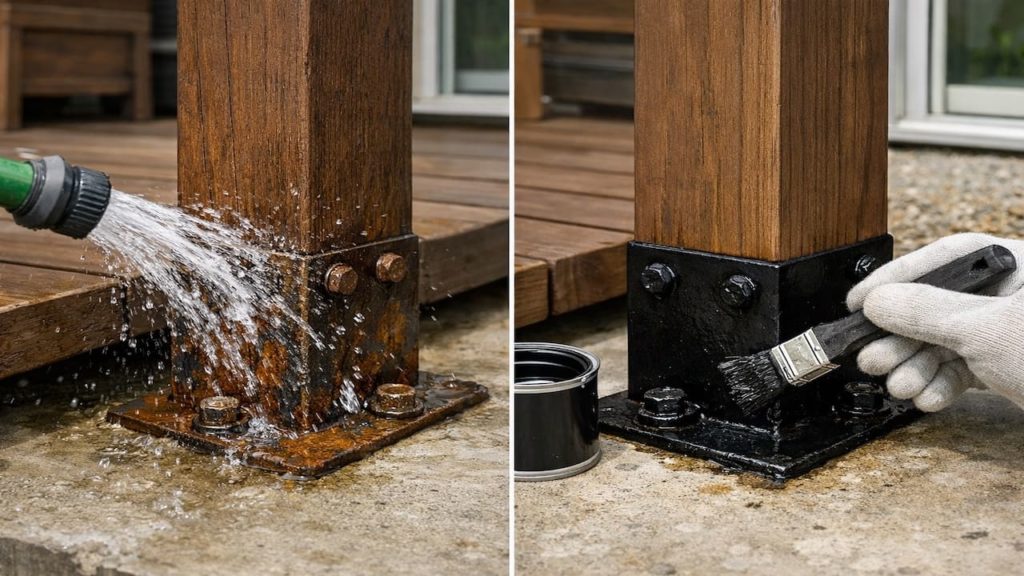
You see tiny rust freckles around deck screws and bolts, and it looks harmless at first. Then the stains spread, and every fastener starts looking suspicious.
Coastal air is loaded with salt mist, and Japan’s humidity keeps that salt wet on metal for longer than you expect. Even “stainless” can stain when chlorides sit in crevices.
In this guide, you’ll learn how to judge fastener rust fast in salty air without guessing. You’ll spot the real cause, pick the right stainless grade, and stop the stains from coming back.

Hi, I’m Ken — I’m Japanese, and I live in Malaysia long-term, so I explain everyday life in Japan from a practical ‘from abroad’ perspective.
I hold a building design qualification and I’ve been on site for 20+ years across hundreds of jobs. I turn Japan’s unspoken rules into simple checks, so you can avoid costly mistakes and take the next step with clear actions that feel safe.
1. Deck fastener rust spots: 5 checks for coastal air
Rust spots near the coast are usually salt plus trapped moisture.
Fasteners fail first because they have tiny gaps around heads, washers, and countersinks. Salt sits there, stays wet, and starts tea-staining long before the wood looks bad in Japan’s sticky summer. Sneaky damage—fast.
- Check orange rings around screw heads after rain
- Inspect washers for rust dust and streaks
- Look for stains that start under rail posts
- Check shady corners where drying is slow
- Compare windward side to sheltered side fasteners
You might think it is just surface discoloration — sometimes it is, but it is still telling you where salt is camping. If you ignore the pattern, the same wet crevice keeps feeding corrosion. Map the spots first, then fix the cause.
2. Stainless grades
Not all stainless survives salty air the same way.
Coastal air is a chloride environment, so pitting and crevice corrosion are the main enemies, not just “rust.” Grade 316 is often chosen for sea-front fittings because it resists pitting and crevice corrosion better than 304 in warm chloride exposure. According to assda.asn.au.
- Confirm if fasteners are 304 or 316
- Check packaging for A2 vs A4 marking
- Watch for “stainless” with no grade listed
- Check if screws are magnetic after installation
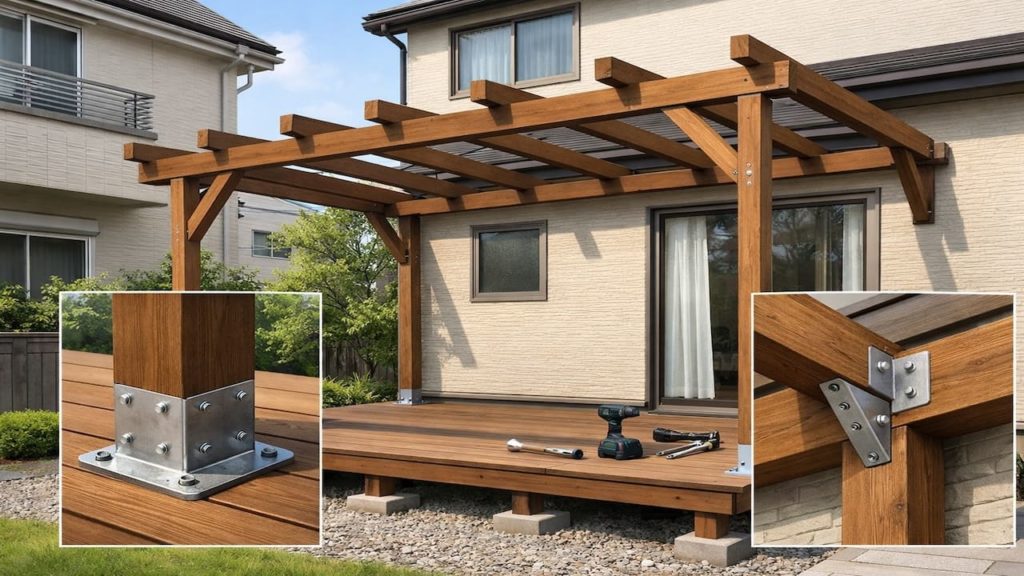
- Confirm washers match the same grade fasteners
You might hear “304 is fine everywhere” — it can be fine inland, but salt air punishes crevices. The grade label matters more than the shiny look. If the grade is unknown, assume it is the cheaper one and plan accordingly.
3. Why fastener rust spots show up in coastal decks
Rust spots spread when salt gets trapped under heads and in holes.
Salt mist lands, then dew rewets it at night, and the cycle repeats without a dramatic splash. On Japanese decks, rail posts and corner joints create shade and low airflow, so the metal stays damp longer. That’s where staining starts.
- Salt collects under screw heads and washers
- Water sits in countersinks and pilot holes
- Wood tannins can darken around wet fasteners
- Dissimilar metals can accelerate local corrosion
- Surface grime holds moisture against the steel
You might blame the wood finish — but the metal is usually the trigger point. If you see matching stains on many fasteners, it’s not random, it’s exposure plus crevices. Fix the moisture trap, or the spots keep returning.
4. How to stop rust spots and pick better fasteners
Clean the salt off then upgrade the worst fasteners to 316.
Start with cleaning and drying so you can tell staining from active corrosion, then address the worst locations first. For coastal decks, swapping key screws and bolts to 316 can be worth it, and you can expect ¥1,500–6,000 for a small batch depending on size and quantity. According to portlandbolt.com.
- Rinse fasteners and joints with fresh water
- Scrub stains gently and remove salty grime
- Dry the area and recheck after 24 hours
- Replace worst fasteners with 316 grade sets
- Add small gaps so water cannot stay trapped
You might want to just coat everything and forget it — coating over salt is like painting over sand. Clean first, then upgrade, then reduce traps. If stains return fast on “stainless,” the grade or the crevice design is the issue, not your luck.
5. FAQs
Q1. Are rust spots on stainless screws always a sign of failure?
No, light tea-staining can be surface-only, but it still shows chloride exposure—watch if it returns after cleaning. If you see pits or rough craters, treat it as active corrosion.
Q2. Is 316 always required for a coastal deck?
Not always, but it is safer on exposed rails, edges, and windward faces. If your deck gets sea mist regularly, 316 reduces the headache cycle.
Q3. Why do stains show up around some screws but not others?
Different micro-spots dry differently, especially under posts and in shade. A small crevice or trapped debris can make one screw stay wet longer.
Q4. Can I mix stainless screws with other metal brackets?
Mixing metals can increase corrosion risk at contact points if moisture stays there. Match materials when possible, and keep the joint clean and dry.
Q5. What is the quickest maintenance routine near the ocean?
Rinse with fresh water after salty winds or storms, then let it dry with airflow. A quick wipe around heads and washers stops salt from camping.
Pro's Tough Talk

I’ve spent 20+ years working around Japanese homes, so I’ve seen what tends to work—and what tends to go wrong—in everyday use. Coastal rust is like glitter at a party, it gets into everything and never leaves on its own.
The mechanism is simple and mean: salt lands, dew rewets it, crevices keep it trapped, and the fastener sweats corrosion. This is not you being careless, and it is not the builder being evil, it is chemistry doing push-ups in the corner. A stainless screw is not a magic talisman.
Right now, rinse the worst areas with fresh water and dry them. Today, scrub off grime around heads and washers and let it air out. This weekend, replace the fasteners that keep staining and open small gaps where water sits.
If you see pits or rough craters you replace the fastener, no debate. If it is only light staining that wipes off and stays clean, keep rinsing after salty weather and move on. That’s the line.
You finish a long day, step onto the deck barefoot, and see orange streaks like the screws are leaking tea. Seriously. Then you try to “ignore it,” and next week you are outside with a brush in one hand and a flashlight in the other.
Summary
Rust spots on deck fasteners near the coast usually come from salt trapped in crevices, not a single bad screw. Check patterns around heads, washers, shady corners, and windward exposure.
If stains return after cleaning or you see pitting, upgrade the worst fasteners and reduce water traps. If it wipes off and stays clean, rinse after salty winds and keep airflow.
Start with cleaning then choose the right stainless grade so you stop chasing stains every month. Once the metal stays clean, the whole deck feels easier to maintain.