You walk the patio steps and one of them feels “wrong,” like your foot expects a different height. That tiny surprise is exactly how trips happen.
It can be uneven rise, a sinking edge, or a visual trick caused by tile lines and lighting. In Japan, wet seasons and small settlement can shift step edges just enough to create a hazard.
In this guide, you’ll learn 5 checks to spot trip hazards from uneven step height and what to do first. You’ll learn how to measure rise consistency and where to look for edge movement that keeps getting worse.

Hi, I’m Ken — I’m Japanese, and I live in Malaysia long-term, so I explain everyday life in Japan from a practical ‘from abroad’ perspective.
I hold a building design qualification and I’ve been on site for 20+ years across hundreds of jobs. I turn Japan’s unspoken rules into simple checks, so you can avoid costly mistakes and take the next step with clear actions that feel safe.
1. Patio step height feels off: 5 checks for trip hazards
One odd step is enough to cause most stumbles.
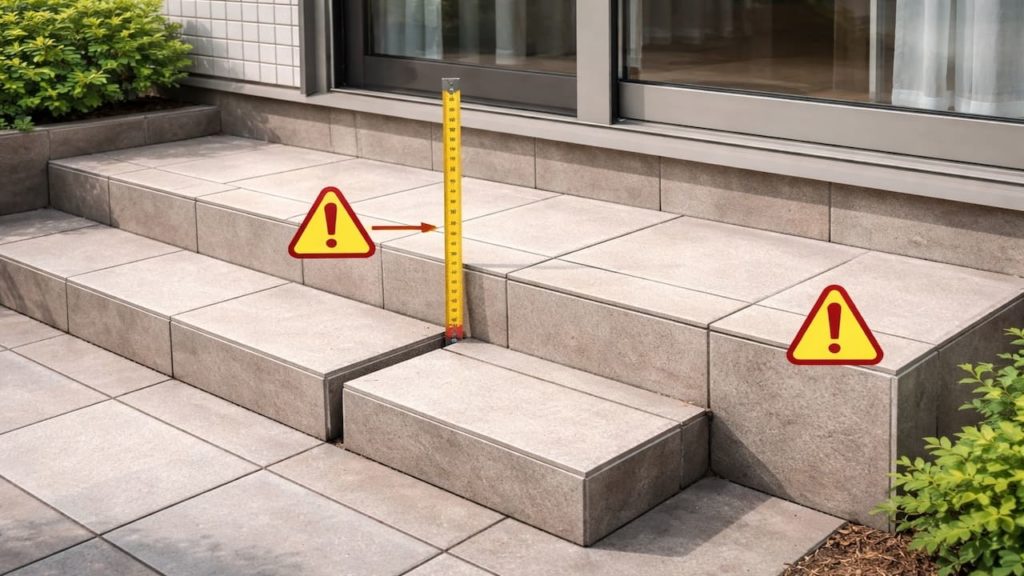
You don’t need a huge defect to trip, just one rise that breaks your rhythm. Start by checking if the “off” feeling is real height difference or edge settlement creating a toe-catching lip. In Japanese patios, narrow drainage paths can wash support out near step corners, making the edge drop. If you find a consistent pattern, you can fix it instead of guessing.
- Measure each riser with the same tape method
- Check for a lip at the tread edge line
- Test wobble by stepping on outer corners
- Look for one step that holds puddles longer
- Mark the odd step and recheck after rain
Some people assume it is just them being clumsy. Nope. Your body detects rise changes fast. If you feel it, it’s worth checking, because wet tiles plus a bad rise is a clean recipe for a fall.
2. Rise consistency and edge
Consistency matters more than the exact number.
Use a tape measure from tread to tread, and also check the edge line with a straightedge to see if settlement created a toe-catching ridge. If you want a fast “DIY measurement kit,” it is usually ¥500–2000 for a solid tape, a short level, and some marking tape—cost is mostly time/effort if you already have them. In Japan’s humid months, algae film can hide small lips, so do checks when the surface is dry and bright.
- Measure rise at left center and right
- Compare tread depth so foot placement stays stable
- Use a level to check slope on each tread
- Check nosing edge for chips and lifted tile
- Confirm handrail grip where people naturally reach
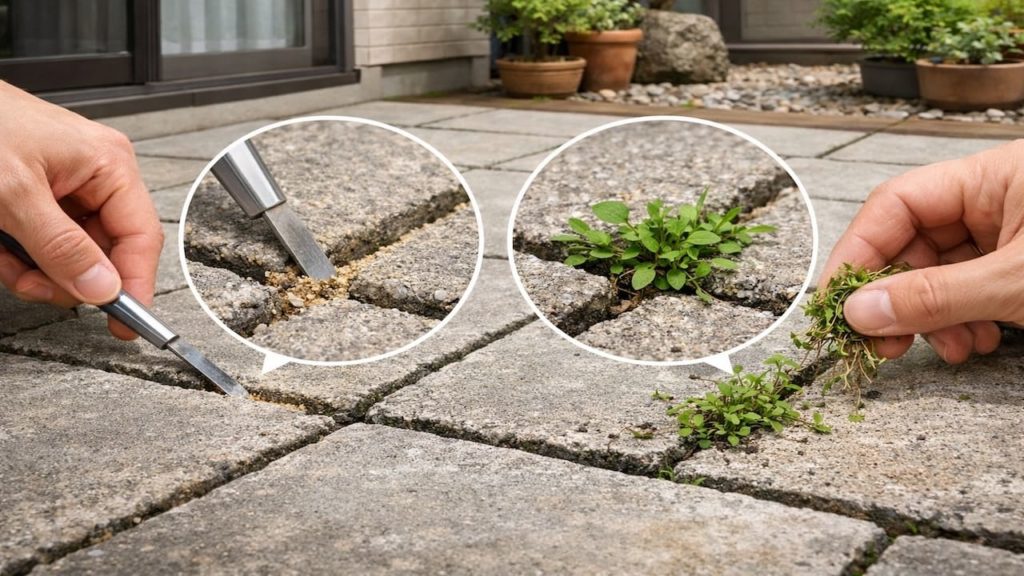
People focus only on the riser height and miss the edge. A small lifted tile at the nosing can feel like a taller rise. If the edge is changing, that is movement or damage. Fix the edge and the “off” feeling often disappears.
3. Why steps feel wrong even when they look fine
Feet notice rhythm breaks that eyes overlook.
Your brain predicts the next step height based on the last one, so one irregular rise triggers a stumble. Settlement at one corner can also twist the tread and change effective rise on one side. Wet conditions make the problem worse because traction drops, so you can’t recover as easily. In Japan, rain and humidity can keep tile slick and make tiny geometry issues more dangerous.
- One uneven rise breaks your walking rhythm
- Corner settlement creates a twisted tread surface
- Edge chips act like a hidden toe catch
- Wet film reduces recovery when you misstep
- Lighting shadows hide height changes at night
Some folks try to solve this by adding a mat only. Mats can help traction, but they can also hide the problem and create a new trip edge. Use traction aids only after you confirm the geometry is stable. Fix the cause, then add safety upgrades.
4. How to reduce trip risk without rebuilding the whole step
First make it safe then correct the unevenness.
Start with immediate safety: add a high-contrast edge strip, improve lighting, and keep the tread clean and grippy. Then address the cause: reset a lifted tile, relevel a settled corner, or patch a chipped nosing. For basic supplies like anti-slip tape, a small repair compound, and replacement caps, expect ¥1000–6000 depending on what you need. In Japan’s rainy weeks, schedule repairs when the surface can dry, because patching on damp steps fails fast.
- Add anti slip strip on the step nosing
- Clean algae film so traction returns
- Fix lifted tiles that create toe catch edges
- Relevel settled corners and compact base properly
- Improve lighting so shadows do not hide edges
Some people try to “build up” the low step with thick coating. That can peel and create a worse lip. If the step is settling, you need base stability. If the tile is lifted, you need reset and proper bonding. Do the correct fix and it stays safe.
5. FAQs
Q1. How much rise difference is enough to be a trip hazard?
Even small differences can cause stumbles because your foot expects repetition. If you can feel it walking normally, measure it and treat it as a safety issue.
Q2. Could it be just tile pattern making it feel off?
Yes, strong lines and shadows can trick your eyes, but your foot reaction matters more. Measure rise at multiple points to separate illusion from real height change.
Q3. Can I fix this with a rug or mat?
A mat can improve traction, but it can also create a new trip edge and trap damp underneath. Use mats carefully and don’t let them hide a real lip or wobble.
Q4. What if only one corner feels higher?
That suggests twist or settlement, not just a riser issue. Check edge level and corner support, especially where runoff hits after rain.
Q5. When should I call a pro?
If the step rocks, the risers vary a lot, or cracks keep expanding. Steps are safety-critical, so movement problems are worth a professional check.
Pro's Tough Talk

I’ve spent 20+ years working around Japanese homes, so I’ve seen what tends to work—and what tends to go wrong—in everyday use. One weird step is all it takes to turn a normal walk into a near-faceplant, especially when the tiles are damp.
Three causes show up again and again: uneven rise, a lifted nosing edge, or a corner that settled and twisted the tread. Your feet are honest, your eyes are lazy, and the step doesn’t care which one you trust. It’s like a bad beat in a song, your body trips over the rhythm. You carry laundry, you glance away for one second, and that odd step tries to collect rent from your shins.
Right now, mark the odd step and measure every riser. Today, check the nosing edge for a lip and clean the tread so it grips. This weekend, fix the lifted tile or relevel the settled corner so the rise becomes consistent again.
Do that and the steps feel normal again. If the edge has a lip you treat it as urgent because that toe catch plus wet tile is a fall waiting to happen. If measurements show consistency but it still feels off, improve contrast and lighting so your foot and eyes agree.
Nope.
Keep ignoring the “one weird step” and one rainy morning it’ll remind you with interest. Fix the rise and the edge before it fixes you.
Summary
Steps feel off when one rise breaks your rhythm or an edge lip catches your toe. Measure each riser, check for twist and settlement, and inspect the nosing edge carefully.
Reduce trip risk fast with traction strips and better lighting, then fix the cause by resetting lifted tiles or releveling settled corners. Avoid mats that hide defects or create new edges.
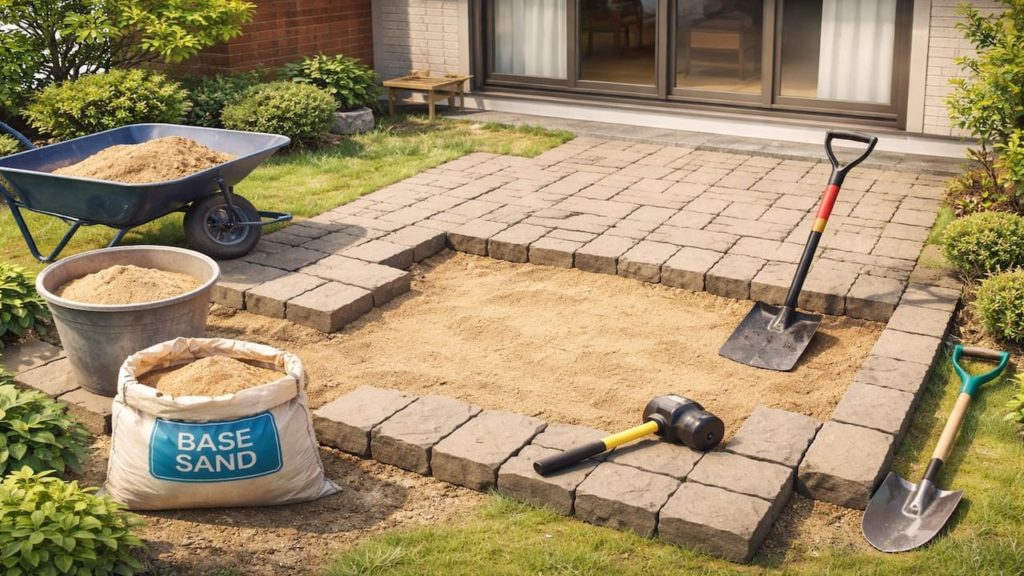
Measure every riser and check the nosing lip today so you know if it is geometry or just visual trickery. Then move to the next patio base or drainage fix that matches what you find.