You walk across the patio and it feels uneven, like small dips and high spots keep catching your feet. It’s tempting to blame the base right away, but the surface can lie.
Uneven feel can come from settling, voids, lifted edges, or even grime film that changes traction and makes you “feel” bumps. In Japan, rainy weeks and tight outdoor corridors can speed up small shifts and make the surface feel worse.
In this guide, you’ll learn 5 checks to confirm what is making your patio feel uneven before you tear into the base. You’ll also learn how to find settling and void spots without guessing.

Hi, I’m Ken — I’m Japanese, and I live in Malaysia long-term, so I explain everyday life in Japan from a practical ‘from abroad’ perspective.
I hold a building design qualification and I’ve been on site for 20+ years across hundreds of jobs. I turn Japan’s unspoken rules into simple checks, so you can avoid costly mistakes and take the next step with clear actions that feel safe.
1. Patio surface feels uneven: 5 checks before you blame the base
Prove whether the problem is height or traction.
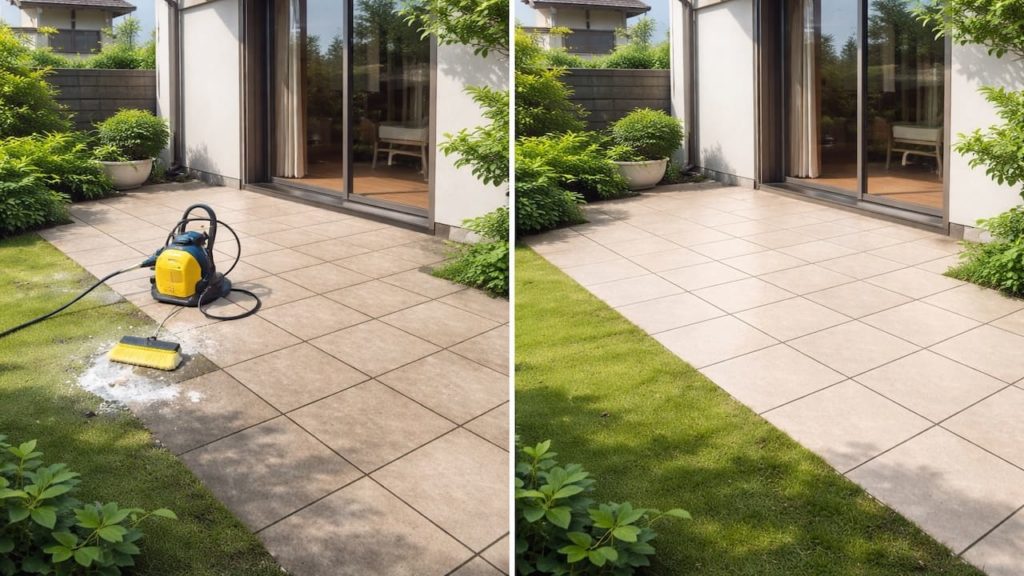
Start by separating a true elevation change from a slippery film or gritty patch that tricks your feet. A real height issue will show with a straightedge and repeat in the same line, while traction issues change after cleaning and drying. In Japanese patios, algae film in shade can make you step differently and think the surface is “warped.” Do quick checks that give yes or no answers.
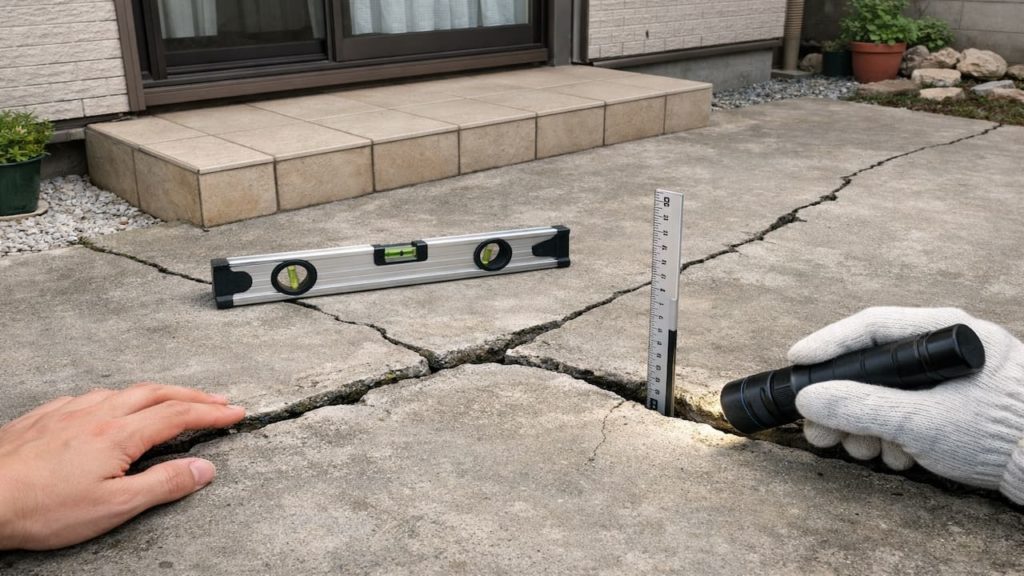
- Run a straightedge and measure gaps under it
- Mark dip and high spots with chalk after rain
- Check if uneven feel changes after deep cleaning
- Look for one lane where joints are opening
- Test corners for rocking when you step down
Some people jump straight to “the base failed.” That can be true, but you can confirm it in minutes. If cleaning changes the feel, you had a film problem too. If the straightedge shows real gaps, then you chase structure.
2. Settling and void spots
Settling makes dips while voids make hollow and sudden drop zones.
Settling usually creates gentle slope changes over a wider area. Voids feel sharper: a tile or paver sounds hollow and can rock or sink with a step. For basic inspection tools like a short level, a straightedge, and marking tape, expect about ¥1000–4000—cost is mostly time/effort if you already have a broom and flashlight. In Japan’s wet seasons, voids can grow faster near edges and drains where water carries fines away.
- Tap tiles and listen for hollow tone change
- Press near joints to see if it flexes
- Probe edge gaps for hidden empty space
- Watch for joint sand loss in one direction
- Look for new puddles that did not exist before
People try to “fill dips” from the top without checking for voids. If there’s air under the surface, top patches crack again. Find voids first. Settling you can manage, voids you must stabilize.
3. Why patios become uneven over time
Water, compaction loss, and edge movement are the main drivers.
Base material can loosen if it stays wet and fines wash out through joints or drain paths. Edges settle more because they have weaker confinement and see runoff exposure. Temperature changes can also move slabs, and repeated foot traffic can “pump” material out of weak spots. In Japan, narrow side yards can channel rain along one line, making one strip settle faster than the rest.
- Water washout removes fines and creates dips
- Edges settle first because confinement is weaker
- Puddles feed the same low line and worsen it
- Traffic vibration pumps material out through joints
- Freeze cycles pry open gaps that invite water
Some think unevenness is just old age. Not really. It’s a water path and support issue. If you change the water path and stabilize support, the surface stops drifting out of level.
4. How to fix uneven feel with the smallest effective repair
Target the low line and stabilize the support before cosmetic work.
Start by fixing drainage so water stops feeding the low area, especially near walls, drains, and edges. If you have pavers or tiles you can lift, reset only the affected zone and rebuild the base in compacted layers. If it is a slab, you may be looking at patching, grinding, or professional lifting depending on severity. For a small paver reset, materials and tools can run ¥3000–20000 depending on area—cost is mostly time/effort if you do it yourself and keep it dry during repair. In Japan, time the work to avoid surprise rain so your base doesn’t turn to mud.
- Fix water path so low area stops being fed
- Lift and reset only the uneven paver zone
- Rebuild base in thin compacted lifts
- Add edge restraint to prevent future creep
- Recheck with straightedge after the next storm
Some people try to solve everything with a thick coating or sealer. That hides and fails. If the surface is moving, you need stability. Fix support and drainage, then do finishing work. That order saves you from repeating repairs.
5. FAQs
Q1. How do I know if it is just dirt film making it feel uneven?
If deep cleaning changes the feel it was partly traction and film. Real height changes show under a straightedge even after cleaning and drying.
Q2. What is the fastest way to find a void?
Tap with a handle and listen for a hollow tone, and check for rocking under foot pressure. Voids often show near drains, edges, and spots where sand keeps disappearing.
Q3. Can I ignore small dips if they are not growing?
If they stay stable and don’t hold water, you can monitor them. If puddles form or the dip grows after storms, fix drainage and support before it spreads.
Q4. Why is the unevenness worse in rainy season?
Wet soil softens, fines wash out, and joints lose sand, all of which increases movement. Humidity also keeps surfaces slick so your feet notice changes more.
Q5. When is it time for a full rebuild?
If many areas rock, voids are widespread, or slope now sends water to the house. If only one lane is affected and the rest is stable, targeted resets are usually enough.
Pro's Tough Talk

I’ve spent 20+ years working around Japanese homes, so I’ve seen what tends to work—and what tends to go wrong—in everyday use. When a patio feels uneven, people love to blame the base like it’s a villain, but sometimes it’s just a slick film messing with your feet.
Three realities: true settlement makes gentle dips, voids make hollow danger spots, and edges move first because they’re weak and wet. A void is like a missing tooth under the surface, it bites back when you step on it. You walk out with a cup of coffee, feel that one soft spot, and suddenly you’re doing a careful little dance like the floor is judging you. It is.
Right now, run a straightedge and mark the worst gaps. Today, tap for hollow zones and trace where water pools after rain. This weekend, stabilize the low line and stop water from feeding it before you patch anything.
Do that and the surface stops drifting. If a spot sounds hollow or rocks underfoot you treat it as a void and you fix support first, not cosmetics. If the straightedge shows only tiny variation and cleaning changes the feel, you’re dealing with film plus minor settlement, not a base collapse.
Nope.
Keep guessing and you’ll either waste money on fake fixes, or step into the one spot that finally gives up. Do the checks and stop the drama.
Summary
Uneven patio feel can come from real height changes or from traction film that tricks your feet. Use a straightedge, puddle marks, and a cleaning test to separate the causes.
Settling makes broad dips while voids create hollow rocking spots, often near edges and drains. Fix drainage and stabilize support before patching or sealing, or the unevenness returns.
Run a straightedge check and tap for hollow spots today so you stop blaming the base on guesses. Then move to the next patio drainage or base stability topic that matches what you find.