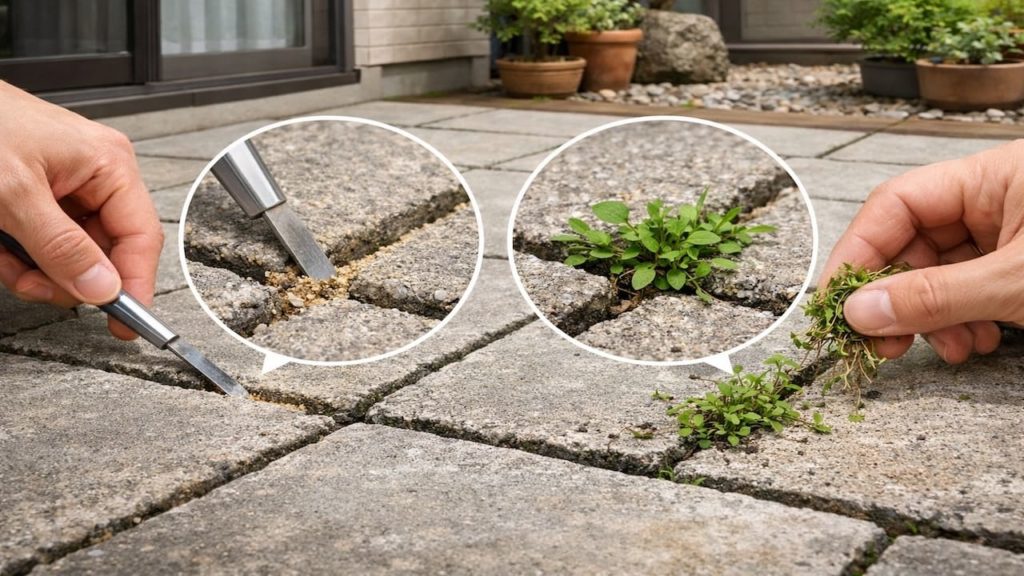
You spot weeds popping out of your patio joints again, even after you cleaned and brushed. Now you’re thinking about resealing the gaps and making it “final.”
But weeds return for a few different reasons, and sealing too early can trap the real problem. In Japan’s humid rainy weeks, joints stay damp longer, so tiny gaps turn into mini planters fast.
In this guide, you’ll learn how to check the real cause before resealing patio joints so you don’t waste time and money. You’ll know when sand depth and sunlight matter more than any sealer.

Hi, I’m Ken — I’m Japanese, and I live in Malaysia long-term, so I explain everyday life in Japan from a practical ‘from abroad’ perspective.
I hold a building design qualification and I’ve been on site for 20+ years across hundreds of jobs. I turn Japan’s unspoken rules into simple checks, so you can avoid costly mistakes and take the next step with clear actions that feel safe.
1. Patio weeds in joints: 5 checks before you reseal the gaps
Resealing works only after you confirm why weeds are winning—not before.
Weeds in joints are usually about conditions, not luck. Seeds land, moisture stays, and light hits the right angle, then they root into loose sand and dust. If you seal without fixing the conditions, weeds can still sprout in tiny cracks, or they grow at the edges where sealant never truly closes. In Japan, patios near walls and fences often stay shaded and damp, which feeds the cycle.
- Check if weeds cluster only in one sunny strip
- Probe joints for loose sand and soft spots
- Look for soil spill from planters onto joints
- Confirm water flow path after heavy rain
- Inspect edges where joints open wider
It’s easy to blame the sand and rush to seal. But sealing is the final layer, not the diagnosis. If water and dirt keep entering, you’ll reseal again. Same weeds, new frustration.
2. Sand depth and light
Shallow sand and strong light are the perfect weed combo—especially in patchy shade.
If sand is too shallow, roots grab the base dust and lock in fast. If sand is deep but loose, it becomes a soft nursery that holds moisture and air, so seeds sprout easily. Light is the other half of the equation, because most weeds need it to keep going, and patios often get weird “stripe sun” between buildings. In Japan’s summer humidity, even a small amount of morning sun can be enough if the joints stay wet.
- Measure joint depth with a zip tie probe
- Check if sand level is below tile edges
- Watch sun patterns across joints for a week
- Inspect if shade corners stay damp all day
- Look for moss film that holds moisture
Some people only look at sand and ignore light. Then they reseal, but the same sunny lane still grows green at the edges. Treat light like a design problem. Trim, move, or block what feeds the lane.
3. Why weeds keep coming back in patio joints
Weeds return when joints keep getting dirt moisture and airflow—that’s the engine.
Dirt and dust settle into joints from wind, shoes, and nearby soil, and that becomes growing medium. Water from rain, roof drip, or sprinklers keeps the joint damp long enough for roots to establish. If your patio drains slowly, the joint stays wet, and weeds get a free head start before you even notice. In Japan, narrow side passages can trap moisture and reduce drying, so the same joints regrow faster than you expect.
- Dirt fills joints and becomes growing medium
- Moisture lingers due to slow drying conditions
- Roof drip keeps one edge constantly wet
- Loose joints let roots anchor deeper over time
- Edge gaps invite soil and seeds repeatedly
People say “I pulled them all, so it’s done.” Not really. Pulling removes the plant, not the habitat. Remove the habitat and weeds stop acting confident. Otherwise you’re just resetting the timer.
4. How to reset joints so weeds stop before resealing
Clean out the joint habitat then rebuild the joint tight—and only then seal.
Start by removing weeds and their roots fully, then flush out the joint dirt that acts like soil. Let everything dry, then refill joints to the correct depth and compact so the sand locks and stops accepting seeds. If you’re buying joint sand, a joint brush, and a compatible sealer, plan roughly ¥3000–15000 depending on area and product, and do the work on a dry stretch so the joints cure clean. In Japan’s rainy season, this is the difference between “fixed” and “back in two weeks.”
- Pull weeds and extract roots from deep joints
- Flush joint dirt out and rinse until clear
- Let the patio dry fully before refilling joints
- Refill sand to proper depth and compact gently
- Seal only after joints are stable and dry
Some people spray, rinse, and immediately seal because they want it finished. That traps moisture and leaves sand loose, so cracks form and weeds return at the edges. Do it in stages and give it a dry window. If your patio always stays damp, fix drainage before resealing.
5. FAQs
Q1. Should I use weed killer before resealing?
Use removal and cleaning first, because chemicals won’t fix dirt and moisture in the joint. If you do use a product, apply it only after the joint is dry and stable.
Q2. Why do weeds grow only in certain lines?
Those lines usually get better light, more drip, or more dirt input from edges. Track sun and water patterns for a week and the pattern usually explains itself.
Q3. Can I just add more sand and skip sealing?
Sometimes yes if the main problem is low sand depth and loose joints. If rain keeps washing sand out, you need better compaction and possibly a sealer.
Q4. What if weeds come back right after I refill sand?
That often means dirt stayed in the joint or the area stayed damp during cure—then seeds sprout immediately. Clean deeper, dry longer, and rebuild the joint tighter.
Q5. Are weeds a sign the base is failing?
Not always, but if pavers rock or joints keep opening, movement may be feeding gaps. Check stability first, because sealing a moving patio is just makeup.
Pro's Tough Talk

I’ve spent 20+ years working around Japanese homes, so I’ve seen what tends to work—and what tends to go wrong—in everyday use. In Japan’s humid rainy stretches, joints turn into little gardens if you let them.
Three reasons, no drama: the joint is full of dirt, the joint stays wet, and the joint gets enough light to power growth. A patio joint is basically a skinny flowerpot, and seeds love free real estate. It’s like trying to keep toast dry in the rain, it won’t happen if you keep leaving it out.
Right now, stop thinking sealer is magic. Today, clean the joint like you’re removing soil, not just weeds. This weekend, rebuild the joint tight and let it dry before you seal.
Do that and you stop feeding the problem. If you do all that and weeds still pop up the next move is changing the habitat: reduce drip, improve drainage, and cut the light lane so joints dry faster. That’s the real “final fix.”
Nope.
You can keep resealing a weed farm, or you can stop giving weeds a comfy bed and call it done.
Summary
Weeds in patio joints usually mean the joint has dirt, moisture, and enough light to keep plants alive. Check sand depth, sun lanes, water flow, and edge gaps before you reseal.
Reset the joints by removing roots, flushing out joint dirt, drying fully, then refilling and compacting sand before sealing. If joints stay damp or sand keeps washing out, fix drainage and drip paths first.
Clean one joint lane deeply and test sand depth today so you know if you’re fighting habitat or just low sand. Then keep going with the next patio joint or drainage fix that matches what your checks reveal.