You step on a patio paver and it rocks like a loose tooth. It’s annoying now, but it can turn into a trip hazard fast.
Wobble usually means the paver lost support, the bedding sand is uneven, or the joints aren’t locking the field together. In Japan, heavy rain and humid weeks can wash fines out and soften the base quicker than you expect.
In this guide, you’ll learn 5 checks to stabilize wobbling pavers for good using base sand and compaction the right way. You’ll know what to fix first so the wobble doesn’t come back after the next storm.

Hi, I’m Ken — I’m Japanese, and I live in Malaysia long-term, so I explain everyday life in Japan from a practical ‘from abroad’ perspective.
I hold a building design qualification and I’ve been on site for 20+ years across hundreds of jobs. I turn Japan’s unspoken rules into simple checks, so you can avoid costly mistakes and take the next step with clear actions that feel safe.
1. Patio pavers wobble: 5 checks to stabilize them for good
Wobble means the paver is not sitting on a flat supported bed.
One paver rocking often points to a local low spot, a void under one corner, or a base layer that softened and shifted. The goal is to confirm whether it’s a single-unit issue or a sign the whole area is loosening. In Japanese patios, runoff lanes and shade corners stay damp longer, so the same few pavers keep getting loose first. If you stabilize the bed and lock the joints, you stop the repeat.
- Press each corner to find the rocking point
- Check if adjacent pavers are also moving
- Look for joint sand loss around the wobble
- Tap for hollow sound indicating a void below
- Watch if wobble worsens right after heavy rain
Some people just add sand into the joint and hope it tightens. That is cosmetic if the paver is floating on an uneven bed. First fix the support under it. Then joint sand becomes a lock, not a bandage.
2. Base sand and compaction
Bedding sand must be level and compacted enough to support corners.
If the bed is too thick, too loose, or uneven, corners settle and the paver starts rocking. If the base below is soft, the sand bed will keep moving no matter how perfect you level it. For basic supplies like bedding sand, joint sand, and a hand tamper, expect about ¥2000–12000 depending on area—cost is mostly time/effort if you already have tools. In Japan’s rainy season, don’t rebuild on wet base, because wet sand compacts poorly and the wobble returns.
- Lift the paver and clean the bed surface
- Check for soft base and muddy sand below
- Relevel bedding sand in a thin even layer
- Compact base properly before resetting paver
- Sweep joint sand and compact the field again
People love to “add more sand” to fix a low corner. More sand often makes it worse by creating a thicker sponge. Thin, level, and supported is the rule. Fix the base first, then the sand layer can actually behave.
3. Why pavers start wobbling in the first place
Support changes when water and vibration move fine material.
Water can wash fines out through joints and edges, creating tiny voids under corners. Traffic vibration can also pump sand and dust away from high load points like steps and door exits. Edges loosen first when restraint is weak, because the field can spread and joints open. In Japan, narrow corridors and gutters can concentrate runoff so one strip gets punished every storm.
- Joint washout removes confinement and support
- Edge restraint failure lets pavers creep outward
- Soft base spots settle under repeat foot traffic
- Drain paths scour bedding and create void pockets
- Freeze cycles widen gaps and loosen corners
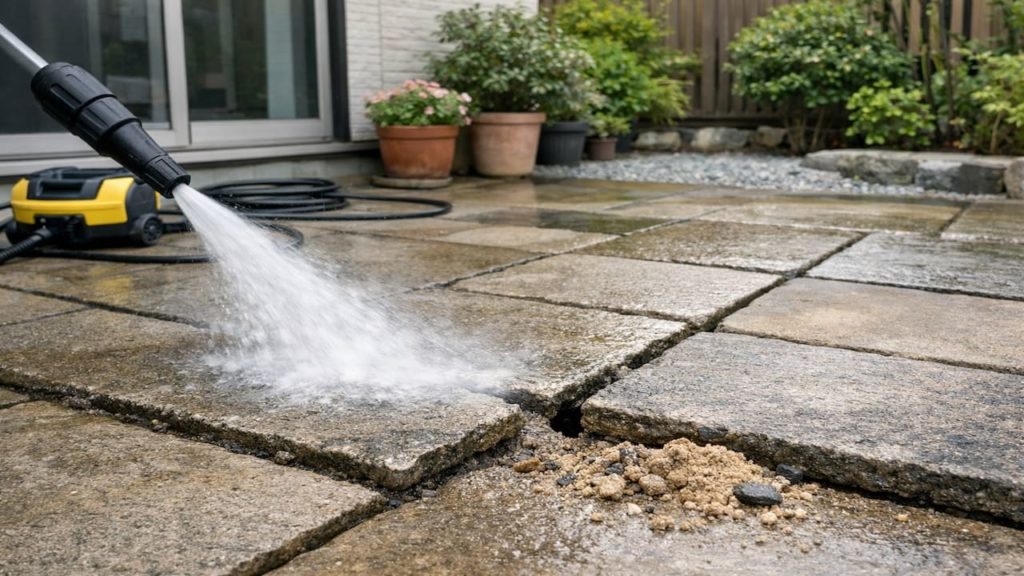
Some people blame the paver quality. Usually it’s the support system, not the paver itself. If your pavers were stable and then got loose after rain or pressure washing, you changed the joint and base conditions. Fix those and the same pavers become solid again.
4. How to stabilize wobbling pavers so they stay stable
Reset the unit on a firm base then lock the field with joints.
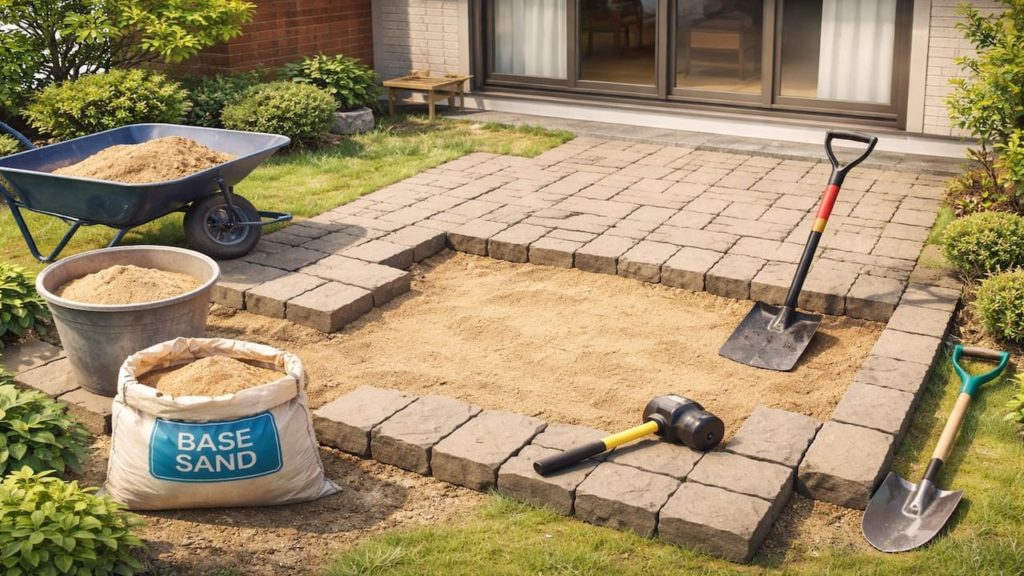
Lift the paver, scrape out loose sand, and inspect the base beneath for soft spots or voids. Rebuild the base in thin compacted lifts if needed, then place a thin, level bedding layer and reset the paver flush with neighbors. After that, refill joints and compact the area so the pavers act as one unit. In Japan, plan a dry window so the base and sand stay dry during compaction, because water ruins your “firm” feeling.
- Remove paver and vacuum loose sand debris
- Recompact base until it feels firm and flat
- Lay thin bedding sand and screed it level
- Reset paver and tap until flush with neighbors
- Refill joints and compact twice for lock in
Some people try to inject random filler under a corner. That can lift unevenly and trap water, and it never locks the field together. The real fix is mechanical: firm base, thin bed, tight joints. Do the boring steps and the wobble disappears for good.
5. FAQs
Q1. Can I fix wobble without lifting the paver?
Sometimes only if it is tiny and caused by missing joint sand, but most wobble is bed support. If the paver rocks at a corner, lifting and releveling is the real fix.
Q2. Why does wobble get worse after rain?
Rain softens the base and can wash fine material out, creating more voids. It also makes joint sand migrate, reducing confinement.
Q3. Is polymeric sand necessary to stop wobble?
It can help lock joints, but it won’t fix a bad bed. Fix support first, then choose joint sand based on your climate and washout risk.
Q4. What if multiple pavers wobble in the same area?
That suggests base settlement over a wider zone, not a single corner issue. You may need to lift a section, recompact the base, and reset the area.
Q5. When should I call a pro?
If the area keeps settling, slope sends water to the house, or you find large voids and soft base. Regrading and drainage fixes can require heavier tools.
Pro's Tough Talk

I’ve spent 20+ years working around Japanese homes, so I’ve seen what tends to work—and what tends to go wrong—in everyday use. A wobbling paver is your patio telling you the support system got lazy.
Three causes show up every time: the base softened, the bedding sand got uneven, or the joints stopped locking the field. A rocking paver is like a chair with one short leg, it will never feel stable no matter how many times you stare at it. You step out with slippers, it tilts, and your brain goes “oh come on.” Been there.
Right now, find which corner rocks and check if neighbors move too. Today, stop blasting joints and stop washing sand out of the seams. This weekend, lift the unit, firm the base, thin the bed, and compact the field so everything locks.
Do that and the wobble stops coming back. If the base is soft you rebuild it first because no joint sand can save a mushy foundation. If it is just one corner void, fix the bed and lock the joints and you’re done.
Nope.
Keep ignoring wobble and sooner or later that paver will try to throw you off like a rodeo. Make it boring and stable again.
Summary
Wobbling pavers usually mean uneven bedding sand, soft base spots, or joint sand loss that removed confinement. Check which corners rock, whether neighbors move, and whether rain makes it worse.
Stabilize for good by lifting the paver, compacting the base, laying a thin level bedding layer, then refilling joints and compacting the field. Avoid shortcuts that hide voids or wash out sand again.
Find the rocking corner and tap for hollow spots today so you know if it is a small bed issue or a wider base problem. Then keep going with the patio drainage and joint stability fixes that match what you find.