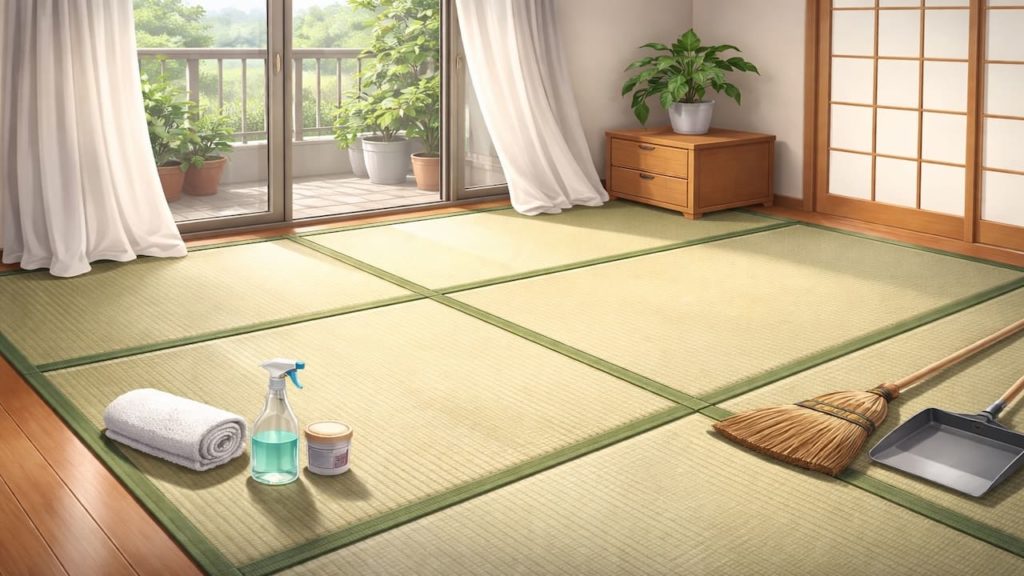
You open the window to freshen a tatami room, then the room feels dusty.
That tradeoff is common in Japan, where rainy season humidity, winter dryness, and compact apartments change how air moves.
In this guide, you’ll learn a simple tatami ventilation routine that stays clean so you move air, avoid musty corners, and keep the room comfortable.

Hi, I’m Ken — I’m Japanese, and I live in Malaysia long-term, so I explain everyday life in Japan from a practical ‘from abroad’ perspective.
I hold a building design qualification and I’ve been on site for 20+ years across hundreds of jobs. I turn Japan’s unspoken rules into simple checks, so you can avoid costly mistakes and take the next step with clear actions that feel safe.
1. Tatami ventilation routine: 5 steps
Ventilate in short bursts and keep the tatami dry.
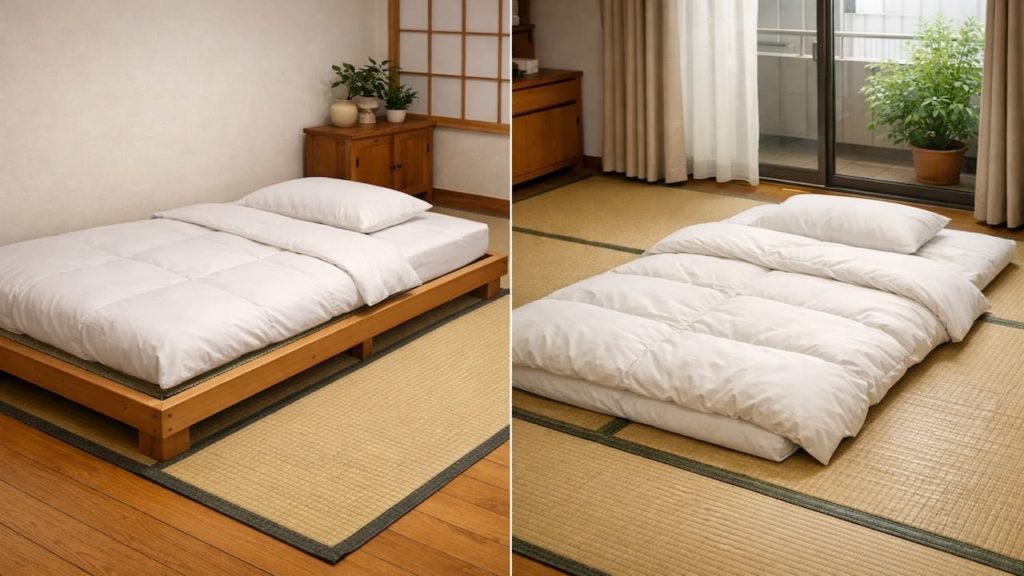
Airflow matters because igusa holds moisture, and trapped dampness can turn into odor in Japan’s humid months—dust also clings when the room stays sticky. Pick a routine you can do even on workdays. If you use a futon, lift it first so the mat can breathe.
Regular airing and placing igusa products in well ventilated spaces helps prevent mold. According to Source.
- Lift futon and stand it near doorway
- Open two openings to create airflow path
- Run fan low aimed above tatami surface
- Close closet doors to stop dust dumping
- Finish by wiping sill and vacuuming entrance
You might think longer is better and leave windows open all day. That often invites more pollen and road dust, especially in spring. Do short cycles twice a day instead. Clean air is controlled air.
2. Move air without making rooms dusty
Control where air enters and where dust lands.
Most dust in a Japanese tatami room comes from the entry path: hallway air, clothing lint, futon fibers, and outside pollen. If you guide air high and keep the floor calm, you get freshness without grit. It is a flow problem.
Opening two windows to create an air passage is more efficient than opening one window. According to Source.
- Open window and door diagonally for cross breeze
- Angle blinds upward to bounce air higher
- Place fan to push air toward exit
- Keep shoes and bags outside tatami threshold
- Vacuum tatami along the weave after airing
Some people try to “shake out dust” by slapping bedding in the room. That makes the dust worse, then ventilation spreads it—order matters. Move bedding out first, then ventilate, then clean the floor last.
3. Why ventilation makes tatami rooms dusty
Fast air stirs light fibers that tatami likes to hold.
Tatami is textured, so it catches lint and fine grit better than smooth flooring. When you open windows wide, the first gust lifts surface dust and throws it into the air—then it resettles on the mat and shelves. In Japan’s dry winter, static makes dust cling and float longer.
- Check where dust lines appear after ventilation
- Notice fan angle that lifts dust from floor
- Look for lint sources near futon storage
- Inspect window tracks for fine powdery buildup
- Test one short airing versus one long airing
You may blame “old tatami,” but even new mats collect lint if airflow hits the surface hard. The fix is not sealing the room forever. Use gentler flow plus simple cleaning at the right time.
4. How to ventilate tatami rooms cleanly
Ventilate high and slow while the floor stays quiet—then lock the dust down with a light finish.
Start with a 5 to 10 minute cross breeze, then switch to fan-only circulation if outside air is dirty or pollen is high. Japan has days when opening windows is nice, and days when it brings trouble. Keep the futon lifted until the tatami feels normal. cost is mostly time/effort.
- Open diagonal gaps and keep airflow above knee
- Use fan to pull air toward open exit
- Wait five minutes before touching dusty surfaces
- Vacuum entrance zone before stepping on tatami
- Vacuum tatami with the weave direction only
You might be tempted to wipe the tatami wet to “catch dust.” That can trap moisture in Japan’s rainy season and create a new problem. Keep wiping minimal and finish dry. Ventilate again briefly if needed.
5. FAQs
Q1. Should I open windows every day in a tatami room?
Yes but do short controlled airing cycles—daily helps in Japan if you avoid long open windows during pollen or heavy rain. Use cross air for 5 to 10 minutes, then close and settle the room.
Q2. What is the best time to ventilate without dust?
Early morning can be calmer before traffic dust rises, and late afternoon can work if the air feels clean. Avoid gusts that hit the tatami surface. If pollen is high, ventilate briefly and use fan circulation.
Q3. Do I need a fan for tatami ventilation?
A fan helps you control direction, so you move air without blasting the weave. Aim it so airflow travels above the floor, then exits. It also speeds drying after humid nights.
Q4. How do I ventilate when it is raining?
Crack two openings slightly for a short cross path, then rely more on fan circulation. Keep the futon off the mat longer because Japan’s humid air slows drying. Clean the entry area so wet grit does not spread.
Q5. What if my room still feels dusty after ventilation?
That usually means dust sources are inside: futon lint, closet debris, or window tracks. Reduce the source, then shorten airing time and change fan angle. Finish with a gentle vacuum along the weave.
Pro's Tough Talk

I’ve been on site for 20+ years. I’ve worked on hundreds of jobs. Japan’s rainy season makes people fear stale air, then dust shows up right after “freshening.”
Three causes, no pity. One, you open one window a finger width and call it ventilation. Two, you point the fan at the tatami like a hair dryer. Three, you store futon and blankets in a linty closet, then act shocked when dust keeps returning.
Do this in order. Lift the futon and clear the floor. Make a real cross path with two openings. Push air toward the exit, not straight down. You “air out” at night, then your socks turn gray by breakfast.
Air control is cleaner than air volume. Tatami is like a soft brush, it grabs whatever you throw at it. Dust is like flour, it explodes if you slap it.
Yeah, keep blasting the floor and acting surprised.
Summary
Lift bedding and move air across the room, not down into the tatami. Short cycles reduce moisture and odors without stirring a dust storm.
If the room feels dusty, change the airflow path—then reduce indoor dust sources first. Then vacuum gently along the weave after the air settles.
Do a quick cross breeze then a calm clean finish and you will keep the room bright, fresh, and easy through every season.