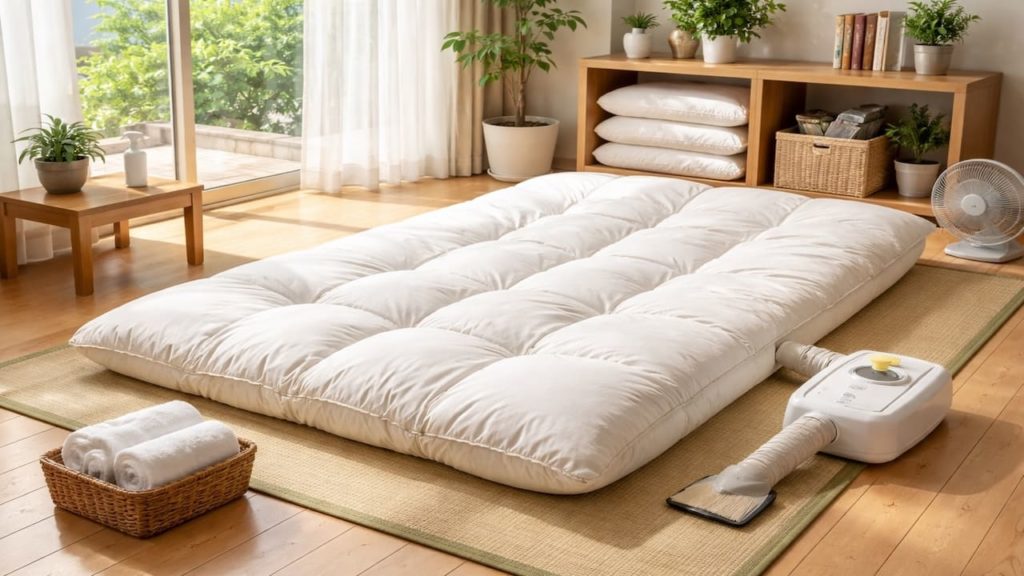
You searched because friends are coming over, and you want a futon setup that feels clean and welcoming.
You also want to avoid the awkward “where do I put my stuff” moment that happens in small Japanese rooms.
In this guide, you’ll learn how to set up a futon guest space that feels calm and polite.

Hi, I’m Ken — I’m Japanese, and I live in Malaysia long-term, so I explain everyday life in Japan from a practical ‘from abroad’ perspective.
I hold a building design qualification and I’ve been on site for 20+ years across hundreds of jobs. I turn Japan’s unspoken rules into simple checks, so you can avoid costly mistakes and take the next step with clear actions that feel safe.
You will do it in a way that matches Japan’s genkan habits and tsuyu humidity reality.
1. Futon guest setup: 5 tips
Start by making one clear guest zone so the room feels intentional, not improvised.
In Japan, rooms often switch roles fast, so guests feel better when the “sleep area” is obvious—especially in a one-room layout. During tsuyu, you also want airflow before you lay bedding, because damp fabric can smell loud by night. Guest calm. Keep the floor lane clean from genkan to the futon spot.
It is polite to remove shoes at the entrance and use indoor slippers, and bringing clean socks helps if you are barefoot. According to japan-guide.com.
- Clear one corner for guest bag placement
- Lay clean sheet layer under the futon
- Set spare slippers near the genkan step
- Place towel and tissues within easy reach
- Open window briefly to swap humid air
You might think guests do not care about the floor plan. They do, because uncertainty is stressful in small homes. A simple zone removes that tension and keeps Japanese house rules obvious. Do the basics, then relax.
2. Host friends in Japan without stress
Reduce stress by preparing bedding like a checklist instead of “perfect hospitality.”
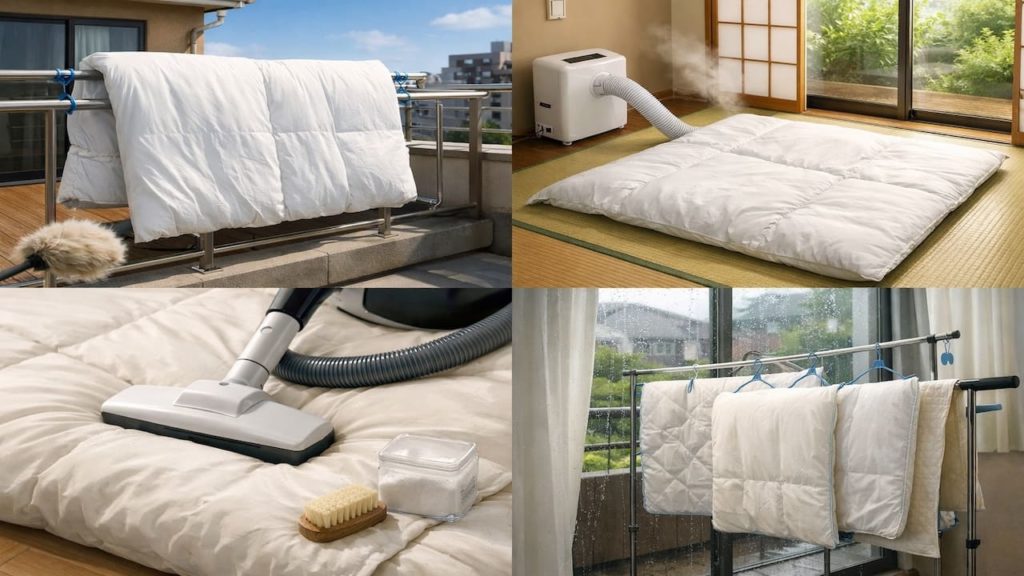
Guests notice comfort, smell, and a place to put things, not fancy décor. In Japan’s humid season, the biggest fail is laying a futon that still holds last night’s moisture, then trying to mask it later. Smooth flow. Give the futon a short air-out and keep covers clean and dry.
Futons retain moisture from sleep, so giving them time to air out helps avoid mold and mites. According to futontokyo.com.
- Air futon upright before you set it down
- Use fresh cover and pillowcase for guests
- Offer small basket for phone and keys
- Dim lights early to signal sleep time
- Close curtains to block morning glare
You may worry the guest will judge your tiny space. Most guests just want clarity and cleanliness in a Japanese home rhythm. If the futon smells fresh and the rules feel simple, you win. No drama.
3. Why futon guest nights feel awkward
Awkwardness comes from unclear rules and shared space in Japan’s compact living style.
When the same room is living room, dining area, and bedroom, guests hesitate because they do not know what is allowed. Genkan habits are strict, but visitors may not know the “tatami versus slippers” logic, so they freeze. Awkward silence. Add tsuyu humidity and you also get the fear of “is this bedding clean.”
- Notice guests hover near the doorway area
- Notice guests avoid sitting on floor surfaces
- Notice guests ask where to put bags
- Notice guests hesitate with slippers on mats
- Notice guests comment about damp air at night
You might think you need a long etiquette lecture. You do not. One or two simple cues solve most tension, and the rest is just friendly tone. Make rules visible through layout.
4. How to set up a futon guest space fast
Set up in a fixed order so you do not forget hygiene steps.
Do airflow first, then floor wipe, then bedding, then guest items, then lighting. In Japan, tsuyu weeks make drying slower, so plan a short window or fan time before guests arrive. ¥1,000–5,000 is enough for basics like a spare cover set, a small basket, and a simple sheet layer. Quick order—less stress.
- Vent room ten minutes before laying bedding
- Wipe futon zone and dry it fully
- Lay base sheet then place the futon
- Add clean cover and fresh pillowcase set
- Show slippers and toilet route in one line
You may think this is too much for one night. It is lighter than dealing with musty smells or dust sneezes the next morning. A fixed order protects you from forgetting steps when you are busy. Repeatable hosting.
5. FAQs
Q1. Should I explain genkan rules to guests?
Yes, but keep it simple and friendly. Point to where shoes go and where slippers are, then move on.
Q2. Is it rude to dry futons on the balcony before guests arrive?
It is normal in Japan, but check your building rules and be mindful of timing. If balcony drying is hard, use indoor airflow and a sunny window.
Q3. What is the fastest way to make the futon feel clean?
Use a fresh cover and air the futon core first. That combination removes most “sleep smell” without harsh sprays.
Q4. What if my guest has allergies?
Vacuum the futon surface slowly and wipe the floor zone with a damp cloth, then dry it. Keep the closet door closed if it smells stale.
Q5. How do I avoid a cramped feeling in a one-room setup?
Clear one guest zone for bags and one zone for sleeping, even if they are small. Turning off bright lights early also helps the room feel calmer.
Pro's Tough Talk

I’ve been on site for 20+ years. I’ve worked on hundreds of jobs. Japan’s small homes and tsuyu humidity expose every lazy shortcut.
Cause 1, you “kind of” clean, then lay the futon on a dusty floor and call it hospitality. Cause 2, you fold damp bedding and pull it out for guests like a magic trick. Cause 3, you never tell the rules, so your friend stands there holding slippers like a confused NPC. Your guest quietly asks where to put a bag, and you point vaguely at the floor. Your guest steps on the wrong surface once, freezes, and does the tiny apology laugh.
Step 1: Air the futon. Step 2: Clean the futon zone. Step 3: Set one clear guest zone.
Make the setup obvious and dry, then guests relax and you stop overthinking every minute.
Host like a scatterbrain, and your room will roast you harder than your friends ever will.
Summary
A stress-free futon guest setup is mostly zone clarity plus dry bedding. In Japan’s small rooms, the order matters more than décor.
If anything feels off, fix airflow and floor hygiene first, then swap to a fresh cover set. During tsuyu, assume drying needs more time than you think.
Tonight do the five-step setup order once and keep it simple for your guest. Then keep exploring small-room futon routines that match Japan’s seasons.