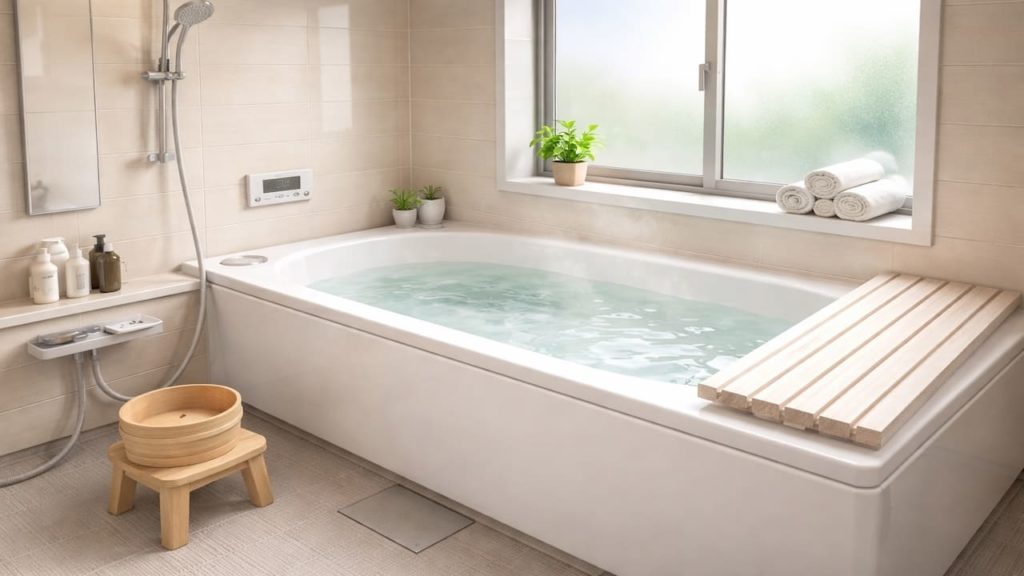
You searched this because you are not sure what ofuro temperature is “safe,” especially when you sometimes feel faint. You want the comfort without the wobble.
In Japan, the temperature gap between the bath, dressing room, and hallway can be brutal, even inside modern homes. That swing can mess with blood pressure, hydration, and timing.
In this guide, you’ll learn how to choose ofuro temperature without getting lightheaded. You will also know what to do the moment you feel dizzy in the tub.

Hi, I’m Ken — I’m Japanese, and I live in Malaysia long-term, so I explain everyday life in Japan from a practical ‘from abroad’ perspective.
I hold a building design qualification and I’ve been on site for 20+ years across hundreds of jobs. I turn Japan’s unspoken rules into simple checks, so you can avoid costly mistakes and take the next step with clear actions that feel safe.
1. Ofuro temperature choice: 5 tips
Pick your bath temperature like a safety tool—warm enough to relax without pushing your body.
Too hot can dilate blood vessels and drop pressure, then you stand up and the room tilts. Too cold can trigger a stress response, especially when your skin is already warm. In Japan, a chilly脱衣所 in winter makes the transition sharper than people expect. Consumer guidance often recommends keeping bathwater at 41°C or lower and avoiding long soaks. According to nippon.com.
- Start at 40°C and adjust slowly
- Warm the dressing room before you soak
- Keep soak time short and consistent
- Stand up slowly and hold tub edge
- Step out, sit down, then dry off
You might think “hotter equals better sleep,” but hotter often equals more dizziness. The goal is comfort with a stable exit, not a sauna challenge. Keep the routine boring. Safety.
2. Soak safely without feeling faint
To soak safely, treat faintness as a signal—stop the heat load before it escalates.
Feeling faint is usually your body asking for air, fluids, and time to stabilize, not willpower. In humid Japanese summers, dehydration sneaks up faster, and hot water adds to it. If you feel dizzy, common advice is to lie down, move slowly, and drink fluids like water. According to NHS.
- Open the door slightly to reduce steam
- Sit on a stool before standing fully
- Drink water before and after bathing
- Cool wrists and neck with lukewarm water
- Skip bathing if you drank alcohol earlier
Some people try to “push through” because they are already in the tub, but that is backwards. Your best move is to exit early and reset, then try again another day. Calm wins. No hero mode.
3. Why hot ofuro can trigger lightheadedness
Hot ofuro can make you lightheaded because heat changes circulation faster than your brain expects—especially with Japan’s room-to-room temperature gaps.
Heat widens blood vessels, which can lower blood pressure while you are sitting still. Then you stand, and gravity suddenly wins, so blood flow to your head dips for a moment. Steam also makes breathing feel heavier in a small unit bath, and that adds stress. Add low hydration and you get the classic “tunnel vision” feeling. Classic pattern.
- Notice ringing ears or narrowing vision early
- Check if your face feels suddenly flushed
- Watch for nausea when you stand up
- Track dizziness timing during water temperature changes
- Reduce bath temperature when symptoms repeat often
You might blame “weak stamina,” but this is mostly physics and biology, not character. Make the temperature and transitions gentler, and the problem often fades. If it keeps happening, take it seriously. Your body is talking.
4. How to choose a safe temperature every night
Use a simple nightly method—set a base temperature and only tweak one step.
Start with a warm baseline that feels comfortable in Japan’s season, then adjust by small increments, not big jumps. Keep your soak time predictable so your body learns the pattern and stops overreacting. The cost is mostly time/effort. If you still feel faint after lowering heat and shortening time, shift focus to hydration, ventilation, and standing technique. Repeatable method.
- Set water to warm and test slowly
- Use a timer to cap soak length
- Keep a cup of water within reach
- Stand in two stages seated then half-rise
- Exit, sit down, and breathe for 30 seconds
You may want the “perfect number,” but your safe temperature is personal and changes with season, fatigue, and alcohol. Use your symptoms as feedback, then adjust one variable at a time. If you did this and it still fails, next is reducing baths on risky days and checking with a clinician. Steady improvement.
5. FAQs
Q1. What temperature range is safest for most people?
Many people do well around 40°C to 41°C, then adjust based on how they feel. If you get dizzy, lower it and shorten the soak—your body will still warm up.
Q2. How long should I soak if I sometimes feel faint?
Keep it short and predictable, like a brief soak you can repeat without symptoms. If you feel any warning signs, end the soak early and cool down gradually.
Q3. Should I take a bath when I am tired or sick?
If you are exhausted, feverish, or not eating well, your risk goes up. A quick shower is often safer than a long soak on those days.
Q4. Is it safer to shower first or soak first?
A short shower first can help your body adjust and reduce the “sudden heat” feeling. It also lets you test how you feel before committing to a soak.
Q5. What should I do immediately if dizziness starts in the tub?
Stop soaking, sit low, and get out carefully with support on the tub edge. Move to cooler air, drink water, and do not stand up fast.
Pro's Tough Talk

I’ve spent 20+ years working around Japanese homes, so I’ve seen what tends to work—and what tends to go wrong—in everyday use. When the dressing room is cold and the tub is hot in winter, people act surprised like the laws of physics are optional. That surprise is where accidents start.
Cause 1: you overheat, vessels open up, pressure drops. Cause 2: you stand fast, blood shifts down, your head gets less for a moment. Cause 3: you add steam, poor airflow, and low hydration, then wonder why your vision sparkles. A hot bath is a gentle campfire, not a flamethrower. Your body is not a pressure cooker lid.
Get out now and sit. Today, lower the temperature and shorten the soak. This weekend, warm the dressing area and improve airflow.
Do that and you cut the risk without losing the relaxing part. Pick comfort that lets you exit steady. If you did this and it still fails, next is skipping baths on alcohol days and getting medical advice for repeated faintness.
Come on, you are not a lobster. Scene one: you stand up fast, and your knees turn to jelly like cheap tofu. Scene two: you feel “fine,” then the moment you bend to dry your feet, the room spins and you grab the wall like it owes you money.
Summary
Safe ofuro temperature is not about bravado—it is about stable circulation and a calm exit. Aim for warm, keep the soak short, and make the dressing area less harsh.
If faintness shows up, treat it as feedback and change temperature, time, and standing speed first. If the same dizziness repeats even after those changes, use that as your sign to pause soaking and seek advice.
Tonight, set a warm baseline and exit in two steps so your bath refreshes you instead of draining you. Then keep reading about ventilation, hydration, and seasonal bathroom gaps to lock in safer habits.