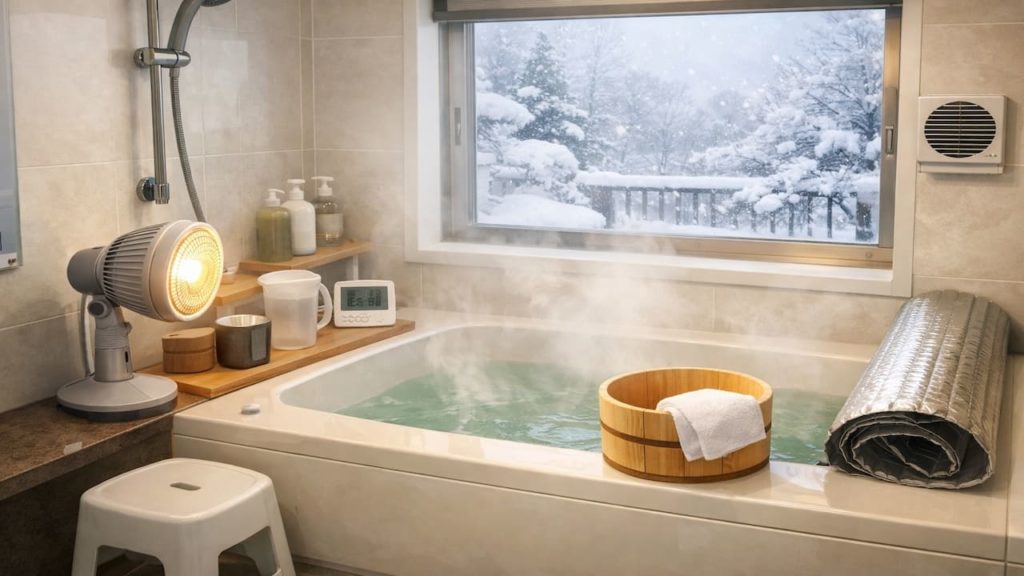
You searched this because your bath time keeps stretching, and you feel tired instead of refreshed. You want the calm of ofuro without that heavy “drained” feeling.
In Japan, a small unit bath and high humidity can trap heat, while the dressing room can feel cooler than expected. That gap makes long soaks sneakier than they look.
In this guide, you’ll learn 5 quick checks to set the right bathing time so you soak safely and still have energy. You will also know what to change when you feel faint.

Hi, I’m Ken — I’m Japanese, and I live in Malaysia long-term, so I explain everyday life in Japan from a practical ‘from abroad’ perspective.
I hold a building design qualification and I’ve been on site for 20+ years across hundreds of jobs. I turn Japan’s unspoken rules into simple checks, so you can avoid costly mistakes and take the next step with clear actions that feel safe.
1. Ofuro bathing time: 5 checks
For Japan’s seasons, the safest bath is the one you can exit steady—so time your soak on purpose.
Long soaks can raise your core temperature, dehydrate you, and leave you foggy afterward. If you stand up fast, your blood pressure can drop and your head can spin. In winter, a cold dressing room makes that jump worse, even in modern Japanese homes. Many safety guides emphasize keeping water moderate and not staying too long. According to The Japan Times.
- Set a timer before you enter bath
- Cap soak time to avoid overheating
- Drink water before bathing and after
- Stand up slowly and hold tub edge
- Exit, sit down, then dry off
You might think “longer equals better recovery,” but longer often steals energy. A shorter soak plus a calmer exit usually feels better the next morning. One clean rule—finish while you still feel good.
2. Avoid long soaks that drain your energy
To avoid the post-bath crash, treat bathing like a warm reset not endurance—especially in Japan’s humid nights.
Energy drain often comes from heat load plus dehydration, not from “being weak.” A steamy unit bath keeps your skin wet, so you keep sweating without noticing. If you feel dizzy, the safest move is to leave the tub carefully and cool down gradually. Guidance for onsen safety also stresses moving slowly and exiting when you feel faint. According to spa.or.jp.
- Open door slightly to reduce steam buildup
- Use lukewarm rinse to lower heat gently
- Cool wrists and neck with running water
- Keep towel and water bottle within reach
- Skip soaking after alcohol or heavy exercise
You may want to “push through” because it feels relaxing, but dizziness is not a challenge. End early, cool down, and try again another day with a shorter timer. The win—leaving the bath with your legs steady.
3. Why long soaks drain your energy
Long soaks drain you because your body spends energy dumping heat afterward in Japan’s closed bathroom spaces.
Heat expands blood vessels, and that can lower blood pressure when you stand. Steam and poor airflow make breathing feel heavier, which adds stress and fatigue. In summer, dehydration builds quietly, and the “sleepy” feeling can be a warning sign. One simple pattern—if you feel worse after, you stayed too long.
- Notice lingering sweat for 20 minutes after
- Watch for headache nausea or tunnel vision
- Check if legs feel weak when standing
- Track dizziness timing during temperature changes
- Reduce soak time when symptoms repeat often
Some people blame the water temperature only, but time is the silent multiplier. Shortening time is easier than chasing a perfect number. Keep the bath boring, and your energy stays yours.
4. How to set a safe soak schedule
Build a schedule you can repeat—same start time and same cut-off works best in Japan’s daily routines.
Pick a baseline soak time that leaves you clear-headed when you stand. Use a timer so you do not “zone out” in warm water after a long day. If the dressing area is cold, warm it a little so your exit is smooth. The cost is mostly time/effort.
- Choose a fixed soak window and keep it
- Use a phone timer placed outside splash zone
- Stand in two steps seated then half-rise
- Sit for 30 seconds before walking out
- Drink water and cool down before bed
You might want flexibility every night, but your body loves patterns. If you did this and it still fails, next is lowering water temperature and avoiding baths on low-hydration days. One smart rule—stop the soak before your body protests.
5. FAQs
Q1. How long should I soak in an ofuro on a normal day?
A short, consistent soak is usually enough for relaxation and warmth. If you feel tired afterward, shorten the time first before changing anything else.
Q2. What are early warning signs I stayed in too long?
Lightheadedness when standing is your clearest warning. Also watch for pounding heartbeat, nausea, and a heavy “can’t move” feeling right after you exit.
Q3. Is it safer to bathe at night or in the morning?
Night bathing is common in Japan, but late-night fatigue can make you sloppy with timing. Morning baths can feel energizing, but keep them shorter if you rush afterward.
Q4. Should I shower first or soak first?
A quick rinse first helps your body adjust and lets you check how you feel. It also reduces the “sudden heat” hit when you enter the tub.
Q5. What should I do immediately if I feel faint in the tub?
Lower your posture, stop soaking, and exit slowly while holding the tub edge. Sit down in cooler air, sip water, and do not stand up fast.
Pro's Tough Talk

I’ve spent 20+ years working around Japanese homes, so I’ve seen what tends to work—and what tends to go wrong—in everyday use. During Japan’s muggy rainy season, people soak longer because “it feels good,” then wonder why they feel like a dead battery. That is the setup for a bad wobble.
Cause 1: you overheat, so your body burns effort to cool down later. Cause 2: you lose fluid through sweat, so your blood pressure gets touchy. Cause 3: you stand up fast, and gravity steals blood from your head for a moment, like a rug pull.
Get out and sit down now. Today, set a timer and cap the soak. This weekend, improve airflow and make your exit area comfortable.
This is not about courage, it is about control. Shorter soaks often feel better than longer ones. If you did this and it still fails, next is lowering water temperature and treating recurring faintness as a medical check item.
Seriously, stop turning bath time into a mystery novel.
Scene one: you stay “just two more minutes,” then your legs feel like cooked noodles when you stand. Scene two: you feel fine until you bend to dry your feet, and the room spins like a cheap carousel. Quit marinating yourself like pickles, yeah?
Summary
Bathing time is a safety lever, not a mood decision, and Japan’s bathroom environment makes timing matter. Set a timer, keep the soak short, and exit in stages.
If you keep feeling drained, shorten time first, then adjust airflow and standing speed. If symptoms repeat even after changes, use that as your line to pause soaking and get advice.
Tonight, finish the soak while you still feel steady and you will sleep better with less crash. Then keep browsing related tips on ventilation, hydration, and safer exits in seasonal bathrooms.