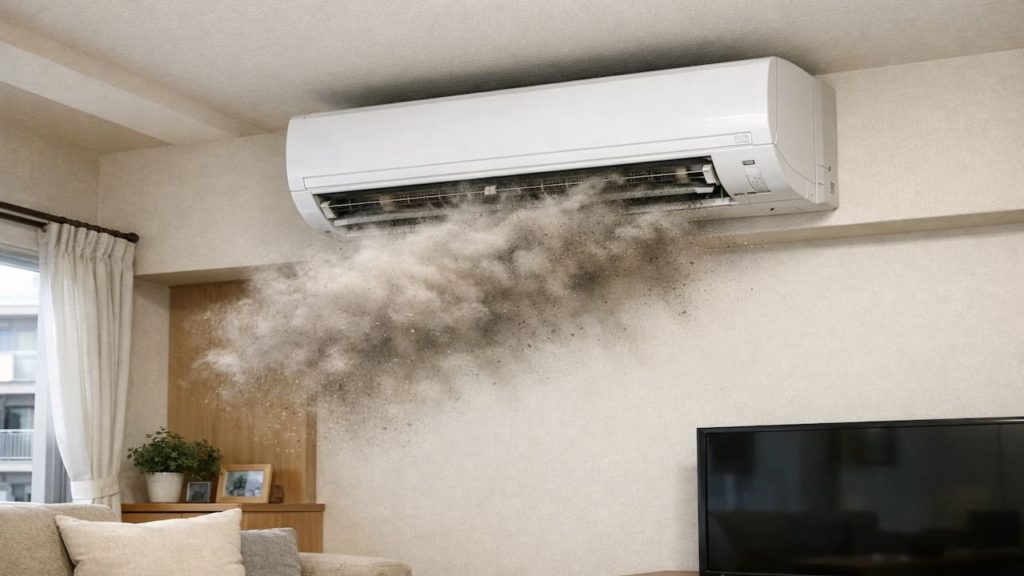
Your aircon runs, but the room smells “not clean,” even after you wipe surfaces. That is usually the first mold warning, not your imagination.
Japan’s tsuyu humidity and tightly sealed apartments make moisture linger inside the unit. Dust becomes food, and the dark wet space does the rest.
In this guide, you’ll learn the 5 signs that mean it is time to go deeper and what you can do now to reduce risk without dismantling. You will also learn when “just clean the filter” is no longer enough.

Hi, I’m Ken — I’m Japanese, and I live in Malaysia long-term, so I explain everyday life in Japan from a practical ‘from abroad’ perspective.
I hold a building design qualification and I’ve been on site for 20+ years across hundreds of jobs. I turn Japan’s unspoken rules into simple checks, so you can avoid costly mistakes and take the next step with clear actions that feel safe.
1. Aircon mold risk: 5 signs
Recurring musty odor is the strongest early warning—especially in Japan’s humid cooling season.
If the smell hits right after startup, it often means moisture stayed inside after the last shutdown. If you smell it most in the first 5 minutes, the fan is throwing yesterday’s damp air back at you. A pattern. In compact Japan rooms, that odor concentrates fast and feels worse than it looks.
Moisture control is the key to mold control, and drying damp areas quickly matters. According to EPA.
- Smell startup air for musty sour notes
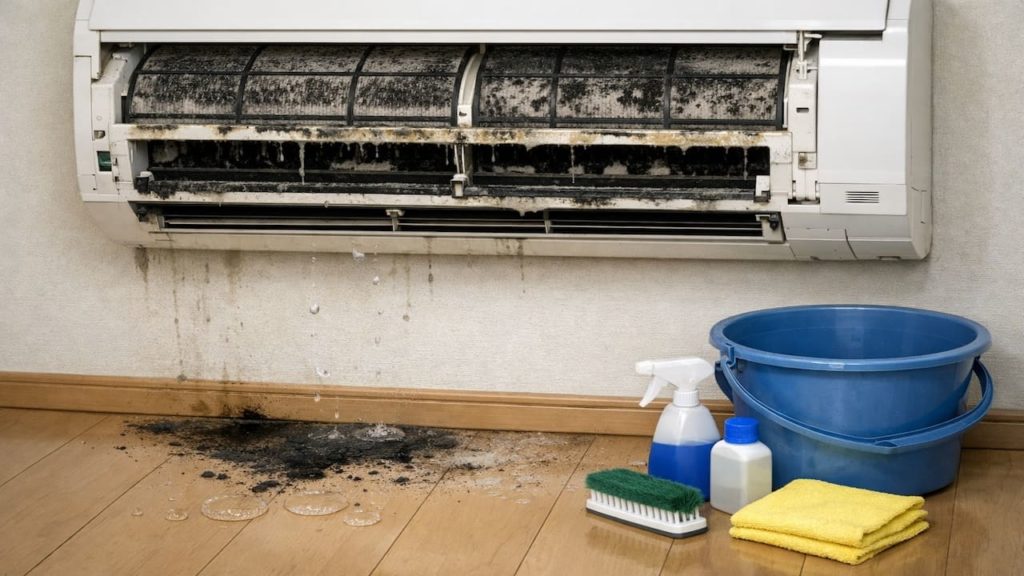
- Inspect filter for black specks or slime
- Check louvers for sticky dust film
- Watch humidity stay high during cooling
- Notice throat itch only when running
Some people think odor is “normal in summer,” but repeat odor is a sign. If the smell returns within 1–2 days after filter washing, it is rarely just the filter. In Japan apartments, one bad corner airflow can keep the inside damp. Not random.
2. Know when a deep clean is really needed
If smell returns fast after basic cleaning it is deep clean time—Japan’s rainy season does not forgive shortcuts.
A deep clean is needed when the dirty part is past the filter, like the blower fan, drain pan area, or inner fins. If you only rinse the filter, the hidden damp dust stays and keeps growing. The classic loop. A “mildew” smell is often linked to dirty filters and contaminated airflow paths, so regular cleaning matters.
Cleaning filters regularly helps reduce mildew problems and improves airflow. According to Daikin.
- Smell returns within 48 hours after cleaning
- Black dots appear on louvers repeatedly
- Airflow feels weak and damp at once
- Drain odor rises when fan starts
- Allergy symptoms spike in one room only
You might hesitate because “it still cools fine,” but mold risk is not only about temperature. If you see visible growth inside the airflow path, you are past the easy stage. In Japan rental units, deep cleaning early can prevent wall stains and chronic odor. Do it before it becomes your room’s personality.
3. Why mold grows inside aircons in Japan
Mold grows when dampness and dust stay trapped together—and Japan housing makes that easy.
Cooling creates condensation, and that water must drain and dry out after use. If you stop the unit and close everything, the inside stays wet and dark, which mold loves. In tsuyu, the incoming air already carries high moisture, so the unit works harder and stays wetter. A wet cavity.
- Shut down right after cooling ends nightly
- Run very low temps that cause sweating and icing
- Skip filter cleaning during peak summer weeks
- Block intake with curtains and tall furniture
- Let drain hose sag and hold dirty water
People blame “old units,” but habits create the environment. Even a newer unit can smell if it never gets a proper dry-out cycle. In small Japan rooms, one wet laundry rack can keep the whole space damp. Simple math.
4. How to reduce mold risk without dismantling
Dry the inside after use and keep airflow clean—then mold loses its home.
Use a short fan-only run after cooling, or use the unit’s internal dry function if available, so the coil and fan do not stay wet. Keep airflow steady and avoid blocking the intake with curtains common in Japan apartments. cost is mostly time/effort. Do this consistently, and you cut the “wet-dust sandwich” that feeds growth.
- Run fan only for 30 minutes after cooling
- Clean filters weekly during humid summer weeks
- Point louvers up to reduce cold wet spots
- Keep doors slightly open for gentle circulation
- Move indoor laundry away from the unit
You might think this is overkill, but the inside dries slower than you expect. If you did this and it still fails, next is a professional internal wash focused on blower and drain pan. In Japan’s humid season, prevention beats perfume sprays every time. Routine wins.
5. FAQs
Q1. Is a musty smell always mold?
If it returns after cleaning it is usually mold or damp dust. In Japan’s humid months, the smell often comes from moisture left inside after shutdown.
Q2. Can I fix it with a deodorizer spray?
Sprays can mask odor while the damp dirt remains inside. If the smell comes back after a day, the source is still there.
Q3. Do self-clean or internal dry modes prevent mold?
They reduce risk but they are not magic—habit still matters. If humidity is high and filters are dirty, odor can still return.
Q4. How often should I clean filters in summer?
In Japan peak summer and tsuyu, weekly is a safe rhythm for many homes. If you have pets or indoor laundry, you may need more often.
Q5. When should I call a professional cleaner?
Call when odor returns fast, when black specks keep reappearing, or when someone’s symptoms worsen in that room. Also call if you see water leakage or repeated freezing.
Pro's Tough Talk

I’ve spent 20+ years working around Japanese homes, so I’ve seen what tends to work—and what tends to go wrong—in everyday use. During tsuyu, the inside of an aircon turns into a damp cave if you shut it off and forget it. You feel it in the first breath.
Three causes, same trap. You leave moisture inside, like stuffing a wet futon into a closet and acting surprised later. Dust sticks to damp fins and the fan, like a kitchen sponge that never fully dries. Then the drain path gets slimy, and the smell rides the airflow straight to your face.
Smell the startup air right now.
Wash the filter today.
Run fan-only to dry it this weekend.
Deep clean is needed when the odor returns fast after basics. If you did this and it still fails, next is a professional internal wash focused on blower fan and drain pan. Don’t chase “fresh scent,” chase the wet dirt.
No, “cool air” is not the same as “clean air.”
You switch it on and that sour puff hits, and you pretend it was the neighbor’s cooking. You finally wash the filter once, feel proud, and then the smell comes back like it paid rent—congrats, you raised it.
Summary
Use the 5 signs: recurring musty odor, dirty film on filters and louvers, stubborn humidity, drain odor, and symptoms tied to one room. Japan’s humid seasons make these signs louder.
Do basic prevention first, then decide based on how fast the smell returns and whether black specks reappear. If the loop keeps repeating, it is time to escalate to internal cleaning.
Dry the unit after use and stop feeding it damp dust. Do that today, and you cut mold risk without turning your room into a freezing cave.