Your aircon won’t start, and the room keeps getting warmer. You hit ON again and again, and nothing happens.
The cause can be power, remote settings, or a safety lockout that looks like a “dead unit.” In Japan’s small apartments, heat builds fast and stress follows.
In this guide, you’ll learn the fastest way to rule out simple no-start causes without guessing. You’ll also know when to stop poking it and call help.

Hi, I’m Ken — I’m Japanese, and I live in Malaysia long-term, so I explain everyday life in Japan from a practical ‘from abroad’ perspective.
I hold a building design qualification and I’ve been on site for 20+ years across hundreds of jobs. I turn Japan’s unspoken rules into simple checks, so you can avoid costly mistakes and take the next step with clear actions that feel safe.
1. Aircon won’t start: 5 checks
Check power and timer basics first—it solves more “dead” units than you think.
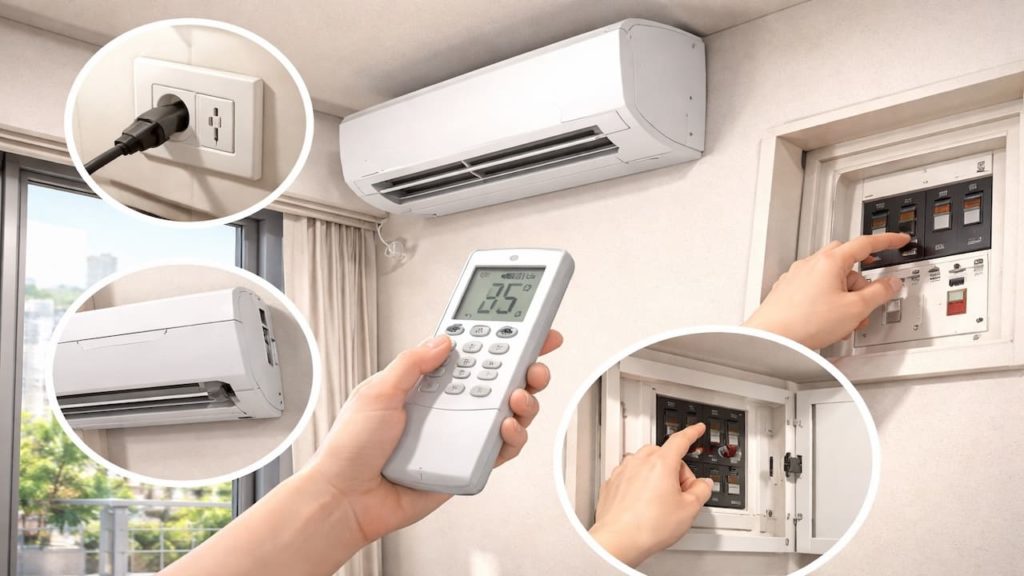
Start with the obvious because Japan homes often use shared circuits and compact breaker panels. A tripped breaker, loose plug, or remote batteries can look like a big failure. Daikin lists core no-start checks like breaker, plug, power failure, remote batteries, and timer settings. According to Daikin.
- Check breaker switch and reset if tripped
- Confirm plug fully seated in wall outlet
- Replace remote batteries with fresh matching type
- Cancel timer and confirm current time setting
- Wait 3 minutes after power loss reset
Some people jump straight to “gas is low” or “it’s broken.” But no-start is usually control or power, not refrigerant. No power. Do the quick checks first, then move to lockouts.
2. Power, settings, and safety lockouts
Lockouts can block start even when power is fine—especially after kids or cleaning.
Japan living rooms often share remotes, and one wrong mode can stop operation without warning. Child lock, operation lock, or a timer program can silently override your button presses. Panasonic shows that child lock can be enabled or disabled by holding specific buttons on some remotes. According to Panasonic. Small thing, big frustration.
- Look for lock icon or child lock lamp
- Hold lock key combo for 5 seconds
- Switch mode to cool and set temp lower
- Disable eco limit and retry normal operation
- Try manual ON button on indoor unit
You might think “locks are only for fancy models.” Not true, and Japan remotes love hidden long-press functions. Timer trap. Clear lockouts, then re-test with simple cool mode.
3. Why your aircon refuses to start
Most no-start cases are a protection delay—not a sudden death.
After a power cut or rapid on-off, many units delay restart to protect the compressor. In Japan’s summer humidity, people mash buttons because the room feels urgent, and that makes it worse. Protection logic. If the operation lamp flashes, it may be signaling a fault or safe stop.
- Wait 3 to 5 minutes before retrying
- Stop rapid toggling and keep settings steady
- Check for blinking lights and note patterns
- Confirm indoor cover is closed and latched
- Ensure outdoor unit has clear airflow space
It’s easy to assume the unit is ignoring you. But many systems are doing a timed cooldown or sensor check. Quiet delay. Give it time, then use the lights and symptoms as clues.
4. How to restart safely without causing damage
Reset once, test once, then decide the next step—don’t turn it into a button-smashing contest.
In Japan rentals, the simplest safe reset is power off, wait, power on, then test cool mode. If you suspect the remote, swap in fresh batteries and confirm the display is stable. Budget batteries are cheap, so plan ¥100–500 for basic supplies. After that, watch for flashing lamps or repeated shutdowns.
- Turn off power at breaker for 2 minutes
- Restore power and wait 3 minutes silently
- Set cool mode and lower temperature slightly
- Set fan medium and point airflow upward
- Try manual ON then test remote again
People say “reset fixes everything,” and sometimes it does. But resets can also hide a real fault if you keep repeating them. One reset. If you did this and it still fails, next is a service visit for control board diagnosis.
5. FAQs
Q1. My aircon display is on but it will not start.
Cancel the timer and check for lock icons first. Then set cool mode, lower the set temperature, and wait 3 minutes before retrying.
Q2. Why does it start, then stop right away?
That can be a protection response or a sensor issue. Check airflow blockage, confirm filters are clean, and watch for flashing lamps.
Q3. Should I keep turning it on and off to “wake it up”?
No rapid toggling makes it less likely to start. Many units enforce a restart delay to protect the compressor, so steady patience works better.
Q4. What if the remote seems dead or weird?
Replace batteries and clean the contacts, then confirm the screen stays stable. Try the indoor unit’s manual button to separate remote versus unit issues.
Q5. When is it unsafe to keep troubleshooting?
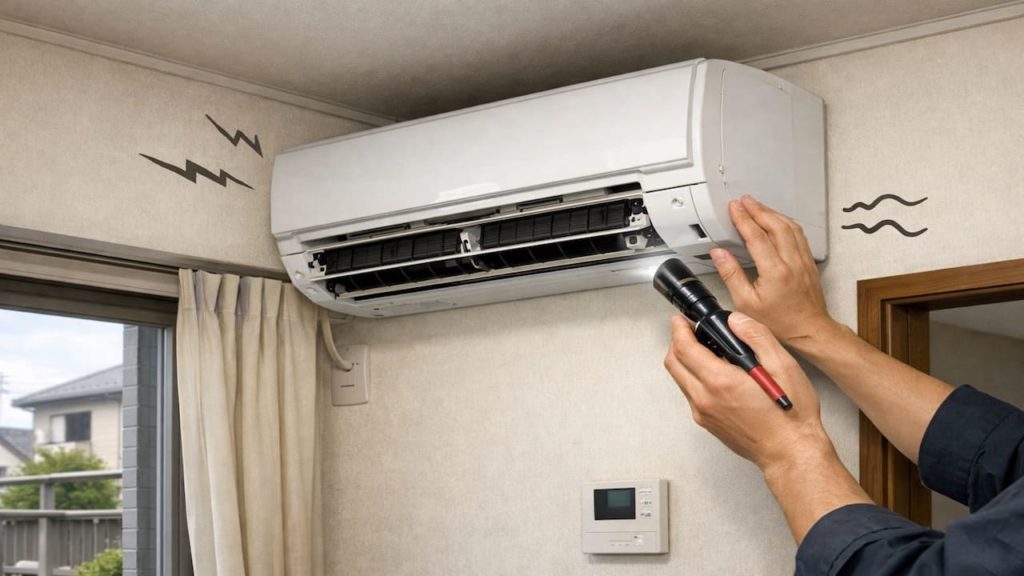
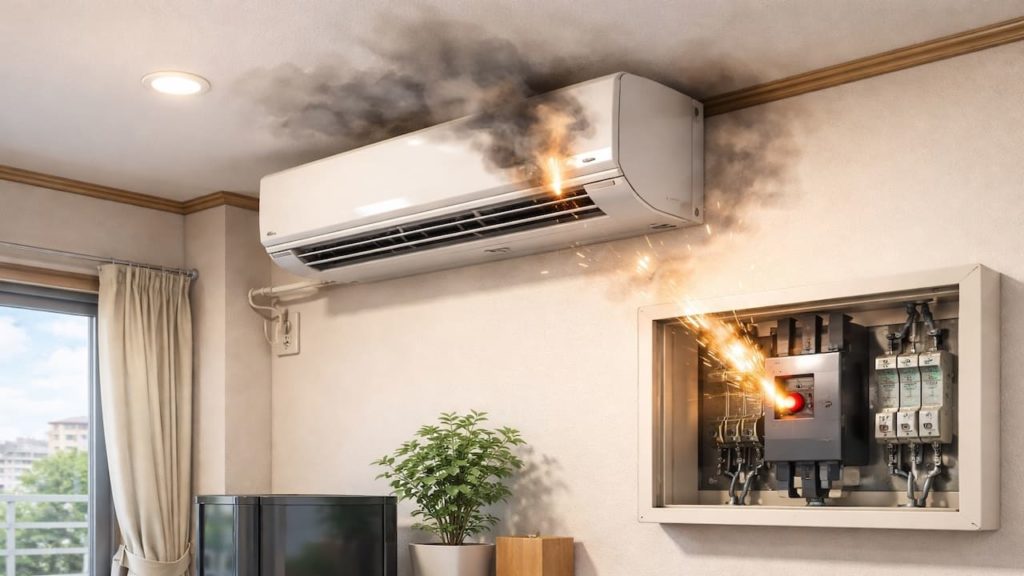
If you smell burning, hear buzzing from wiring, or see sparking, stop and cut power. Call building management or a technician immediately.
Pro's Tough Talk

I’ve spent 20+ years working around Japanese homes, so I’ve seen what tends to work—and what tends to go wrong—in everyday use. I’ve been on site for 20+ years. I’ve worked on hundreds of jobs. In Japan’s humid summer, a no-start at midnight gets real fast.
Cause one: no power, like trying to drive with the handbrake on. Cause two: lockouts and timers acting like a bouncer at the door, and you’re not on the list. Cause three: protection delay, and you keep hammering ON like it’s a broken elevator button.
Check the breaker now. Clear the timer today. Do one full reset this weekend.
Do one clean test in cool mode and stop guessing. Seriously. If you did this and it still fails, next is a technician checking the control board and sensors.
You stare at the remote, press ON, and swear the beep sounded different. You open the window for “fresh air,” then wonder why the room turns into a sauna. Congrats, you just fought the aircon and the air won.
Summary
You can solve many no-start cases by checking power, timer, and lockouts in that order. In Japan’s tight rooms, fast checks matter because heat rises quickly.
Reset once and test once—then use blinking lamps and repeat behavior as your clue. If the unit still refuses to start, move from guessing to diagnosis.
Tonight do the 5 checks and write down what you saw. Then keep exploring related aircon topics so your next issue feels smaller.