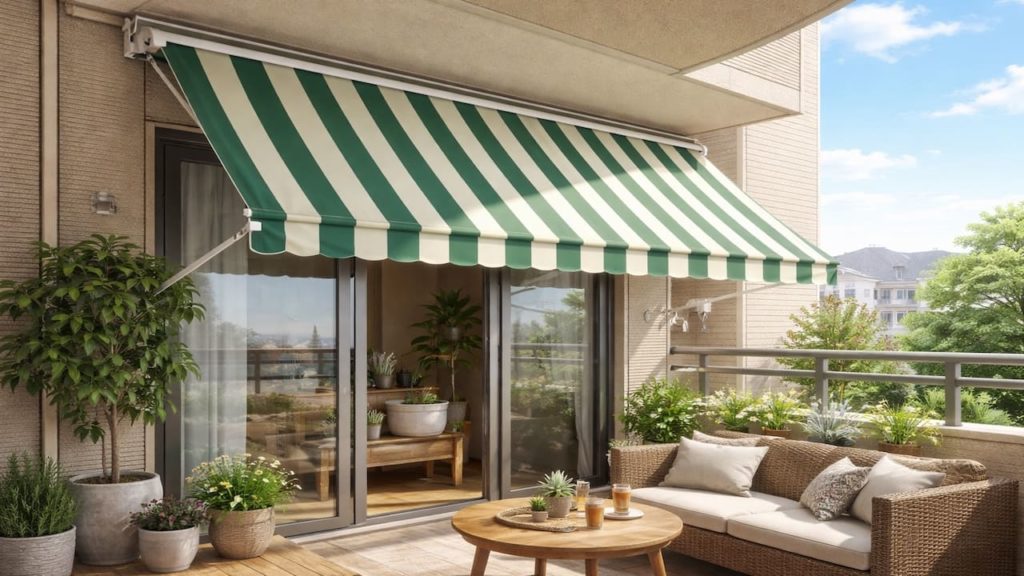
You want shade on your apartment balcony, but you also don’t want a complaint letter in your mailbox. One awning can turn a nice space into a rule fight fast.
The tricky part is that the “balcony” feels private, yet the building treats parts of it as shared territory. In Japan, typhoons, sudden gusts, and tight building gaps make weak installs risky.
In this guide, you’ll learn 5 checks to install a balcony awning without breaking rules. You’ll also learn how to handle wind and drilling limits so you can shade the space safely.

Hi, I’m Ken — I’m Japanese, and I live in Malaysia long-term, so I explain everyday life in Japan from a practical ‘from abroad’ perspective.
I hold a building design qualification and I’ve been on site for 20+ years across hundreds of jobs. I turn Japan’s unspoken rules into simple checks, so you can avoid costly mistakes and take the next step with clear actions that feel safe.
1. Awning in an apartment balcony: 5 checks
Check rules first because the balcony is not fully yours.
Apartment balconies in Japan often sit in a gray zone: you can use them, but you can’t change the building freely—especially anything visible outside. One “small” hole can become a waterproofing issue, and one loose shade can become a falling hazard. Paperwork feels annoying, but it’s cheaper than repairing concrete and apologizing to neighbors.
- Read your lease and building usage rules
- Confirm what counts as common area
- Check if exterior appearance changes are banned
- Measure balcony width without blocking evacuation path
- Plan wind removal steps before summer storms
Some people think “temporary” means “allowed,” but buildings don’t care about your definition. Rule reality. If your setup affects the facade or safety, treat it like a formal change and act accordingly.
2. Rules wind and drilling
No drilling is the safe default unless you have written approval.
Many buildings require approval for work that could affect common parts or other units, and drilling into walls or slabs can trigger that—especially if water intrusion is possible. According to mlit.go.jp. Wind is the second trap: even a light fabric becomes a sail on higher floors, and the risk spikes during Japan’s storm season.
- Ask management if drilling is ever permitted
- Request the approval process and required documents
- Choose clamp or tension mounts over anchors
- Set a wind limit rule for daily use
- Store the awning fast when warnings appear
You might assume “it’s inside my balcony” makes drilling okay, but the structure isn’t yours alone. Shared structure. Treat wind like a schedule, not a surprise, and your setup stays drama-free.
3. Why balcony awnings fail in apartments
They fail because people design for shade not for wind.
An apartment balcony is a wind tunnel in disguise, because air squeezes between buildings and accelerates. Add a big sheet of fabric and you’ve made a lever that yanks on your mounts—one gust can rattle everything. In Japan’s humid months, people also hang laundry under the awning, which adds weight and blocks movement so the fabric snaps harder.
- Mount points are too few for uplift
- Fabric size is too big for the frame
- Edges flap and saw into ropes quickly
- Poles shift because the floor is slick
- Storage blocks a clean tie-down path
Some folks blame “cheap products,” but even pricey gear fails when it’s oversized for the balcony. Physics wins. Build for wind first, then enjoy the shade.
4. How to install an awning without drilling
Use reversible mounts and a fast take-down routine.
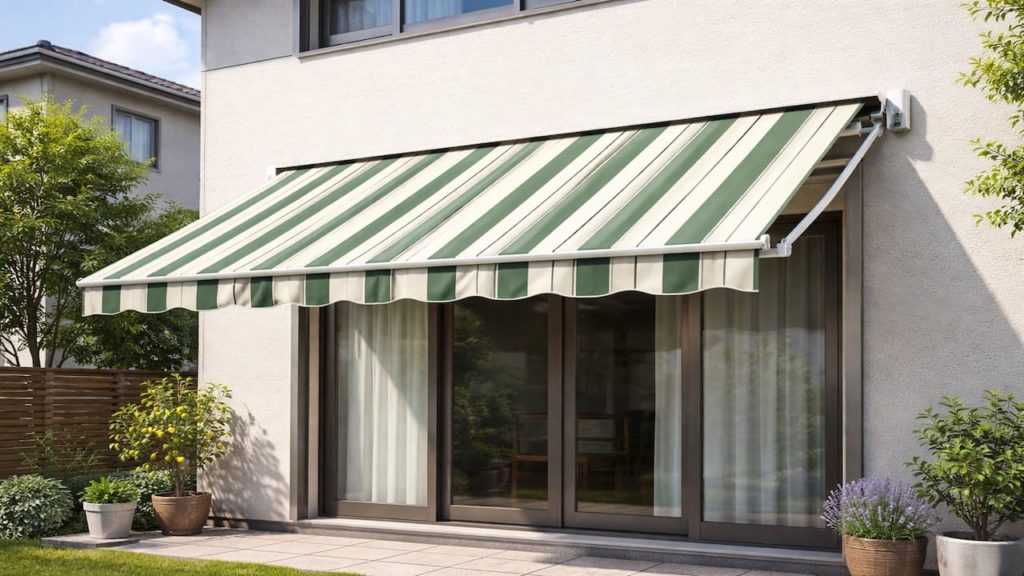
Start with clamp-on railing brackets or a tension pole frame that doesn’t pierce walls—then add secondary safety lines so a single failure can’t drop anything. Budget-wise, expect ¥3,000–20,000 for basic balcony-friendly mounts, ropes, and a simple shade set, depending on size. Keep the awning smaller than your balcony width so you can retract it quickly when weather shifts.
- Pick a smaller shade than you want
- Add two safety tethers to solid points
- Protect ropes with sleeves at sharp edges
- Set a two-minute take-down practice routine
- Keep the floor clear for quick movement
You may worry clamps will slip, but that’s usually a setup issue, not a clamp issue—wrong angle, wrong padding, or no backup line. Do a pull test, then do a wet-day test. If it passes both, you’re good.
5. FAQs
Q1. Do I always need permission for an awning on a balcony?
Not always, but assume yes until you confirm your building rules. If it changes the exterior look or needs drilling, expect approval to be required.
Q2. Is drilling into the balcony wall ever okay?
Sometimes with written approval, but many places treat it as a building-impact change. If you can’t show permission later, you’re the one holding the bill.
Q3. What’s the simplest wind safety rule?
Retract it anytime it starts flapping. If fabric is snapping, the load is already high, and the next gust is the one that breaks something.
Q4. Can I mount it only to the railing?
Yes, if you use the right clamps and add safety tethers. Railing-only mounts without backup lines are where accidents start.
Q5. Will an awning block my evacuation path?
It can. Keep the walkway open and avoid placing poles or storage where you’d need to pass quickly. In Japan, balconies are often part of the emergency plan.
Pro's Tough Talk

I’ve spent 20+ years working around Japanese homes, so I’ve seen what tends to work—and what tends to go wrong—in everyday use. If you treat an awning like a cute curtain, wind will treat it like a wrestling opponent.
Here’s the cold truth: rules exist because water and falling stuff don’t forgive anyone. Wind load climbs fast, and your “tight knot” isn’t a structural design. Add drilling without approval, and you’ve basically signed a “my problem forever” contract. And in Japan’s typhoon season, your balcony turns into a shaker bottle.
Right now: stop thinking about shade size and think about take-down speed. Today: set clamps, then add backup tethers. This weekend: practice retracting it until it’s automatic.
If you can’t remove it in two minutes, it’s not balcony-ready. If management says no drilling, don’t argue like a lawyer, just switch to reversible mounts and keep your receipts clean.
Seriously. That’s not an “installation,” that’s arts and crafts with gravity. Don’t let your awning become the building’s newest flying mascot.
Summary
Check the building rules, plan for wind, and avoid drilling by default. Those three checks prevent most balcony awning problems.
If your setup flaps, blocks the path, or needs holes, change the plan before you “test it in real weather.” If you need approval, get it in writing first.
Choose reversible mounts and practice fast take-down today so you can enjoy shade without complaints. Then keep learning about balcony airflow, drying, and storm prep next.