You park your bike outside, then the saddle is wet again. The chain looks dusty, and the lock feels gritty.
You think, “I just need a small awning,” but bad coverage can trap moisture or catch wind. In Japan, rainy season humidity and sudden gusts punish flimsy outdoor setups.
In this guide, you’ll learn 5 checks to make a bike awning actually work. You’ll cover rain protection, wind handling, and lock points so your bike stays usable.

Hi, I’m Ken — I’m Japanese, and I live in Malaysia long-term, so I explain everyday life in Japan from a practical ‘from abroad’ perspective.
I hold a building design qualification and I’ve been on site for 20+ years across hundreds of jobs. I turn Japan’s unspoken rules into simple checks, so you can avoid costly mistakes and take the next step with clear actions that feel safe.
1. Awning for bike parking: 5 checks
A bike awning only works if it covers the wet zones.
Most people protect the seat and forget splash lines from the ground. Tire spray and roof drip hit the drivetrain, then rust and grime build up fast. In Japanese housing, bike parking is often tight, so runoff bounces off walls and comes right back at the bike—messy corner.
- Cover saddle and handlebar without leaving gaps
- Block roof drip line from hitting drivetrain
- Prevent ground splash with a simple mat
- Plan wind direction not just rain direction
- Secure lock points before choosing awning size
Some people think “any roof is fine,” but a roof that misses the chain is just decoration. Not protection. If the wet parts stay wet, the bike still ages fast. Aim at the real impact zones, then adjust.
2. Coverage wind and locks
Good coverage means rain control plus a lock-friendly layout.
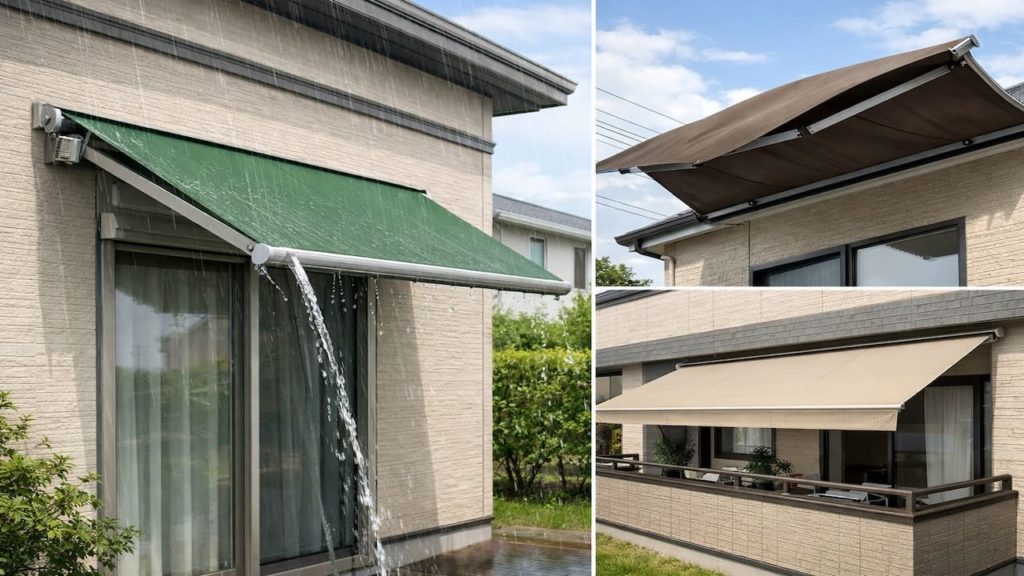
You want the awning to shield the bike from above, but also keep airflow so damp air can leave—otherwise it turns into a wet cave. Wind is the other half: fabric and light panels can lift, twist, and slam into the frame. Locks matter because thieves love easy angles, and a covered corner can hide them.
- Extend roof past front wheel to block spray
- Keep a high vent gap for airflow
- Angle edges so gusts slide off
- Place anchor point behind the bike frame
- Leave space to lock wheel and frame
You might think locks are separate from the awning, but the awning changes access and visibility. Big deal. A smart layout makes locking fast, so you actually do it every time. That’s the win.
3. Why bike awnings fail in Japan: wet corners and easy theft
They fail because moisture and security get designed last.
Rain doesn’t fall straight, it blows sideways and rebounds off concrete. Then the covered area stays damp because airflow is weaker, especially next to walls. On top of that, bike theft is often about time and hassle, and weak locking habits make the “covered spot” an easy target—quiet work zone.
Unlocked bikes are still a major problem in real cases, so locking is not optional. According to police.pref.fukuoka.jp.
- Side rain enters from wind-facing direction
- Drip lines land right on chain path
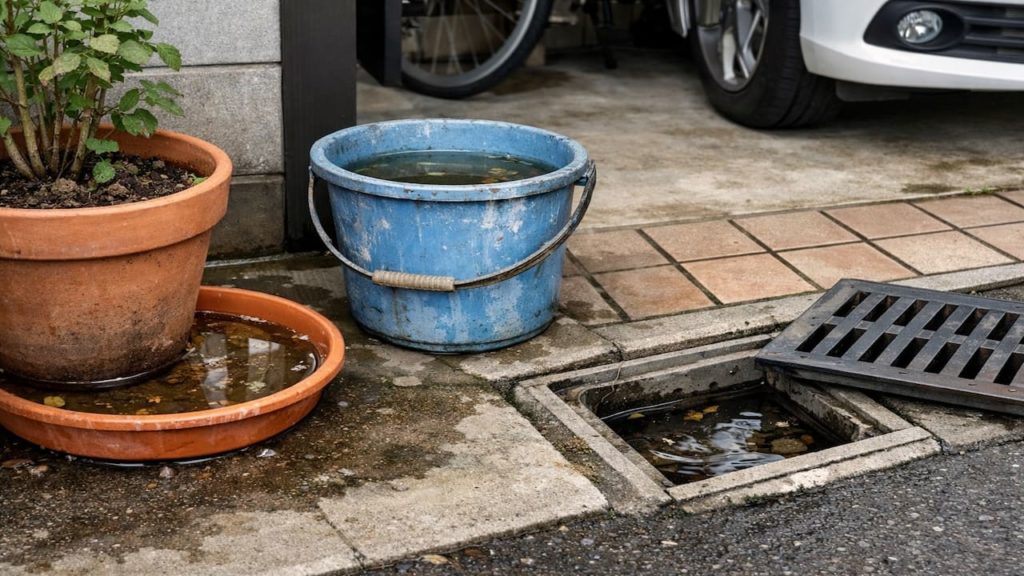
- Wet concrete bounces spray onto bearings
- Hidden corners reduce natural eyes on bikes
- One quick lock invites fast cut attempts
People blame the awning product, but the real issue is the plan: where water goes and how you lock. Simple. Fix those two, and most “bad awning” complaints disappear. No drama.
4. How to set a bike awning that survives wind and boosts security
Build a dry zone and a lock zone as one setup.
Start by mapping water: find the drip line, splash zone, and wind path—then position the bike where those don’t hit hard. Spend ¥1,000–8,000 on basics like a ground mat, wall-safe hooks, and a solid chain or U-lock if you need upgrades. Keep the awning smaller than your space so you can tighten it and remove it fast.
- Shift bike away from roof drip edge first
- Add mat or gravel to kill splash
- Mount a fixed anchor ring to a solid point
- Use two locks on frame and wheel
- Set a wind rule for take-down days
Some folks think “I’ll just park deeper under the roof,” but deeper often means less airflow and more damp. Tradeoff. Dry plus secure beats deep plus hidden. Make it easy to lock, and you’ll stay consistent.
5. FAQs
Q1. How much coverage do I actually need for a bike?
Cover the saddle and the drivetrain splash line, not just the top tube. If the chain area stays dry, the bike stays smooth.
Q2. Should I cover the bike fully like a tent?
Not if airflow dies. Leave a top gap so damp air can escape, or you’ll trap moisture and grow grime faster.
Q3. What is the best lock setup under an awning?
Use two locks on frame and wheel. Make one lock connect to a fixed anchor—then a thief can’t just lift and walk.
Q4. Will an awning make theft more likely?
It can if it hides the bike from view. Place the bike so it’s still visible from normal paths—privacy for you is cover for them.
Q5. What is the fastest wind safety habit?
When the fabric starts snapping, take it down that day. If it flaps hard, the load is already high.
Pro's Tough Talk

I’ve spent 20+ years working around Japanese homes, so I’ve seen what tends to work—and what tends to go wrong—in everyday use. If your “bike roof” leaves the chain wet, you basically built a hat for your problems.
Here’s the ugly split: water hits from the side, and it bounces from the ground. Then you “hide” the bike under cover, and you also hide the thief’s hands. In Japan’s rainy season, that damp corner turns into a sponge, and your lock gets crunchy.
Right now: find the drip line and move the bike out of it. Today: add a mat to kill splash and dry the lock. This weekend: add a real anchor point and run two locks.
If you can’t lock frame and wheel in 10 seconds, you won’t do it. And if the awning slaps in wind, stop pretending it’s fine, pull it down and rethink the angle.
This isn’t a bike parking setup, it’s a wet museum display. ムリだろ。 Don’t let your awning become a thief’s private office.
Summary
Check coverage on the saddle and drivetrain, then control splash and drip lines. A bike awning is only as good as its dry zone.
If wind makes it flap or the corner stays damp, change the angle and clear airflow. If security feels slow, redesign the lock points.
Move the bike out of the drip line and add a fixed anchor today so drying and locking become automatic. Then keep learning about outdoor moisture and simple wind-proofing habits.