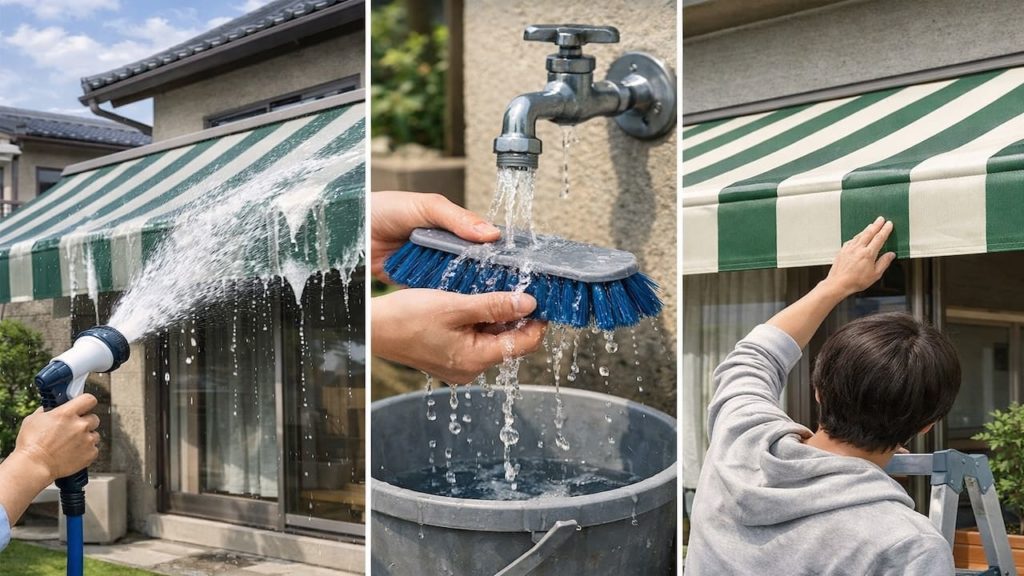
Your awning looks fine from far away, then you notice dark streaks and sticky dust near the edge. Now it drips dirty water when it rains, and the fabric smells a bit off.
Cleaning feels annoying because ladders, runoff, and “will I ruin the coating” worries slow you down. In Japan, pollen season, rainy season humidity, and narrow balconies make awnings grime up faster than you expect.
In this guide, you’ll learn an awning cleaning routine that stays easy. You’ll rinse, brush, dry, and check in a simple loop so it doesn’t turn into a big job.

Hi, I’m Ken — I’m Japanese, and I live in Malaysia long-term, so I explain everyday life in Japan from a practical ‘from abroad’ perspective.
I hold a building design qualification and I’ve been on site for 20+ years across hundreds of jobs. I turn Japan’s unspoken rules into simple checks, so you can avoid costly mistakes and take the next step with clear actions that feel safe.
1. Awning cleaning routine: 5 steps that stay easy
Keep it easy by cleaning little and often.
The goal is not perfection, it’s stopping grime from bonding to the surface. Once dust mixes with moisture, it turns into a film that holds water and feeds stains. Japanese outdoor air can carry pollen and fine dust, and humid days slow drying—so small regular wipes beat rare deep scrubs.
- Rinse the top surface to float loose dust
- Brush lightly before dirt bonds to coating
- Clean the edge where drip lines form
- Dry the fabric so mildew cannot start
- Check mounts and seams after each wash
Some people wait until it looks terrible, but that’s when cleaning gets rough and risky. Bad timing. Make it a quick habit and it stays quick. That’s the whole trick.
2. Rinse brush dry and check
Do it in order so you don’t grind grit into the surface.
Rinse first to remove sand and dust, then brush with light pressure so you don’t scar the coating. Drying matters because a wet awning traps moisture in folds and seams, especially in Japan’s rainy months. The “check” step prevents small tears and loose bolts from becoming wind damage.
- Use gentle water flow not a hard jet
- Brush from high to low in one direction
- Wipe seams where black streaks begin
- Open it fully to dry before storing
- Test fasteners by hand for any movement
You might think any strong spray saves time, but it can drive dirt into seams or lift weak edges. Slow is fast. Do the steps in order, and you finish sooner with less damage risk.
3. Why awnings get dirty fast in Japan
Humidity makes dust stick and stains spread.
Dust alone is easy, but dust plus moisture becomes grime that holds more moisture. That wet film encourages mildew and keeps black streaks forming at the drip edge. Outdoor mold can affect comfort and irritate breathing for some people, so reducing damp grime is not just “looks.” According to epa.gov.
- Rain splashes dirt back onto the underside
- Pollen clumps when humidity stays high
- Bird droppings bake into stains on sunny days
- Drip edges concentrate grime into dark lines
- Stored wet fabric grows smell and spotting
People blame the awning material, but the environment is doing half the work. Climate reality. If you cut moisture time, you cut dirt problems too. That’s your leverage.
4. How to keep the routine simple without buying tools
Use basic supplies and a fixed schedule trigger.
You don’t need special chemicals for a basic routine, just water, a soft brush, and a cloth. If you want a mild cleaner, expect ¥100–500 for basic supplies like a small sponge and gentle soap, but keep it mild to protect coatings. Use a schedule trigger like “after pollen weeks” or “after a heavy rain streak” so you don’t forget.
- Rinse on a cloudy day to avoid streaking
- Spot-clean droppings before they harden fully
- Dry with a towel along the lowest edge
- Store only after fabric feels fully dry
- Log the next check date on your phone
You may think “I’ll do a big clean later,” but later becomes never, and the stains get tougher. Same story. Tiny resets beat weekend punishment. Make the routine boring and it will happen.
5. FAQs
Q1. How often should I clean an awning in Japan?
Light rinsing every few weeks works for most places, with a brush pass when you see film starting. During rainy season, drying and quick checks matter more than deep scrubbing.
Q2. Can I use a pressure washer?
Usually not a good idea for fabric or coated surfaces because it can damage seams and edges. If you must, keep it far away and use the gentlest setting.
Q3. What is the fastest “good enough” routine?
Rinse then brush then dry the edge. That stops most streaks and prevents the damp smell from starting.
Q4. What should I do about black streaks at the edge?
Wipe the edge and seam line after rinsing, because that’s where dirty runoff concentrates. If you ignore it, it keeps reappearing even after rain.
Q5. Is it safe to clean on a sunny day?
You can, but water spots and soap streaks set faster. Cloudy or late afternoon is easier, and you can dry it without racing the sun.
Pro's Tough Talk

I’ve spent 20+ years working around Japanese homes, so I’ve seen what tends to work—and what tends to go wrong—in everyday use. If you wait until it looks like a swamp tarp, you’re signing up for a nasty weekend.
Dust turns sticky when humidity hangs around, like flour turning into glue. Then you grind grit into the surface with a hard brush, like sanding your own gear for fun. Nobody wants that, and it’s not your fault, it’s just how grime works, especially when rain keeps re-wetting the same edge. You know that moment: you pull the awning out, and it smells like a damp towel you forgot.
Right now: rinse it to float the dirt off. Today: brush lightly in one direction. This weekend: dry it fully and check seams and bolts.
If the seam looks rough or the edge keeps fraying, stop scrubbing. Clean gently, then fix the small damage before wind turns it into a rip.
This isn’t “maintenance,” it’s basic survival for outdoor fabric. Keep it clean, or enjoy your new hobby: scraping mystery gunk in flip-flops.
Summary
Rinse first, brush lightly, dry fully, and check seams and mounts. That sequence keeps the job small and avoids damage.
If stains keep returning or seams look worn, shift from cleaning to fixing the weak spot. If it stays wet after rain, focus on drying and airflow.
Do the quick rinse and edge dry today so grime doesn’t bond. Then keep learning about outdoor moisture control and wind-safe awning care.


