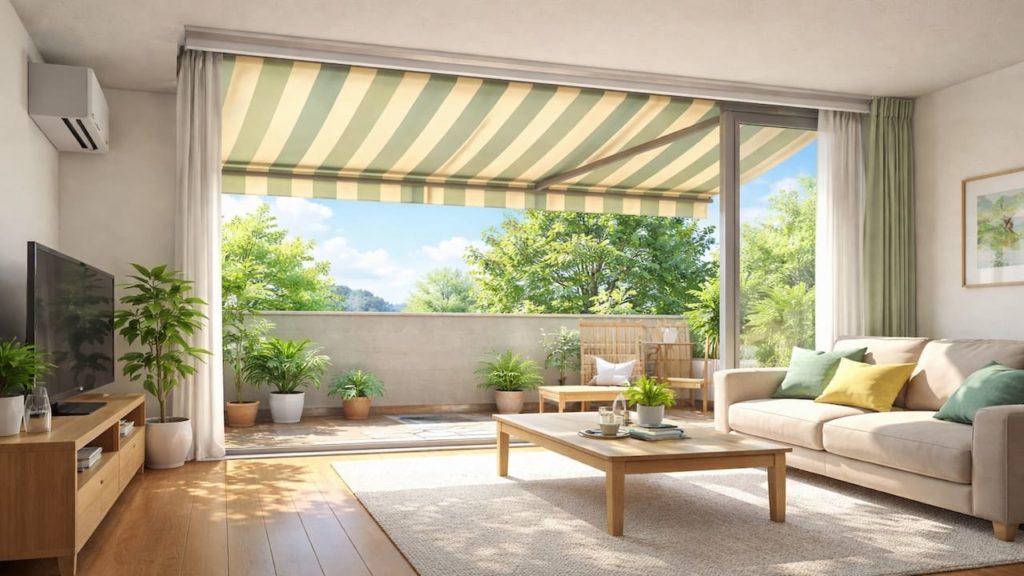
You put up an awning for comfort, then the room suddenly feels dim all day. Now you need lights earlier, and the window view looks heavier.
This can happen from the awning angle, fabric color, or covering too much glass at the wrong height. In Japan, low winter sun and deep eaves already cut daylight, so one extra layer can push the room into “always evening” mode.
In this guide, you’ll learn 5 tips to stop an awning from making the room dark. You will adjust angle, color, and partial shade so you keep glare control without killing daylight.

Hi, I’m Ken — I’m Japanese, and I live in Malaysia long-term, so I explain everyday life in Japan from a practical ‘from abroad’ perspective.
I hold a building design qualification and I’ve been on site for 20+ years across hundreds of jobs. I turn Japan’s unspoken rules into simple checks, so you can avoid costly mistakes and take the next step with clear actions that feel safe.
1. Awning makes the room dark: 5 tips
Fix darkness by shading the right sun not the whole window.
Many awnings get set too low or too flat, which blocks skylight and steals the brightest part of the window. Daylight is not just direct sun, it is also the sky brightness coming from above. In Japan, rainy season clouds and tight housing already reduce light, so you need a setup that filters glare but still lets the room breathe—bright ceiling light.
- Raise the front edge to open sky view
- Increase pitch so light can enter above
- Keep shade line above eye level indoors
- Trim coverage to match glass height correctly
- Test light at noon not just morning
Some people assume darker equals cooler, but you can cut heat without turning the room into a cave. Balance. Aim to block harsh angles, not daylight itself.
2. Angle color and partial shade
Angle and fabric brightness decide how much light survives.
A shallow angle blocks more sky, while a steeper angle can block direct sun yet still allow reflected daylight. Color matters because dark fabric absorbs light, while lighter fabric bounces some light back toward the window. Partial shade works because you often only need to block top glare or a specific hour of sun, especially in Japan where seasonal sun height changes a lot.
- Choose a lighter neutral fabric for brightness
- Set pitch steeper during low winter sun
- Use a shorter projection to preserve sky light
- Add a partial panel instead of full coverage
- Retract during cloudy days to regain light
You might think white fabric always wins, but glare can increase if the surface is shiny. Matte matters. Pick a light tone with low sheen and you keep comfort and daylight.
3. Why rooms get darker in Japan with an awning
Japan already has seasonal low sun and deep shadows.
Winter sun angles are lower, so shade devices block more of the useful light when you need it most. In dense neighborhoods, neighboring buildings also cut sky view, so the window depends on a narrow slice of daylight. Add an awning that blocks that slice, and the room shifts to dim all day—especially on overcast days.
- Low sun enters deep and gets blocked easily
- Cloudy days rely on sky brightness not sun
- Nearby buildings reduce usable sky window area
- Dark awning underside absorbs reflected light
- Low mounting height covers too much glass
People blame the window size, but the bigger factor is the sky view you left. Daylight geometry. Open the upper sky path and the room brightens without losing all shade.
4. How to redesign shade without losing comfort
Use adjustable shade and test with simple mockups.
Before changing hardware, mock up new shade lines with tape or cardboard and watch the room through one full day. Cost is mostly time/effort, plus maybe ¥100–500 for basic tape and clips to mark angles and heights. In Japan, where seasons swing, adjustable and retractable shade often beats fixed deep coverage.
- Mark three pitch angles and compare daylight
- Try shorter projection before changing color
- Lift mounting height if glass is overcovered
- Use a partial screen for morning sun only
- Set a retract habit for cloudy days
You may think you need a new awning, but many fixes are angle and coverage changes, not a replacement. Cheap test. Better decision. Do the mockup first.
5. FAQs
Q1. Should I remove the awning in winter?
Not always, but you should change pitch or retract more often to keep low sun daylight. Winter light is valuable, so treat shade as adjustable.
Q2. Does a darker color cool the room more?
It can reduce glare, but it also reduces daylight. A lighter matte fabric can still cut direct sun if the angle is right.
Q3. What is the fastest fix if the room feels too dark?
Raise the front edge and steepen the pitch. That opens the sky view above the awning and often restores daylight quickly.
Q4. Can partial shade really work?
Yes, because you often only need to block one sun angle window. A smaller panel can solve glare without cutting all-day brightness.
Q5. How do I know if size is the problem?
If the awning covers a large part of the upper glass, it is likely oversized or mounted too low. Measure how much sky you can see from inside.
Pro's Tough Talk

I’ve spent 20+ years working around Japanese homes, so I’ve seen what tends to work—and what tends to go wrong—in everyday use. If your room got dark, your awning is shading the sky, not just the sun, and that is on the setup.
A flat awning is like putting a cap over your window, stealing the brightest daylight source. Dark fabric is like sunglasses you cannot take off, and fixed deep projection is like parking a truck in front of your glass. You know the scene: midday outside looks bright, but inside feels like late afternoon, and you start flipping lights on out of habit.
Do this now: retract it and notice how much sky you lost. Today: raise the front edge and steepen the pitch. This weekend: switch to partial coverage or lighter matte fabric if needed.
If you cannot see a clean slice of sky above the awning it is too low. Fix height and angle first, then decide on color, because geometry beats guessing every time.
Come on. Shade is supposed to help you live, not turn your living room into a cave set.
Summary
Rooms get dark when the awning blocks sky brightness, not just direct sun. Fix angle, height, and projection before blaming the window.
If winter light matters, use retract and steeper pitch habits to keep daylight. If glare remains, use partial shade or lighter matte fabric instead of full dark coverage.
Raise the front edge and test a partial shade line today to keep comfort without losing daylight. Then keep learning about seasonal sun angles and balcony airflow planning.


