Your awning looks harmless until a kid treats it like a playground. One tug, one button press, and you get a surprise lesson in leverage.
You want shade and rain cover, not pinched fingers or a scared scream. In Japan, tight entry areas and sliding doors make reach and timing tricky.
In this guide, you’ll learn how to make an awning safer for kids without turning your home into a fortress. You’ll spot pinch points, set reach limits, and add simple locks so daily use stays calm.

Hi, I’m Ken — I’m Japanese, and I live in Malaysia long-term, so I explain everyday life in Japan from a practical ‘from abroad’ perspective.
I hold a building design qualification and I’ve been on site for 20+ years across hundreds of jobs. I turn Japan’s unspoken rules into simple checks, so you can avoid costly mistakes and take the next step with clear actions that feel safe.
1. Awning safety for kids: 5 checks
Assume a kid will touch every moving part.
Kids do not read warning labels, and they love buttons because buttons feel like power—especially when the awning moves and makes noise. Japanese homes often have narrow genkan entries and tight side paths, so a “safe enough” gap becomes a finger trap fast. Your job is to remove the easy hazards before they become a routine scare.
- Identify moving arms and mark no-touch zones
- Check front bar height against kid reach
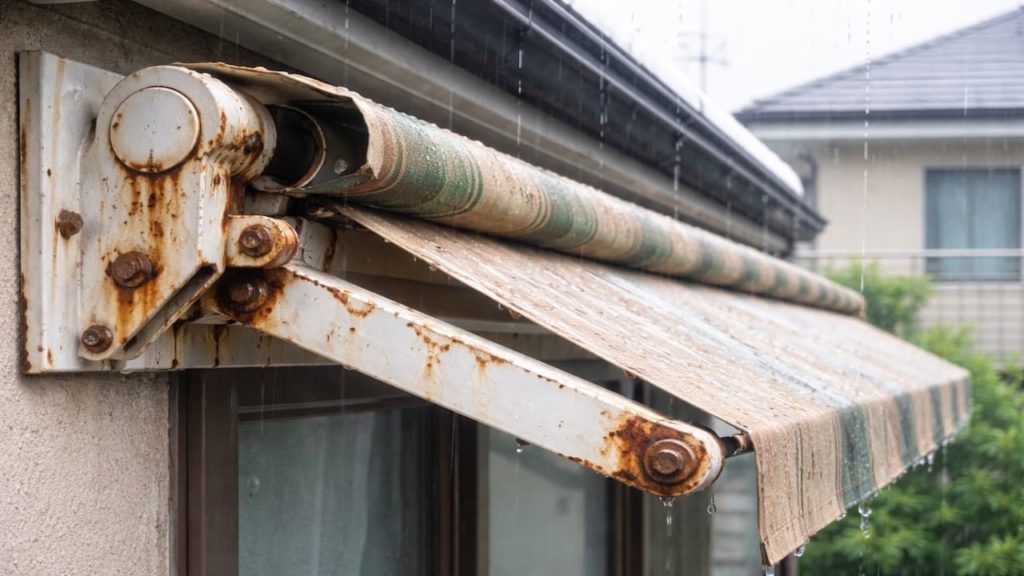
- Locate pinch points at joints and brackets
- Confirm control switch location is not reachable
- Decide a simple family rule for operation
Some people say “just teach them once.” Sure, teach them, but kids forget the moment a delivery arrives or a snack drops. You still design the setup so one mistake does not turn into an injury. That’s the whole point.
2. Pinch points reach and locks
Pinch points plus reach is the real danger.
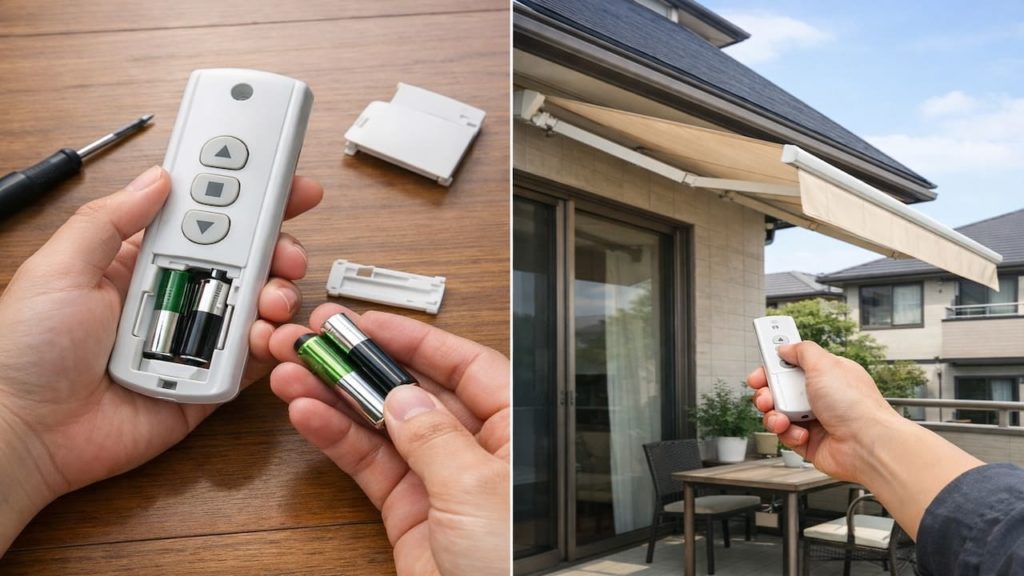
Folding arms, elbow joints, and the front bar edges are where fingers get caught, and the risk spikes when a kid can reach the moving zone. Remote controls are a sneaky problem too, because a kid can trigger motion with zero warning. Many awning manuals warn to keep controls out of children’s reach and avoid touching during movement According to helioscreen.com.au. Do not “store the remote on a hook” if that hook is kid height.
- Remove remotes from tables and low shelves
- Install a lockable cover over wall switch
- Add a cord cleat and wrap cords high
- Set a no-play boundary under the awning
- Check arm joints for squeeze gaps during motion
You might hear “locks are annoying.” Yeah, that’s the feature. Annoying means the kid can’t casually trigger the awning while you’re not looking. If the lock slows adults by one second, it can save a whole week of regret.
3. Why kids get hurt around awnings
The hazard is sudden movement with small hands nearby.
Awnings move quietly compared to doors, so kids do not “hear danger” coming. They also stand where you don’t expect, because they love to watch the fabric roll and the arms fold. Japan’s humid months keep windows and doors in constant use, so the awning becomes part of daily traffic, not a rare event. Basic child safety guidance is blunt: adults prevent accidents by changing the environment, not by trusting a child’s judgment According to caa.go.jp.
- Kids chase moving fabric and step under arms
- Small fingers explore gaps near folding joints
- Adults multitask and lose line of sight
- Remotes get pressed like toys by accident
- Chairs get climbed and reach increases suddenly
Some parents think “my kid is careful.” Cool story, until a friend’s kid visits, or your kid hits a growth spurt and reaches higher overnight. Design for the messy reality, then your rules actually work. That’s the upgrade.
4. How to kid-proof awning controls and movement
Create a two-step action to move the awning.
Make operation require intent: a locked cover, a high-mounted remote, or a stored key that adults control—simple friction. You can do this without fancy gear, and the cost is usually small: ¥300–2,000 for basic switch covers, cord cleats, or straps. In Japan, summer storms pop up fast, so you also want a routine that lets you retract quickly without panic. The goal is safe speed.
- Store remote in high cabinet after use
- Use a switch guard with flip cover
- Set an adult-only rule for all awning movement
- Call out “awning moving” before pressing buttons
- Pause halfway and scan the area once
You might think this is too much for “just shade.” But the awning is a moving mechanism over a walking zone. If you cannot enforce adult-only control, then limit extension when kids are outside and keep it retracted. Safety beats aesthetics, every time.
5. FAQs
Q1. What is the first safety check I should do today?
Put the remote and any switches out of reach and out of sight. In a small Japanese apartment balcony, even a low table can turn into a climbing step.
Q2. Where are the main pinch points on an awning?
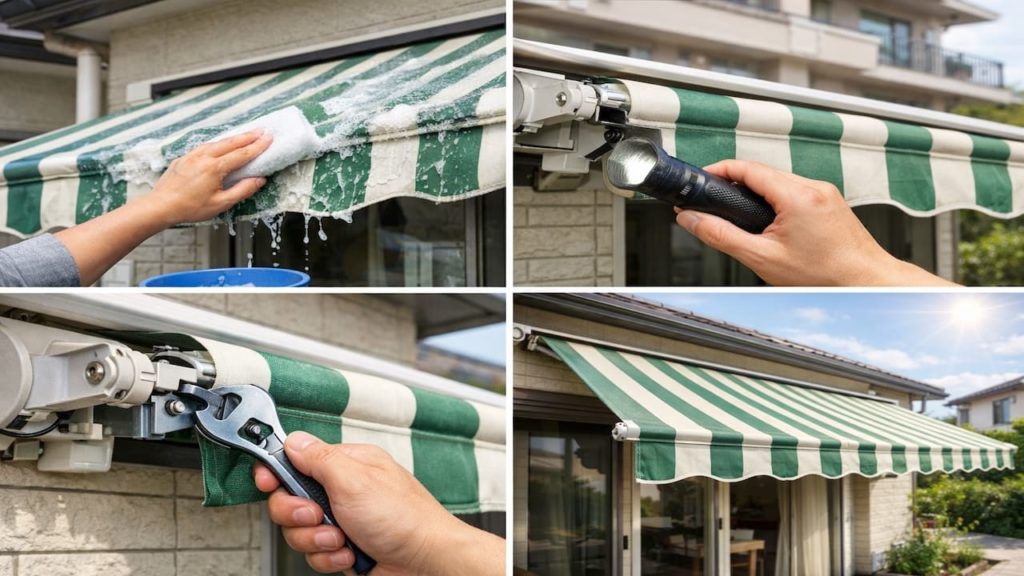
At the folding arm joints, the bracket areas, and the front bar ends during retraction. Watch one full cycle and track where metal parts approach each other.
Q3. Do I really need a lock if I can supervise?
Yes if the awning can move without you noticing. Supervision fails during phone calls, deliveries, or cooking, so add a simple barrier that blocks casual activation.
Q4. Is it safer to leave the awning fully out or fully in?
Fully in is usually safer because the moving parts are compact and out of the traffic zone. Fully out can create a tempting “tunnel” under it where kids run and jump.
Q5. What if my kid keeps touching the fabric edge?
Make the rule simple: no hands on moving fabric, ever. Then pair it with a physical boundary, like moving chairs away and keeping the awning retracted when kids play outside.
Pro's Tough Talk

I’ve spent 20+ years working around Japanese homes, so I’ve seen what tends to work—and what tends to go wrong—in everyday use. A kid plus a moving arm is like a magnet and a paperclip. During Japan’s rainy season, people rush and press buttons without looking, and that’s when it gets spicy.
Three causes, no sugar: reach, surprise, and gaps. Reach changes because kids climb anything with a flat top. Surprise happens because awnings move smoother than doors, so nobody flinches. Gaps are the killer, like a quiet mousetrap that only wakes up mid-fold.
Right now, hide the remote and block the switch. Today, run one full open-close cycle and mark the pinch zones. This weekend, add a guard cover and set an adult-only routine.
If you can move it with one careless press it is not kid-safe. If you can’t guarantee adult control, keep it retracted when kids are outside. If you still get close calls, upgrade to a lockable control setup and stop “winging it.”
You turn to grab a package, and the kid is already under the front bar. You’re carrying laundry, and the remote “mysteriously” got pressed in the other room. Yeah, kids are fast. Don’t let your awning be the dumbest hazard on your porch.
Summary
Check reach, pinch points, and who can activate the awning. Those three decide whether this stays a normal daily tool or a constant worry.
If you can’t control activation, keep the awning retracted when kids are outside. If you keep seeing risky behavior, add a physical lock and stricter routine.
Hide the remote and add a two-step control today. Then keep learning other small home safety fixes so your next click solves the next daily hazard.