You want your awning to stay smooth, quiet, and clean. But you also do not want it to become “that thing you ignore” until it jams.
Most awning problems start small: grime in the joints, loose bolts, or damp fabric that never fully dries. In Japan, humid seasons and sudden rain make that slow damage way easier.
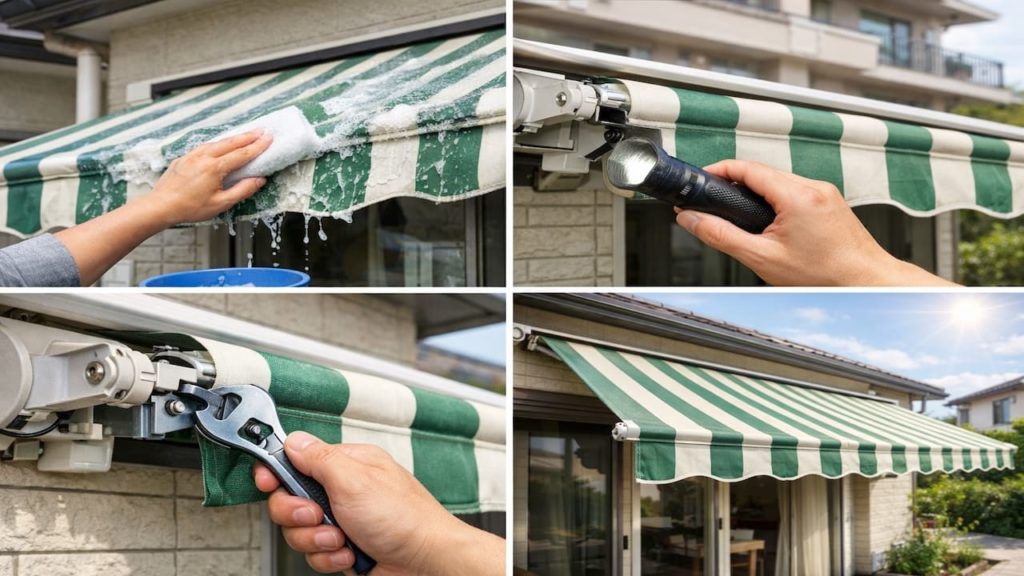
In this guide, you’ll learn a simple awning maintenance schedule you can actually keep. You’ll clean, inspect, tighten, and dry in a repeatable order so the awning lasts longer and feels safer to use.

Hi, I’m Ken — I’m Japanese, and I live in Malaysia long-term, so I explain everyday life in Japan from a practical ‘from abroad’ perspective.
I hold a building design qualification and I’ve been on site for 20+ years across hundreds of jobs. I turn Japan’s unspoken rules into simple checks, so you can avoid costly mistakes and take the next step with clear actions that feel safe.
1. Awning maintenance schedule: 5 steps
Do the same five steps every time so you miss nothing.
Maintenance fails when it is random. You wipe the fabric once, skip the arms, and forget the bolts until something squeaks. A simple loop keeps you consistent, and Japanese homes often have tight exterior space, so you need a routine that fits quick daily life. No drama.
- Brush off loose dust and leaf grit
- Wash fabric lightly and rinse well
- Inspect arms joints and brackets closely
- Tighten hardware that has any play
- Dry fully before you roll it in
You might think “it looks fine, so I’ll skip it.” That is how small issues grow in silence—especially after a stormy week. Keep the five steps, keep the awning boring, keep your weekends yours.
2. Clean inspect tighten and dry
Clean first so inspection is honest.
If the surface is dirty, you miss tiny cracks, frayed stitches, and hairline rust at the bracket edges. Do a light wash, then inspect while everything is visible, then tighten anything that moved, and only roll in after it dries. The cost is small: ¥100–500 for basic supplies like a soft brush and mild cleaner, and the rest is mostly time/effort. In Japan’s rainy season, drying is the step people skip, and that is the step that invites mildew.
- Use soft brush on fabric without grinding
- Rinse soap fully so residue does not stick
- Check seams edges and end caps carefully
- Test arms for wobble before tightening bolts
- Leave extended until fabric feels fully dry
Some folks argue “I can tighten first and clean later.” Bad order. Dirt hides looseness and moisture hides damage—so you end up tightening blindly and rolling in wet fabric. Do it in sequence and you keep the mechanism calm.
3. Why awnings degrade faster than you expect
Moisture and grit slowly chew the moving parts.
Think about what an awning lives through: sun, wind, pollen, fine dust, and water that creeps into edges and joints. If you retract it while damp, you trap humidity inside the roll, and that stays warm and wet for hours. In Japan, summer humidity and sudden showers make “just retract it quick” a daily habit, and that habit shortens life.
- Rolled fabric traps damp air and grows film
- Grit in joints acts like sandpaper
- Loose bolts amplify vibration during wind
- UV weakens threads and makes fabric brittle
- Water at brackets invites corrosion and seepage
You might say “I bought a tough model, it can handle it.” Sure, but even tough gear loses to repeated small neglect—like a bike chain with no oil. Treat moisture and grit as the real enemies, and your awning stops aging in fast-forward.
4. How to run a low-effort maintenance rhythm
Link maintenance to weather events not your memory.
Do a quick clean-and-look after heavy rain, strong wind, or pollen days, and do a deeper check when seasons change. You do not need perfect timing, you need triggers you actually notice. The cost is mostly time/effort, and the payoff is fewer “why is it creaking” moments when you are rushing out the door in a Japanese morning drizzle.
- After storms rinse and inspect brackets
- After pollen wipe fabric and front bar
- After heat waves check fabric stiffness
- Before long trips clean and dry fully
- When noise appears inspect and tighten immediately
Some people prefer a strict calendar schedule. Fine, but most people fail it. Use real-life triggers—rain, wind, pollen, heat—and the routine sticks, because the timing makes sense in your day.
5. FAQs
Q1. Can I use a pressure washer on the fabric?
Usually no, because high pressure can drive water into seams and weaken the coating. Use a soft brush and gentle rinse, especially in Japan where damp fabric can stay wet longer.
Q2. What is the fastest “good enough” check?
Extend it and look for wobble and loose bolts. If anything shifts when you lightly shake the front bar, tighten and recheck before the next windy day.
Q3. How do I know it is fully dry before retracting?
Touch the underside and the rolled edge area, not just the top. If it feels cool and damp, leave it extended longer—retracting wet is how odors and film start.
Q4. What should I inspect on the arms?
Look at joints, pins, and where metal parts pass close to each other. If you see rubbing marks or hear clicking, investigate right away before it becomes wear.
Q5. Should I tighten every bolt every time?
No, tighten only what moved, because over-tightening can strip threads on some setups. If you keep finding the same bolt loose, check the wall backing and mounting surface too.
Pro's Tough Talk

I’ve spent 20+ years working around Japanese homes, so I’ve seen what tends to work—and what tends to go wrong—in everyday use. Awnings don’t “suddenly fail,” they get slowly trashed by damp rolls and gritty joints. You feel it later as noise, sag, and weird motion.
Here’s the cold breakdown: dirt hides damage, moisture feeds stink, and looseness grows under wind. Dirt is the mask, moisture is the mold buffet, and loose hardware is the tiny crack that becomes a real problem. Like a backpack zipper that works until it doesn’t.
Right now, extend it and rinse the obvious grime. Today, inspect joints and brackets, then tighten anything with play. This weekend, do a full clean and leave it out to dry.
If you roll it in wet you are farming trouble. If you still get wobble or grinding after cleaning and tightening, stop forcing it and get the mount and arms checked. That is the decision line.
You retract it in a hurry because the doorbell rings. You notice the smell later when you open it for shade. Seriously.
Summary
Keep awning maintenance simple: clean, inspect, tighten, and dry in the same order. That prevents hidden damage and keeps movement smooth.
If you keep seeing looseness or noise after your routine, treat it as a mounting or arm issue and stop forcing cycles. If the fabric smells or films up, your drying step is not enough.
Extend it today and do the clean-then-inspect loop once. Then keep reading related awning fixes so each next step removes one more daily annoyance.