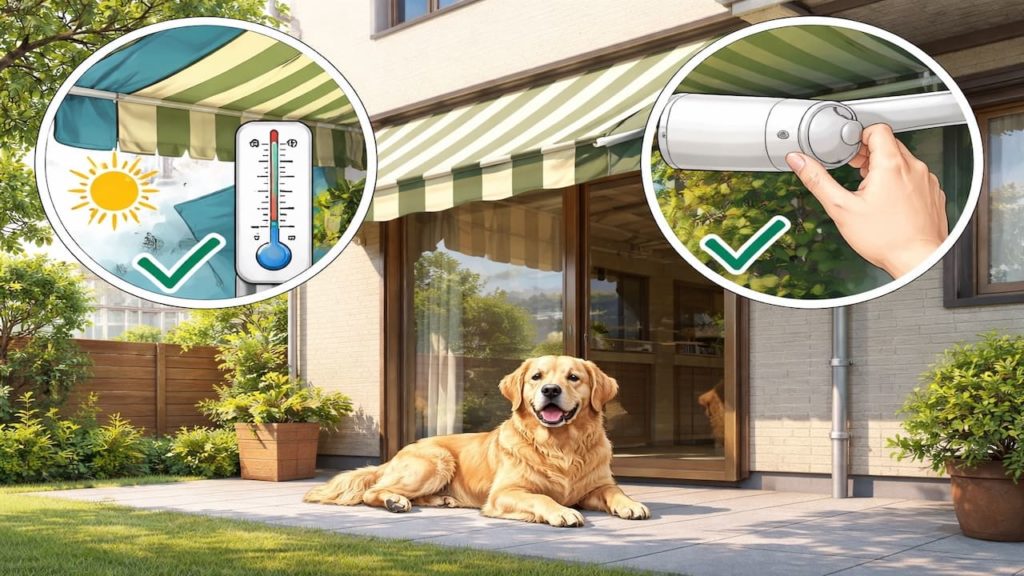
Your awning helps with sun and rain, but pets live low and close to the ground. They feel heat, glare, and sharp corners before you do.
Problems usually come from trapped heat under the canopy, hot ground surfaces, and edge hardware that can scrape or snag. In Japan, humid summers make shaded areas feel cooler but still heavy and stuffy.
In this guide, you’ll learn how to make an awning safer for pets in daily use. You’ll check heat, shade quality, and sharp edges so your dog or cat stays comfortable and avoids accidents.

Hi, I’m Ken — I’m Japanese, and I live in Malaysia long-term, so I explain everyday life in Japan from a practical ‘from abroad’ perspective.
I hold a building design qualification and I’ve been on site for 20+ years across hundreds of jobs. I turn Japan’s unspoken rules into simple checks, so you can avoid costly mistakes and take the next step with clear actions that feel safe.
1. Awning pet safety: 5 checks
Pets need safe shade not just shade.
An awning can create a “cool-looking” zone that is still hot because air is trapped and the ground holds heat. Pets also rub against edges and brackets, and tight Japanese entry spaces can put hardware right at head height for a small dog. Do these checks before you let pets lounge there for long.
- Feel ground temperature where pets actually lie
- Check airflow under canopy for stale heat
- Inspect edges for burrs screws and sharp corners
- Confirm cords or straps are secured out of reach
- Watch for chewing or rubbing near brackets
You might think “they’ll move if it’s hot.” Sometimes they don’t, especially older pets or pets that want to stay near you. Build a safe zone so they don’t have to make perfect choices.
2. Heat shade and sharp edges
Heat stress and edge injuries are the real risks.
Shade lowers direct sun, but humidity and low airflow can still push pets into heat stress. Japan’s summer humidity makes “not in the sun” feel misleading, especially on a concrete entry that stores heat. Sharp edges matter too: front bars, end caps, and bracket corners can scratch noses or snag collars when pets squeeze past. Budget ¥500–3,000 for basic fixes like edge guards, cable clips, and a small cooling mat, and the rest is mostly time/effort.
- Provide water bowl in shade at all times
- Add airflow gap by extending less in heat
- Use lighter fabric or vented style if available
- Cover sharp corners with rubber edge guard
- Clip loose cords high and prevent chewing access
Some people assume shade solves summer danger. Not in humid weather. Shade can still be hot, and pets cannot sweat like you do. Treat shade as one tool, not the full answer.
3. Why pets get into trouble around awnings
Pets combine low height with fast movement.
Dogs dash under the edge, cats weave around brackets, and both can scrape against hardware or get startled by sudden awning motion. Heat is the silent one: a shaded concrete pad can still roast paws and push body temperature up. General guidance for dogs is to prevent overheating by ensuring shade, water, and cool surfaces, and to watch for heat illness signs. In Japan’s close housing, pets often stay near the doorway, right where awnings and edges are.
- Pets rub edges and snag collars on brackets
- Sudden awning movement can startle and bolt pets
- Concrete holds heat even when shaded
- Humidity limits cooling and raises heat stress risk
- Chewing cords creates choking and shock hazards
You might think “my pet is calm.” Calm pets still overheat, and curious pets still chew. Set the environment so calm stays calm.
4. How to make the shaded area pet-safe
Create a cool landing zone with no snag points.
Start with the ground: add a mat or raised bed so paws and belly are not on hot concrete. Then remove snag points by covering sharp corners and securing loose cords. The cost is mostly time/effort, and small supplies, and it pays back every humid Japanese afternoon when your pet wants to hang near the door. If your awning is motorized, keep controls out of reach and avoid moving it while pets are underneath.
- Place raised bed or mat to reduce heat contact
- Keep shade but allow airflow with partial extension
- Install rubber guards on exposed sharp corners
- Secure straps cords and hooks away from pets
- Set rule no awning movement with pets below
Some folks try to block the whole area with fences. That can backfire by trapping more heat and stressing the pet. Make the zone safe and cool, not sealed and stuffy.
5. FAQs
Q1. Is shaded concrete safe for pets in summer?
Not always. Concrete stores heat and can stay hot even in shade, especially in Japan’s humid summer. Touch it with your palm for a few seconds where your pet lies.
Q2. What is the fastest check that prevents most issues?
Check ground heat and give water in the shade. Most pet discomfort under awnings is heat stress, not sunburn.
Q3. My pet keeps rubbing the awning legs or brackets, is that dangerous?
It can be if there are burrs, sharp edges, or protruding screws. Cover corners with a rubber guard and check for loose hardware that can cut skin.
Q4. Can pets get hurt by the awning moving?
Yes, especially if a pet is under the front bar or near arms when it moves. Avoid operating it with pets below and keep remotes stored high.
Q5. What signs tell me the area is too hot for my pet?
Heavy panting, drooling, weakness, or reluctance to move are red flags. Move them to a cooler area and stop using the awning zone as the main resting spot.
Pro's Tough Talk

I’ve spent 20+ years working around Japanese homes, so I’ve seen what tends to work—and what tends to go wrong—in everyday use. People think “shade equals safe,” then they leave a dog on hot concrete like it’s a cool spa. It isn’t.
Three problems, no mercy: heat trap, hot ground, and sharp hardware. Heat trap happens when air sits under the canopy and humidity makes it feel like a wet blanket. Hot ground burns paws and heats the body from below. Sharp hardware scrapes noses and snags collars when pets squeeze past like little furry torpedoes.
Right now, move water into the shade and check the ground with your hand. Today, cover sharp corners and secure any loose cords. This weekend, set a raised bed and a “no awning movement with pets below” rule.
If the shade zone still feels hot to your palm it is too hot for your pet. That’s when you stop relying on the awning and move the pet to indoor cooling or a cooler surface. If you keep seeing scrapes or snagging, the edges need guards or relocation.
You open the door, the dog shoots out, and bonks into the bracket like a pinball. You step outside barefoot and realize the ground is still cooking. Yeah, your pet noticed first.
Summary
Pet safety under an awning is about heat, airflow, and sharp edges. Shade helps, but hot ground and humidity can still create heat stress.
If the area stays hot or you see snag points, change the setup: add a mat or raised bed, increase airflow with partial extension, and cover edges. If you cannot keep it cool, use a different resting spot.
Check ground heat and cover sharp corners today. Then keep reading related awning safety checks so each next step makes daily life calmer for your pet.