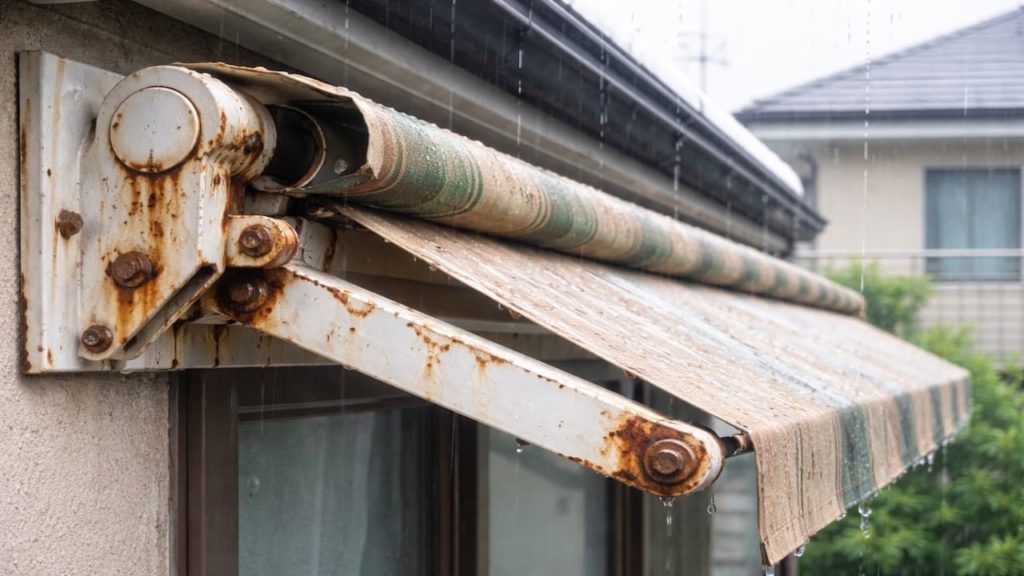
You noticed rust spots on awning hardware, even though it doesn’t look that old. Screws, brackets, or end caps start showing orange stains.
Rust can be surface-only or a sign water is getting trapped where it shouldn’t. In Japan, rainy seasons plus coastal salt air in some areas make small scratches turn into fast corrosion.
In this guide, you’ll learn how to judge rust risk on awning hardware before it gets ugly. You’ll spot salt air effects, scratch damage, and rain traps so you can clean and protect the right parts.

Hi, I’m Ken — I’m Japanese, and I live in Malaysia long-term, so I explain everyday life in Japan from a practical ‘from abroad’ perspective.
I hold a building design qualification and I’ve been on site for 20+ years across hundreds of jobs. I turn Japan’s unspoken rules into simple checks, so you can avoid costly mistakes and take the next step with clear actions that feel safe.
1. Awning rust spots on hardware: 5 signs
Rust tells you where water and oxygen keep meeting metal.
One tiny orange dot can be harmless, or it can mean the coating was breached and water is sitting there after every rain—Japan’s humidity makes that cycle constant. Look for patterns: streaks, clusters, and repeat spots after cleaning. Patterns show the real cause.
- Orange streaks running down from one screw head
- Pitting dots that feel rough under fingertips
- Rust around scratches or chipped coating areas
- Stains that return quickly after cleaning attempt
- Rust concentrated on underside near trapped water
You might think “it’s just cosmetic.” Sometimes. But if you see pitting or repeat streaks, that’s corrosion working, not just discoloration.
2. Salt air scratches and rain
Salt plus scratches turns small damage into fast rust.
Salt air leaves invisible deposits, and rain re-wets them like a corrosion starter. Scratches break the protective coating, and then the rust grows from that cut like a spreading bruise. In Japan, coastal wind and rainy season combo is rough on hardware, and tight homes keep parts wet longer. Expect ¥300–2,000 for basic supplies like rust remover, touch-up paint, and a small brush.
- Check if rust is worse on windward side
- Inspect scratches near bolt heads and bracket edges
- Look for water pooling at horizontal surfaces
- Rinse salt after storms and wipe dry afterward
- Touch up chips before rust gets under coating
Some folks think stainless means “no rust ever.” Wrong. Stainless can still stain and corrode when salt sits and oxygen-starves crevices. Maintenance still matters.
3. Why rust shows up on awning hardware
Trapped water and damaged coating are the usual triggers.
Hardware rust often starts where water lingers: under screw washers, inside bracket corners, and at scratches from tools or debris. Rainwater runs, then collects, then dries slowly in humid air, and that cycle repeats for months. If the awning drips onto the same bracket area, it keeps feeding corrosion. Japan’s seasons make “wet then warm” a normal pattern.
- Coating damaged by installation tools or impacts
- Water trapped in bracket corners and crevices
- Salt deposits remain after wind and rain events
- Mixed metals cause staining near fasteners sometimes
- Sealant gaps allow water to sit behind plates
You might blame the product quality, but many rust cases are install scratches plus neglected rinsing. Once you remove trapped water and seal the breach, rust progression slows hard.
4. How to treat rust spots and prevent return
Clean the spot and restore the coating barrier.
Start with gentle cleaning and light rust removal, then rinse and dry, then touch up coating where it was scratched. The cost is mostly time/effort if rust is early, and small supplies like touch-up paint—¥500–3,000 depending on what you already own. In Japan’s humid months, do this on a dry day and let it cure before the next rain, or you’ll trap moisture under fresh coating.
- Scrub lightly with non metal pad and rinse
- Dry fully and inspect if pitting remains
- Apply rust converter only if manufacturer allows use
- Touch up coating on scratches and chip edges
- Rinse salt monthly and after stormy weather
Some people paint over rust immediately. That seals in active corrosion and it blooms under the paint. Remove the rust first, dry it fully, then seal the surface like you mean it.
5. FAQs
Q1. Is surface rust on a screw head a big deal?
It can be minor if it is only staining and the screw is still solid. But if the rust is pitting or the washer area is lifting, it is a sign water is sitting there and the fastener may weaken over time.
Q2. What is the fastest first check that tells me risk level?
See if the rust wipes off or if it feels pitted. Wipe-off staining is low risk, while pitting means the metal surface is being eaten.
Q3. Should I replace rusted screws immediately?
If they are heavily pitted, yes, because fasteners are cheap compared to bracket failure. If it is light staining, clean and protect first and monitor after rain.
Q4. How often should I rinse hardware near the coast?
More often than you think. A quick rinse after windy storms and a monthly rinse helps remove salt deposits. In Japan’s rainy season, follow up by drying what you can to reduce trapped moisture.
Q5. When should I call an installer about rust?
If rust is spreading under the bracket plate, you see cracks around mount points, or the mount feels loose. Rust plus movement is a structural risk, not just a cosmetic issue.
Pro's Tough Talk

I’ve spent 20+ years working around Japanese homes, so I’ve seen what tends to work—and what tends to go wrong—in everyday use. Rust spots aren’t just “ugly dots.” They’re a map showing you where water sits and where coating got injured.
Three causes, simple and ruthless: scratches, salt, and trapped water. Scratches break the armor. Salt turns rain into corrosion soup. Trapped water keeps the metal wet long enough to start chewing. Like leaving a wet sponge on a knife and acting surprised.
Right now, rinse the hardware and dry what you can. Today, inspect for pitting and mark any spots that return. This weekend, remove rust properly and touch up coating on every scratch you find.
If you have pitting near fasteners you treat it as hardware risk. That means you either replace screws or at least stop letting salt and water camp there. If rust is creeping behind brackets or the mount feels loose, you stop ignoring it and get it checked.
You see one orange dot, then next month it looks like a leopard print. Congrats, you just grew a rust farm.
You wipe it with a tissue, it comes back after the next rain, and you pretend it’s “fine.” Yeah, no.
Summary
Rust spots are caused by scratches, trapped water, and salt deposits working together. Look for pitting, repeat stains, and rust that clusters around fasteners and corners.
If rust wipes off, clean and protect the coating and start rinsing after storms. If rust is pitted or spreading under brackets, treat it as a real hardware risk and escalate.
Rinse and dry the hardware today then check for pitting. Then keep reading related awning checks so you prevent small corrosion from turning into a bigger repair.