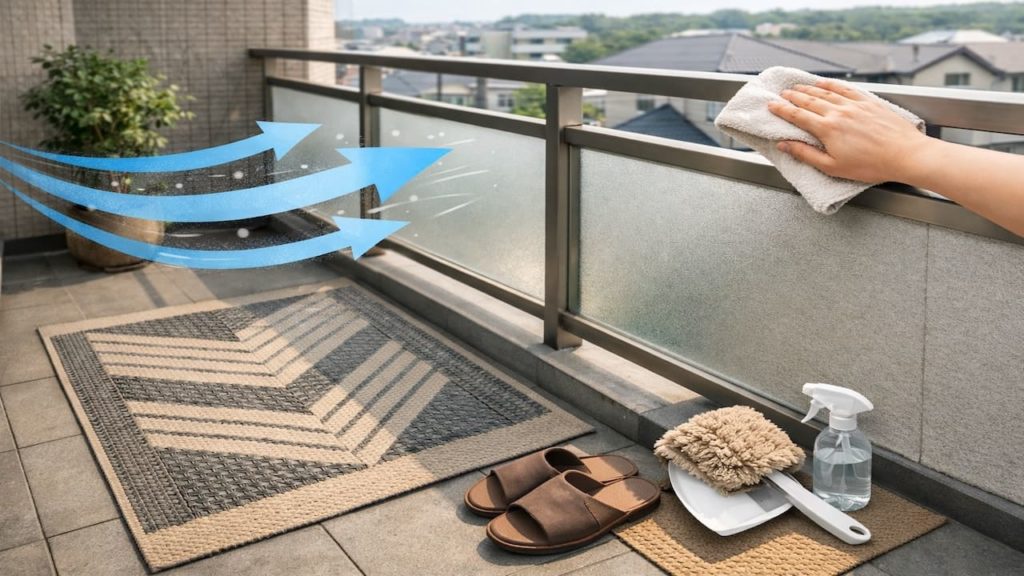
You sweep the balcony and it looks fine, then dust shows up again the next day. The floor feels gritty, and the door track starts collecting dirt like a magnet.
Fast dust buildup can come from wind paths, nearby roads, plants, and the way your balcony traps airflow. In Japan, spring pollen, dry winter air, and windy rainy-season gaps push fine dust into small balconies and keep it there.
In this guide, you’ll learn how to slow balcony dust buildup without constant cleaning. You will read the wind path, choose mats that do not trap grit, and use a quick wipe routine that actually sticks.

Hi, I’m Ken — I’m Japanese, and I live in Malaysia long-term, so I explain everyday life in Japan from a practical ‘from abroad’ perspective.
I hold a building design qualification and I’ve been on site for 20+ years across hundreds of jobs. I turn Japan’s unspoken rules into simple checks, so you can avoid costly mistakes and take the next step with clear actions that feel safe.
1. Balcony gets dusty fast: 5 tips
Stop dust at the edges before it spreads—most of it lands in the same zones.
Balconies collect dust where airflow slows down: corners, under rails, and near the sliding door. Japanese apartment balconies are narrow, so dust does not “blow through,” it settles and stays. If you only sweep the center, the corners keep feeding grit back onto the floor. Same cycle.
- Check corners first where dust piles up
- Wipe the door track lip every week
- Sweep under the rail line not just center
- Bag leaves before they crumble into dust
- Clean after windy days not only on schedule
You might think your balcony is just unlucky or “always dusty.” It is usually predictable. Find the landing zones once, then target them, and you cut effort without letting grime spread through your Japanese home entrance line.
2. Wind paths mat choice and quick wipe
Dust control is airflow plus surfaces—change either one and the balcony feels cleaner.
Wind carries dust through small gaps and drops it where air slows, like behind planters or near walls. In Japan, seasonal winds and pollen spikes make this worse, so your best move is guiding where dust lands and making it easy to remove. Mats matter because some trap grit and stay damp, turning into dirty sponges. Your wipe routine matters because dry sweeping can just kick fine dust around.
- Find wind entry gap by watching light dust lines
- Place a mat where feet step not everywhere
- Choose closed surface mats that shake clean
- Wipe dust with a damp cloth not dry broom
- Reset surfaces after rain when dust sticks less
You might think more mats means less dirt. Often it means more trapped grit and more damp, especially in Japan’s humid months. Use fewer mats, pick ones that clean easily, and rely on a quick damp wipe at the door zone to stop tracking inside. Small system.
3. Why balcony dust returns so quickly
Fine dust keeps re-entering and re-lifting—wind and foot traffic recycle it.
Even when you clean, new dust arrives through airflow patterns, and old dust hides in textured concrete, drain corners, and the door track. In Japan’s spring, pollen and fine particles can be heavy, so the balcony becomes a catch basin. When the surface dries, a small breeze lifts particles again and spreads them across the floor. Loop.
- Remove grit from door track so it stops cycling
- Lift mats to dry so dust does not stick
- Move planters so corners are not blocked
- Clear drain cover so debris cannot crumble there
- Keep balcony items minimal so wiping stays fast
You might think the only answer is cleaning more often. The smarter answer is breaking the dust loop by removing hidden reservoirs and preventing tracking. Once the door track stays clean, your whole apartment feels cleaner, because that is the dirt gateway. Real effect.
4. How to keep a balcony clean with a 3-minute routine
Do a tiny reset that stops dust from migrating indoors—that is the goal.
Plan on ¥500–2,000 for a small hand brush, microfiber cloths, and a simple spray bottle, and you have a repeatable setup. In Japan, you also want low splash and low noise, so avoid blasting water and focus on damp wiping. cost is mostly time/effort.
- Spray cloth lightly and wipe the threshold line
- Brush corners and push debris into a bag
- Wipe rail top where dust coats your hands
- Clean the door track groove with a narrow brush
- Shake mat outside then hang it to dry
You might think this is too small to matter. It matters because it targets where dust enters and where you track it, which is the real pain in Japanese homes. If you miss a week, dust returns fast, so keep it short and easy instead of waiting for a big clean. Boring wins.
5. FAQs
Q1. Why is my balcony dusty even when it rarely rains?
Dry weather lets fine dust travel farther and settle, especially with seasonal winds. Once it lands, it hides in texture and re-lifts with small breezes.
Q2. What kind of mat works best for dusty balconies?
Pick a closed surface mat that shakes clean and dries fast. Avoid thick fabric mats that trap grit and stay damp in humid seasons.
Q3. Should I sweep or wipe first?
Sweep or brush the corners first, then wipe near the door and track. Wiping first can turn grit into scratchy paste.
Q4. Why does the door track get dirty so fast?
The track catches dust and hair and holds it in a narrow groove. Once it is dirty, every open-close motion drags particles back out.
Q5. When should I do the quick routine?
After windy days, after pollen-heavy days, or right before you bring laundry inside. Quick timing beats a rigid schedule.
Pro's Tough Talk

I’ve spent 20+ years working around Japanese homes, so I’ve seen what tends to work—and what tends to go wrong—in everyday use. Japan’s seasonal wind and pollen turn a balcony into a tiny dust collector if you let it.
Here’s the cold breakdown. Dust enters through wind paths, then it settles where air slows, then you re-spread it with footsteps and door tracks. You throw mats everywhere, and now you have dust storage with a cute pattern. Nice try. You sweep the center, feel productive, then the corners dump grit back like they were waiting for you to leave.
Seriously.
Find the wind path now. Clean the door track today. Do the 3-minute wipe loop this weekend.
If dust keeps returning your edges are still feeding it. Fix corners, track, and mat choice, and the rest becomes easy instead of endless.
You clean it, then you drag a dusty mat back inside. Classic.
Summary
Balcony dust returns fast because wind brings fine particles and your balcony traps them in corners and door tracks. Stop dust at the edges and the whole space stays cleaner.
Choose mats that do not trap grit, read the wind path, and keep a quick damp wipe routine near the door. Once the track is clean, you reduce indoor tracking a lot.
Today clean the track and wipe the threshold line. After that, a short reset keeps the balcony comfortable without constant effort.


