You hang laundry on the balcony, but it still takes forever to dry. You keep checking it, flipping it, and it’s still damp when you need it.
In Japan, balcony airflow is often blocked by walls and nearby buildings, and humidity can jump fast during rainy season or winter cold days. Even with sun, weak wind flow can make drying painfully slow.
In this guide, you’ll learn 5 tips to dry balcony laundry faster by using wind angle, rack height, and timing so your clothes finish dry without turning your day into laundry babysitting.

Hi, I’m Ken — I’m Japanese, and I live in Malaysia long-term, so I explain everyday life in Japan from a practical ‘from abroad’ perspective.
I hold a building design qualification and I’ve been on site for 20+ years across hundreds of jobs. I turn Japan’s unspoken rules into simple checks, so you can avoid costly mistakes and take the next step with clear actions that feel safe.
1. Not drying fast?
Fast drying depends on moving air not heat.
Sunlight helps, but airflow removes moisture from fabric. On many Japanese balconies, wind hits at an angle and gets deflected, so clothes sit in still air. If your rack is too low or too close to a wall, you lose the breeze. Slow drying is usually a setup problem—fixable.
- Stand outside and feel the wind direction
- Notice still zones near balcony walls
- Check if clothes touch each other while hanging
- Test one item at a higher rack level
- Track drying time on a humid day
“But it’s sunny, so it should dry.” Not always. Sun without airflow is like a hairdryer on low with no fan. You need air movement to carry moisture away.
2. Wind angle rack height and time
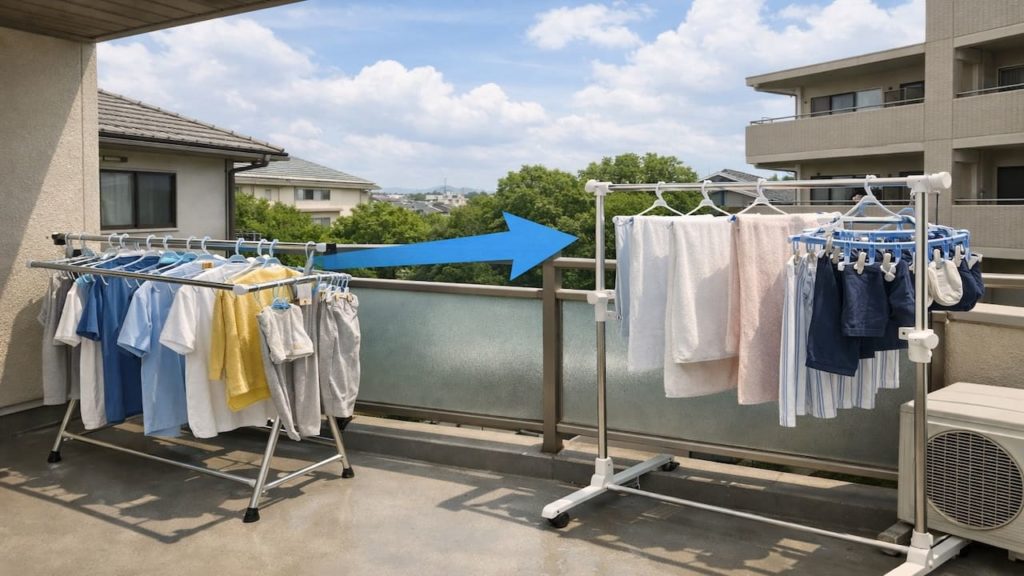
Angle your laundry to catch the breeze.
Wind rarely blows straight into a balcony. It skims past the opening, so you want your hanging line to intercept it. Raise the rack into the path of the breeze and keep a gap behind the clothes so air can pass. This matters in Japan where balconies are narrow and boxed in.
- Rotate the rack to face the wind angle
- Raise the rack closer to the opening edge
- Leave a fist-width gap behind hanging items
- Hang thick items on the outer wind side
- Keep sleeves and hems from overlapping
“My rack has only one spot.” Then you adjust what you can: orientation, spacing, and which items get the best airflow. You don’t need a new balcony, just better geometry.
3. Why balcony laundry dries slowly
Humidity plus crowding slows evaporation hard.
When air is humid, fabric can’t release moisture quickly. Crowded hanging makes it worse by trapping damp air between items. Japan’s weather can shift within hours, and balconies often sit in shade part of the day, so your drying window is smaller than it looks. Small errors add hours.
- Overloading creates a damp pocket between clothes
- Thick cuffs and waistbands dry last every time
- Shade from buildings cuts drying speed sharply
- Evening humidity rises and re-wets fabric
- Still air behind glass doors slows everything
“So I just need more sun.” Sun helps, but you’ll still lose if airflow is blocked and items overlap. Airflow and spacing beat raw sunshine.
4. How to dry balcony laundry faster
Use a two-stage dry to beat humidity.
Most of the cost is mostly time/effort, not money. The trick is to use the best outdoor window for the first stage, then finish indoors with controlled airflow before humidity climbs. In Japanese apartments, this avoids the late-day “re-damp” problem and gets you reliably dry clothes.
- Start hanging as early as you can
- Shake and snap fabric to open fibers
- Flip thick items halfway through drying
- Move the rack as sun and wind shift
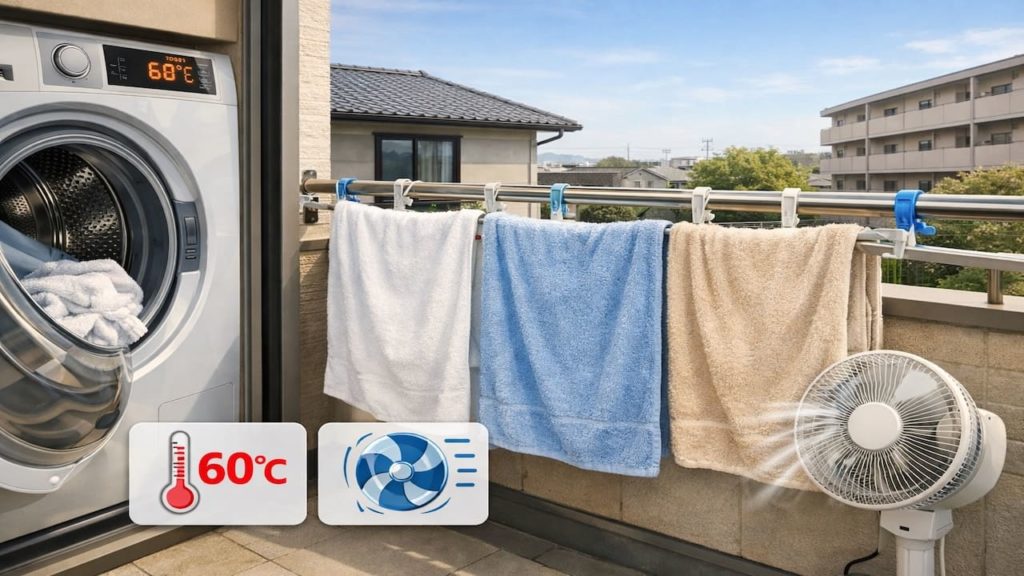
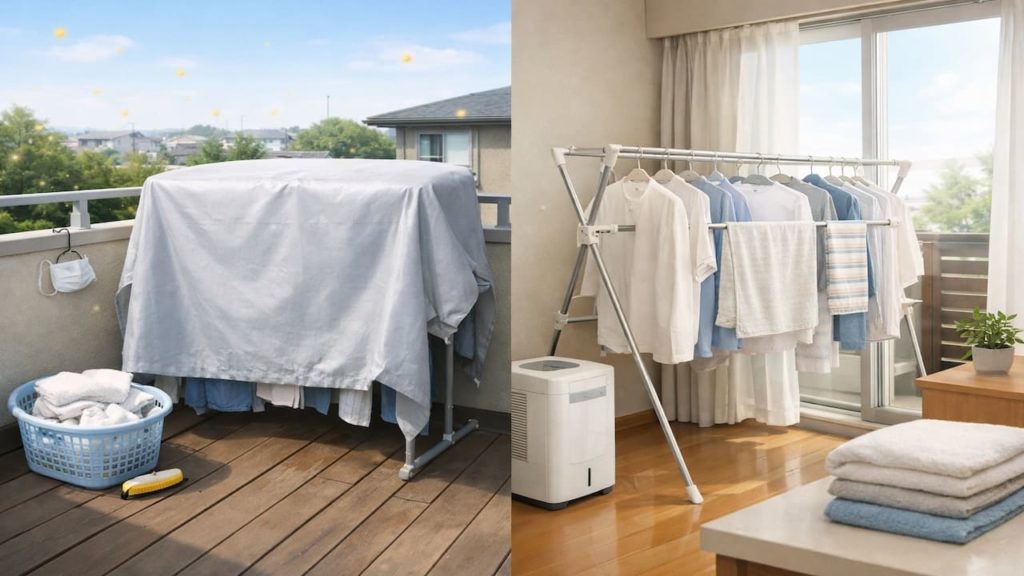
- Finish-dry indoors with a fan if needed
“I don’t want to bring laundry inside.” You don’t have to for everything. Bring in only the thick pieces first and let the thin stuff finish outside. That’s the efficient split.
5. FAQs
Q1. What dries faster, higher rack or lower rack?
Higher usually dries faster because it catches more moving air near the balcony opening. If higher puts clothes into direct shade, raise it less but prioritize airflow and spacing.
Q2. When is the best time to start balcony laundry in Japan?
Earlier is better because humidity tends to rise later in the day, especially in rainy season. Starting before mid-morning gives you the widest dry window.
Q3. Why do thick towels and jeans stay damp the longest?
They hold more water and have layered seams that trap moisture. They need stronger airflow, more spacing, and often a mid-dry flip.
Q4. Should I use a dehumidifier or fan indoors to finish drying?
A fan is a simple win because it increases air movement across fabric. A dehumidifier helps in very humid weather, but even just airflow can finish the job reliably.
Q5. How do I know if clothes are “re-damping” after drying?
If they felt dry earlier but feel cool or slightly clammy later, humidity likely rose and the fabric absorbed moisture again. That’s a signal to finish-dry indoors before evening.
Pro's Tough Talk

I’ve spent 20+ years working around Japanese homes, so I’ve seen what tends to work—and what tends to go wrong—in everyday use. Slow balcony drying isn’t bad luck, it’s physics. In a typical Japanese apartment setup, airflow gets blocked and humidity wins unless you set the rack like you mean it.
Three causes show up over and over. First: wind misses your balcony opening, so your clothes sit in dead air. Second: you hang things too close and they create their own damp bubble. Third: timing is off, so you start late and the humidity surge steals your progress.
Rotate the rack to catch the breeze. Today. Raise it and space items so air can pass. This weekend, build a habit of flipping thick items and finish-drying indoors before the humidity climbs.
If it’s still damp after a full day, your balcony airflow is too weak for that load size. Cut the load, prioritize thick items in the best wind spot, and treat indoor finish-dry as the normal move. If even thin shirts stay damp, then it’s weather and timing, not your technique.
Everyone has done the “just one more hour” wait and then put on a slightly damp shirt anyway. That’s not patience, that’s self-inflicted discomfort. Be smarter than the humidity.
Summary
Drying fast on a balcony is mostly about airflow: catch the wind angle, set the rack height into moving air, and keep spacing so moisture can escape. Sun helps, but still air will always slow you down.
If drying doesn’t improve, treat it as a timing and load-size issue: start earlier, flip thick items, and bring the slow pieces inside before evening humidity rises. If even thin items stay damp, the day’s humidity is the real limiter.
Today, rotate and raise your rack, space items, and move thick pieces to the wind side. Do the two-stage dry and you’ll stop losing hours to “almost dry” laundry, then you can move on to the next problem like a normal human.