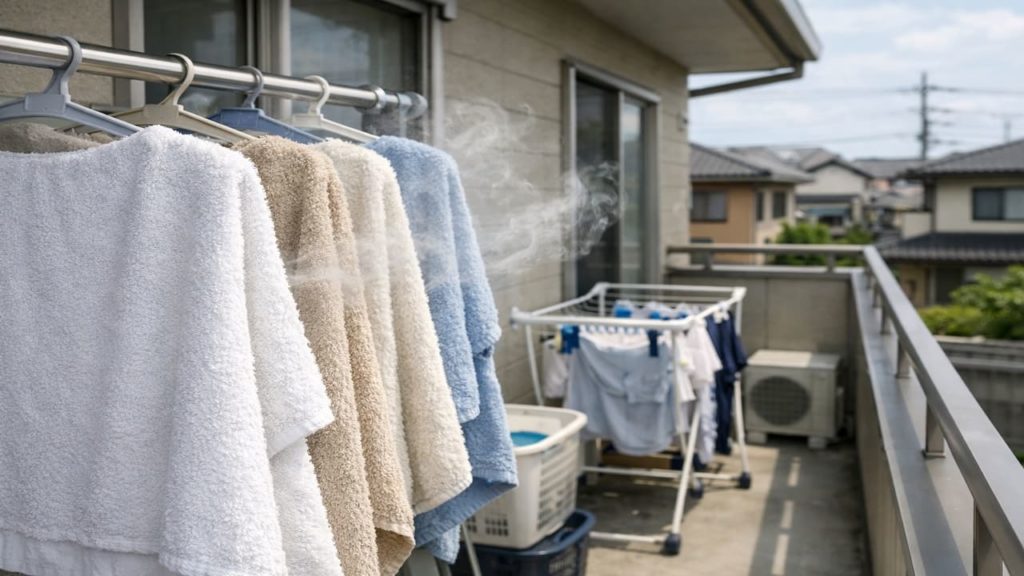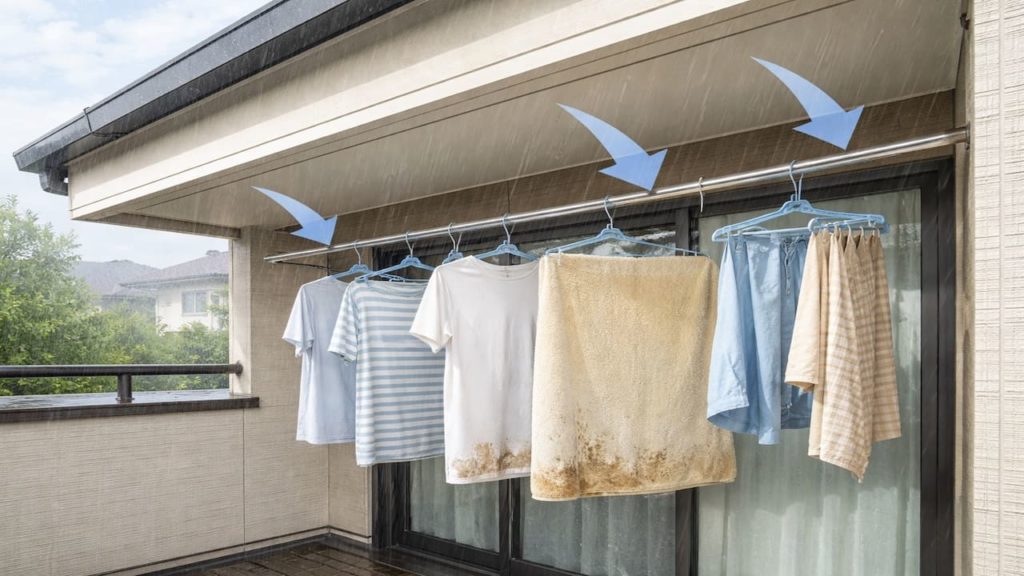
You dry laundry on the balcony, but during pollen season it comes back inside feeling dusty and itchy. You can even smell the “outside” on towels and shirts.
In Japan, spring pollen can be heavy, and balconies sit right in the airflow where it sticks to damp fabric. Even a short hang can collect pollen fast, especially in windy weather.
In this guide, you’ll learn 5 tips to reduce pollen on balcony laundry with a cover method, a pre-shake routine, and an indoor finish plan that still gets clothes dry without bringing the season inside.

Hi, I’m Ken — I’m Japanese, and I live in Malaysia long-term, so I explain everyday life in Japan from a practical ‘from abroad’ perspective.
I hold a building design qualification and I’ve been on site for 20+ years across hundreds of jobs. I turn Japan’s unspoken rules into simple checks, so you can avoid costly mistakes and take the next step with clear actions that feel safe.
1. Pollen season Balcony laundry 5 tips
Wet fabric grabs pollen like a magnet.
Pollen sticks best when fabric is damp and textured, so towels and knits collect more. If you hang laundry fully exposed, pollen rides the wind and lands all day. Japan’s spring breezes can turn a balcony into a pollen delivery route. The goal is to limit contact time and reduce exposed surface area—simple but effective.
- Hang thin items first to shorten pollen exposure
- Keep fluffy towels off the outer edge
- Use tighter spacing to reduce surface area
- Bring laundry in before late afternoon winds
- Finish drying indoors to cut exposure time
“But sunlight kills germs, so balcony is best.” Sun is nice, but pollen isn’t a germ problem. It’s a sticky particle problem. Different battle.
2. Cover method pre shake and indoor finish
Covering works if air can still move.
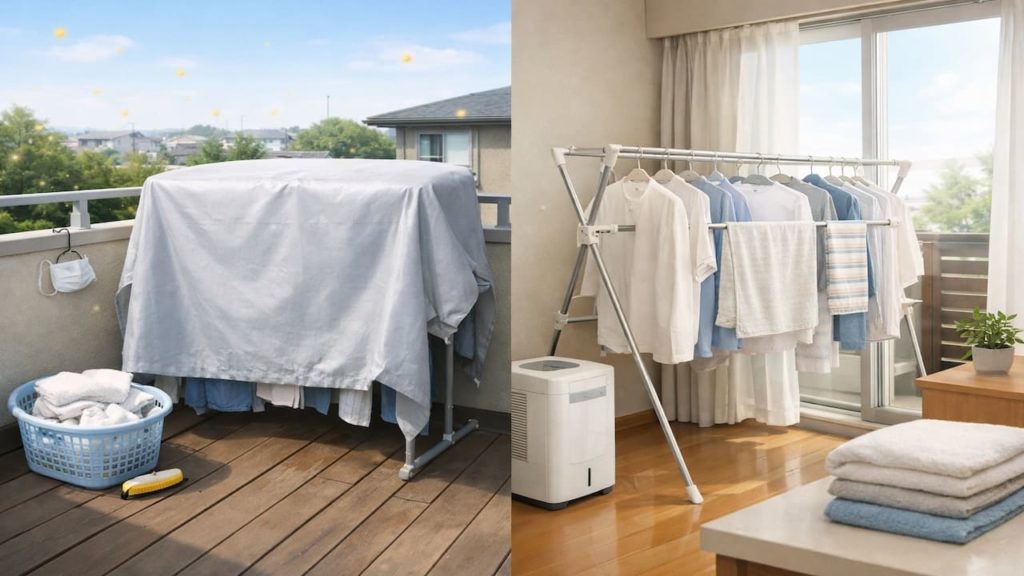
A cover blocks direct pollen landing, but it can also trap humidity if you wrap everything too tight. Use a breathable cover that shields the outer face while leaving gaps for airflow. Then do a quick pre-shake before bringing items inside, and finish indoors with controlled air movement. This fits Japan apartments where balcony space is limited.
- Drape a breathable sheet as a front shield
- Clip cover above clothes leaving side gaps
- Shake each item lightly before bringing inside
- Brush collars and cuffs with clean hands
- Finish drying indoors near moving air
“I used a cover and it dried slower.” That happens when the cover seals airflow. Keep the cover as a shield, not a vacuum bag. Air still needs a path.
3. Why pollen sticks to balcony laundry
Damp time plus texture makes pollen cling.
Pollen particles catch on fibers, and moisture acts like glue. Rough fabrics, static, and softener buildup can increase cling. In Japan, windy days can spike pollen contact, and nearby roads can add fine dust that helps pollen stick even more. Once it’s on fabric, shaking alone may not remove it fully.
- Towels and knits trap pollen in loops
- Softener residue increases cling on fibers
- Static electricity pulls particles onto fabric
- Windy mornings bring higher pollen contact
- Balcony rail area gets the strongest airflow
“So I should never dry outside.” Not necessary. You just want less exposure time and a cleaner transition indoors. Control, not panic.
4. How to reduce pollen on laundry quickly
Use a short outdoor stage then indoor finish.
Most of the cost is mostly time/effort, not money. Start outdoors for the first dry stage, then move inside before pollen contact piles up. A fan helps because it finishes drying faster without adding new pollen. If you need supplies, a simple laundry cover or extra clips are usually around ¥300–1,200.
- Hang outside only until surface feels dry
- Bring in early and finish with indoor airflow
- Use a fan to keep fabric moving lightly
- Skip softener if pollen clings badly
- Rinse again if towels feel gritty
“Indoor drying makes the room humid.” True if you do it wrong. Keep airflow and crack a window for a short burst. Finish-dry is faster than full indoor drying.
5. FAQs
Q1. What type of cover works best for pollen?
A breathable sheet or purpose-made laundry cover that blocks direct landing works well. Avoid fully sealed plastic, because it traps humidity and slows drying.
Q2. Should I shake laundry hard before bringing it inside?
Do a light shake for each item to remove loose pollen, especially at collars and cuffs. Hard shaking can spread pollen around the balcony and back onto other items.
Q3. Is it better to dry laundry at night during pollen season?
Night drying often means higher humidity, which keeps fabric damp longer and can hold particles more. A short daytime outdoor stage plus indoor finish is usually safer.
Q4. Why do towels feel itchier than shirts after balcony drying?
Towels have loops that trap pollen and dust, and they stay damp longer. They need shorter outdoor time and a better pre-shake before coming inside.
Q5. When should I avoid balcony drying completely?
If it’s very windy and you know pollen is high, outdoor exposure climbs fast. On those days, use indoor drying or a very short outdoor stage with a cover and quick indoor finish.
Pro's Tough Talk

I’ve spent 20+ years working around Japanese homes, so I’ve seen what tends to work—and what tends to go wrong—in everyday use. Pollen season turns balcony drying into a sneaky trap: your laundry dries, and you still lose. Japan’s spring winds don’t care about your plans.
Here’s what’s really happening. Your damp fabric is sticky, so pollen lands and stays. Your balcony sits right where air funnels, so you’re basically hanging laundry in a moving cloud. And if you take it inside without a routine, you bring pollen in like it’s a souvenir.
Shield the front side with a breathable cover. Today. Pre-shake each item before it crosses the door. This weekend, switch to a short outdoor stage and finish indoors with airflow.
If you still get itchiness after these steps, your exposure time is too long or the fabric is trapping residue. Shorten outdoor time more and reduce softener use. If only towels are bad, treat towels as indoor-finish items by default.
Everyone has done the “fresh air smell” check and thought it was clean. Then the sneeze starts. That’s not freshness, that’s pollen cosplay.
Summary
Pollen sticks most when fabric is damp, textured, and exposed to wind, so balcony drying needs a strategy in spring. Use a breathable cover, limit outdoor time, and do a quick pre-shake before bringing anything inside.
If pollen problems don’t improve, shorten exposure even more and rely on indoor finish-drying with airflow. If towels are the main issue, treat them differently than thin shirts and bring them in earlier.
Today, cover the laundry, shake it before it crosses the door, and finish indoors with moving air. Cut exposure time and you’ll stop turning your home into a pollen storage unit, then you can breathe like a normal person again.