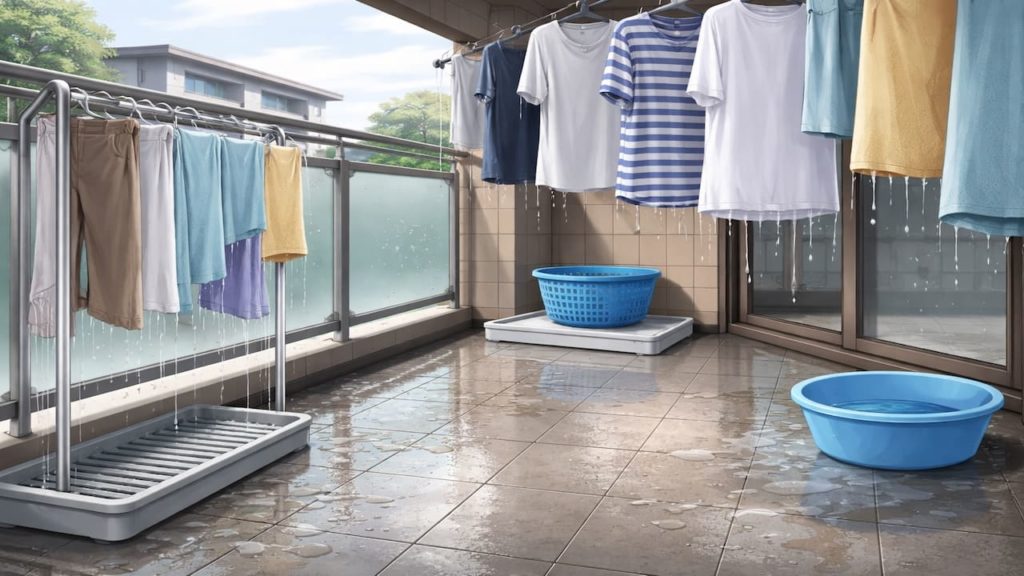
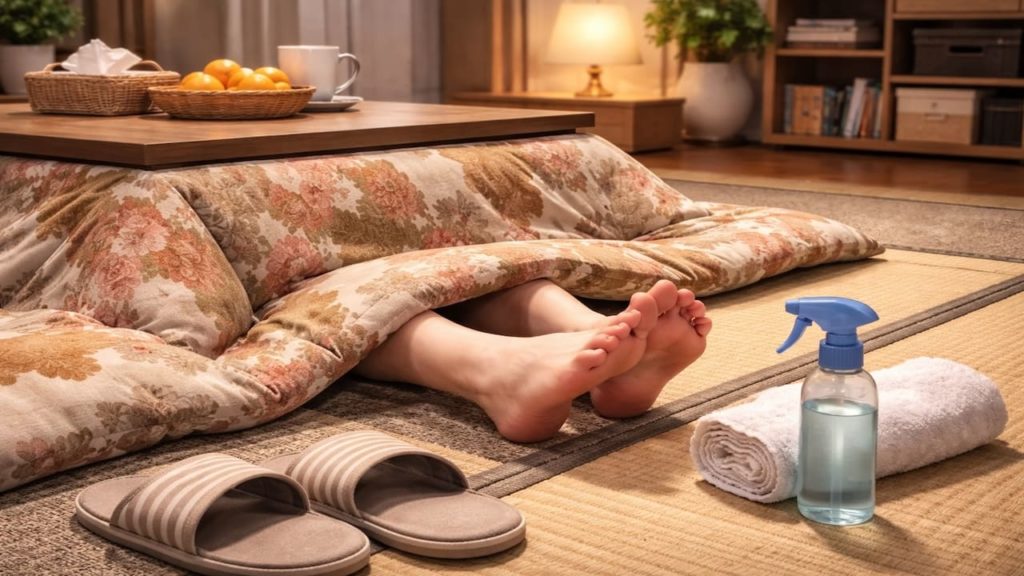
You dry laundry on the balcony, put it on, and then your skin starts itching. It’s annoying because the clothes look clean and smell “fine.”
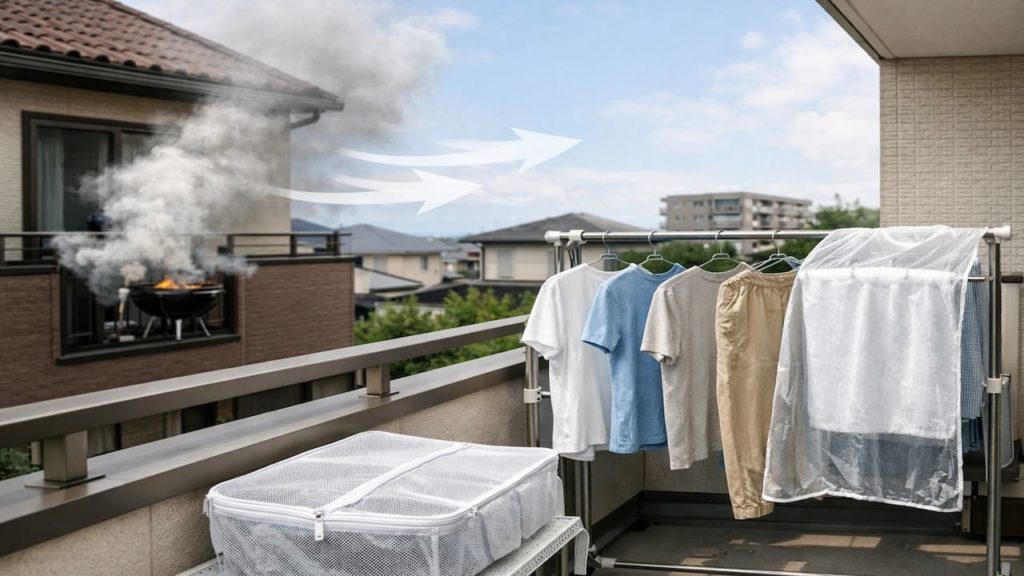
In Japan, balcony drying often means humid air, airborne pollen or dust, and fabrics that re-damp before they fully finish. That combo can make skin react even when nothing looks wrong.
In this guide, you’ll learn 5 checks to stop itchy skin after balcony laundry by adjusting rinse count, correcting detergent habits, and tightening your drying finish so residues and damp-time don’t keep irritating you.

Hi, I’m Ken — I’m Japanese, and I live in Malaysia long-term, so I explain everyday life in Japan from a practical ‘from abroad’ perspective.
I hold a building design qualification and I’ve been on site for 20+ years across hundreds of jobs. I turn Japan’s unspoken rules into simple checks, so you can avoid costly mistakes and take the next step with clear actions that feel safe.
1. Skin itches after Balcony laundry 5 checks
Itch usually means residue or damp-time is the trigger.
If detergent film stays in fabric, it can rub into skin all day — and your body notices fast. If fabric stayed slightly damp for too long, it can hold sweat, skin oils, and micro-gunk that feels “scratchy” against you. Balcony drying in Japan can add pollen and fine dust that sticks to textured fabrics. The goal is to isolate which trigger is winning.
- Check itch location on cuffs collar waistband seams
- Compare balcony dried item versus indoor dried item
- Smell armpit and collar for sour notes
- Rub fabric inside-out against forearm briefly
- Note if itch starts after sweating lightly
You might think it’s “my skin being sensitive today.” Maybe, but patterns matter. If it happens with the same loads, same fabrics, or same drying days, it’s laundry math, not mood.
2. Rinse count detergent and drying
Most itching loads are over-dosed and under-rinsed.
More detergent does not mean cleaner, it often means more leftover surfactant sitting in fibers — and that residue is exactly what irritates skin. A weak rinse plus a short spin leaves clothes holding more water, and then rainy or humid air slows the finish. Once fabric stays damp longer, it also holds onto outdoor particles more easily. Fix dosage, rinse, and finishing dryness as one set.
- Reduce detergent to label minimum amount
- Add one extra rinse for sensitive loads
- Skip fabric softener for one full week
- Extend spin time to start drier
- Finish dry indoors before evening humidity rises
“But I already use a gentle detergent.” Even gentle formulas can irritate if you use too much or rinsing is weak. The cleanest detergent is the one that fully leaves the fabric.
3. Why balcony laundry can make skin itch
Airborne particles and re-damp fabric raise friction.
When clothes re-absorb moisture from humid air, fibers swell and feel rougher on skin. That moisture also helps pollen and dust stick, especially on towels, knits, and dark cotton. Add leftover detergent or softener film, and you get a triple-hit: friction, particles, and chemical residue — then itching shows up on tight-contact areas like waistbands and cuffs.
- Humid air makes fabric feel heavier and rougher
- Pollen and dust cling to slightly damp fibers
- Residue increases friction during movement and sweat
- Thick seams hold irritants longer than flat areas
- Warm skin under clothes amplifies irritation quickly
“So balcony drying is the problem.” Not automatically. Balcony drying is fine when you control residue and finishing dryness, and when you reduce particle exposure on high-risk days.
4. How to stop itchy skin after balcony laundry
Reset residue first then lock in full dryness.
Start with a rinse reset: run an extra rinse with no detergent on the itchy items, then spin longer so they start drier. If itch improves, residue was the main cause and you can lower detergent permanently. If itch stays, focus on drying finish and airborne particles: shorten outdoor exposure and finish indoors with airflow. The cost is mostly time/effort, not money, because the biggest gains come from cycle settings and habits.
- Rewash using water only rinse and spin
- Dry high contact items indoors with airflow
- Store fully dry clothes before wearing next day
- Wash bedding weekly to reduce skin triggers
- Switch to fragrance free detergent if needed
“I don’t want to redo the whole load.” You don’t have to. Fix one itchy item first as a test, then apply the same settings to the next load once you see the result.
5. FAQs
Q1. How many rinses should I use if my skin is sensitive?
One extra rinse is a solid baseline for sensitive skin loads. If the machine is overloaded or you used too much detergent, a second extra rinse can help.
Q2. Can fabric softener cause itching?
Yes, it can leave a coating that increases residue and traps particles. Try skipping it for a week and see if the itch drops.
Q3. Why does itching feel worse after I sweat a little?
Sweat dissolves residues and pulls them into contact with your skin. It also increases friction, especially on seams and elastic areas.
Q4. What’s the fastest check to confirm detergent residue?
Do a water-only extra rinse test on one itchy item. If the itch improves noticeably after drying, residue was a major contributor.
Q5. When should I consider a skin issue instead of laundry?
If you get a persistent rash, swelling, or itching that continues even with clean rinsed clothes, it may be contact dermatitis or eczema. Consider getting medical advice, especially if it spreads or worsens.
Pro's Tough Talk

I’ve spent 20+ years working around Japanese homes, so I’ve seen what tends to work—and what tends to go wrong—in everyday use. If your skin itches after laundry, your clothes are basically arguing with your body all day. In Japan’s humid swings, that argument gets loud fast.
Three causes show up again and again. One: too much detergent leaves a film that never fully rinses out. Two: fabric never finishes fully dry, so it stays rough and holds grime like a sponge. Three: balcony air adds pollen and dust, and damp fibers grab it like Velcro.
Cut detergent and add one extra rinse. Today. Spin longer so items start drier. This weekend, shorten balcony time and finish indoors with airflow.
If itch improves after a rinse reset, residue was your main enemy, so lock in smaller doses and better rinsing. If itch only happens on towels and knits, those fabrics need shorter outdoor exposure and a cleaner finish-dry. If itch hits everything no matter what, stop guessing and treat it like a skin trigger issue.
You wear the shirt, you feel itchy, and you keep tugging the collar like it owes you money. Then you swear it’s “just dry skin” while scratching anyway. Fix the rinse, and your hands get a day off.
Summary
Itchy skin after balcony laundry is usually caused by detergent residue, incomplete drying, or airborne particles sticking to damp fibers. Your first job is to identify which one is dominant for your loads.
If it doesn’t improve, simplify your routine: reduce detergent, add an extra rinse, skip softener, and finish-dry indoors before humidity rises. If symptoms persist even with clean fully dried clothes, consider a skin trigger beyond laundry.
Today, run a rinse reset on one itchy item and change your next load settings to prevent residue and re-damp. Make full rinse and full dry your default and you’ll stop treating “getting dressed” like a gamble, then check the next guide on pollen-season balcony drying.
Laundry tips for eczema include using the right amount of detergent and ensuring adequate rinsing while avoiding scented softeners. According to aad.org.
Skin-care guidance suggests fragrance-free detergents and adding an extra rinse cycle if clothes still irritate skin. According to aaaai.org.