You hang laundry on the balcony, it dries, and then it smells like smoke when you bring it in. It’s the worst because the clothes look clean, but your nose says “nope.”
In Japan, balconies sit close to other units, wind funnels between buildings, and air can carry cigarette smoke, grilling fumes, or roadside exhaust. Add humid days and slow-drying fabric, and smells stick way easier.
In this guide, you’ll learn 5 checks to stop smoke smell on balcony laundry by reading wind direction, choosing better timing, and using covers the right way so your laundry comes inside smelling like laundry.

Hi, I’m Ken — I’m Japanese, and I live in Malaysia long-term, so I explain everyday life in Japan from a practical ‘from abroad’ perspective.
I hold a building design qualification and I’ve been on site for 20+ years across hundreds of jobs. I turn Japan’s unspoken rules into simple checks, so you can avoid costly mistakes and take the next step with clear actions that feel safe.
1. Smoke smell on Balcony laundry 5 checks
Smoke smell sticks when fabric stays damp too long.
Odors cling faster when fibers are still holding moisture — that damp surface grabs airborne particles like tape. The first check is to confirm whether the smell is coming from the air outside or from residue inside the fabric. If it’s outside air, timing and placement fix most of it. If it’s residue, rinse and dry-finish are your leverage.
- Smell clothes outside before bringing them inside
- Compare towels versus shirts for odor intensity
- Check if odor is stronger on collars
- Notice if smell spikes on humid days
- Test one item with indoor finish drying
You might think “smoke is unavoidable.” It’s not, unless you keep hanging when the air is dirty and the fabric is still damp. Control the damp time and the exposure window, and the smell drops fast.
2. Wind direction timing and cover
Hang when wind carries clean air toward you.
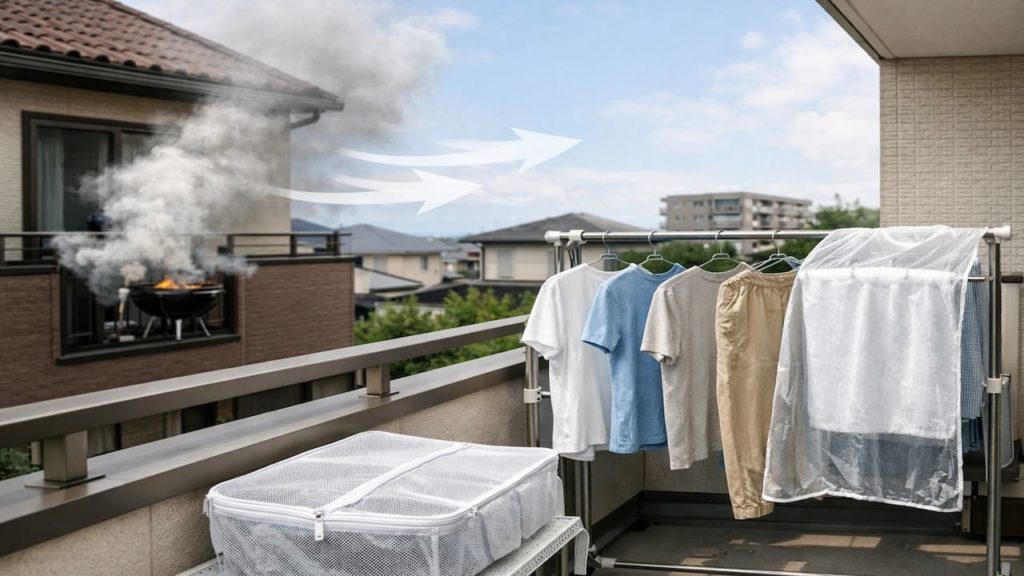
Wind is the delivery truck for smoke — the same balcony can be fine one hour and terrible the next. Check which way air is moving by watching trees, flags, or even your own hanging clips. Then time your hanging around the clean window and use a cover like a screen, not a sealed bag. The goal is to block direct smoke flow while keeping airflow alive.
- Watch flags or plants to read wind
- Hang after air clears not during peaks
- Keep laundry deeper inside from the railing
- Use a cover sheet leaving side gaps
- Take in quickly when wind shifts suddenly
“A cover slows drying.” Only if you wrap the laundry and trap moisture. Use the cover to block the stream of smoky air, while still letting air move around the fabric.
3. Why smoke smell clings to balcony laundry
Airborne particles embed into warm damp fibers.
Smoke is made of tiny particles and odor compounds that can settle on surfaces. When clothes are damp, those compounds stick more easily and can sink into seams and thick areas. If your rack sits near the edge, airflow hits it first, so it catches whatever the wind is carrying. Once odor is in, heat and sweat can “wake it up” later.
- Damp fibers grab particles faster than dry
- Thick seams trap odor longer than flat
- Edge placement catches wind and carried smoke
- Slow drying increases total exposure time outside
- Stored damp items spread smell to others
“But I washed it well.” Washing helps, but if the drying stage is a smoke bath, you’re re-contaminating the fabric. Clean wash plus dirty air still equals dirty smell.
4. How to prevent smoke smell on balcony laundry
Shorten exposure and lock in a fully dry finish.
Start by reducing the outside time: hang only during the clean window, then move to indoor finish drying before humidity rises. If you need supplies, a basic breathable cover sheet and extra clips are usually ¥300–1,500 depending on size and quality. Then fix residue: use the minimum detergent dose, add an extra rinse for the “smoke-risk” loads, and never store anything even slightly cool-damp.
- Run an extra spin to start drier
- Finish dry indoors with fan airflow nearby
- Add an extra rinse for odor prone loads
- Keep clothes spaced to avoid trapped damp
- Store only when fabric feels fully neutral
“Indoor finish makes the room humid.” It can if you bring items in soaking wet. Bring them in mostly dry, then finish quickly with airflow, and the humidity spike stays small.
5. FAQs
Q1. How do I know if the smell came from outside air?
If clothes smell clean while still outside but pick up odor after hanging longer, it’s likely outside air exposure. If the smell stays even after an indoor finish, rinse and detergent residue are more likely.
Q2. Is it better to hang early morning or midday?
It depends on your building airflow, but the best time is when the air is clearly clean and stable. Avoid times when smoke sources are active and the wind is blowing toward your balcony.
Q3. Should I use fabric softener to mask the smell?
Masking usually backfires because it mixes odors and can leave extra residue. Fix exposure time and rinse first, then decide if you need any scent at all.
Q4. What’s the fastest test to fix smoky laundry?
Do an extra rinse and indoor finish test on one item. If odor drops a lot, your main problem is residue plus damp-time, not “permanent smoke.”
Q5. When should I stop balcony drying completely?
If smoke is heavy or your area repeatedly smells smoky, stop using the balcony for long hangs and switch to indoor finish-drying routines. It’s faster than re-washing and way less frustrating.
Pro's Tough Talk

I’ve spent 20+ years working around Japanese homes, so I’ve seen what tends to work—and what tends to go wrong—in everyday use. Smoke smell on laundry isn’t mysterious, it’s just damp fabric acting like a sponge in bad air, especially during Japan’s sticky humid stretches.
Three reasons keep showing up. First, you’re hanging right in the wind stream, like putting your laundry in front of an exhaust fan and hoping it smells like flowers. Second, you leave it out too long, so the fabric keeps collecting odor the whole time. Third, you’re under-rinsed, so residue holds onto smell like a bad memory.
Check wind direction and hang only in the clean window. Today. Move laundry deeper inside and use a cover like a screen. This weekend, add one extra rinse and finish-dry indoors before you store.
If the smell returns when you wear it, your clothes weren’t fully dry or the odor is embedded in thick seams. Rewash that item with a tighter rinse plan and do a full dry finish, then re-test. If only towels stink, treat towels like special cases and stop leaving them outside forever.
Seriously.
You know that move where you sniff the shirt and tell yourself “it’s fine,” then you put it on and smell like you hugged a campfire. And the other classic: you bring laundry in, fold it warm-ish, and the next day it smells worse. That’s not bad luck, that’s your routine snitching on you.
Summary
Smoke smell on balcony laundry usually comes from damp fabric staying exposed to smoky air too long. Check if the odor is outside air exposure or detergent residue, then fix the right side.
If it keeps happening, use wind direction and timing to avoid peak smoke, move the rack inward, and finish-dry indoors so fabric doesn’t stay cool-damp. Extra rinsing helps when residue is holding odor in fibers.
Today, hang only in a clean-air window and take laundry in early, then finish-dry fully before storage. Short exposure and full dry wins, and your laundry stops coming inside with a smoke souvenir.
Keeping windows and doors closed helps reduce smoke getting into your home during smoke events. According to EPA.
Guidance after wildfire smoke events includes advice on removing smoke odor and re-cleaning items until the smell is gone. According to extension.okstate.edu.