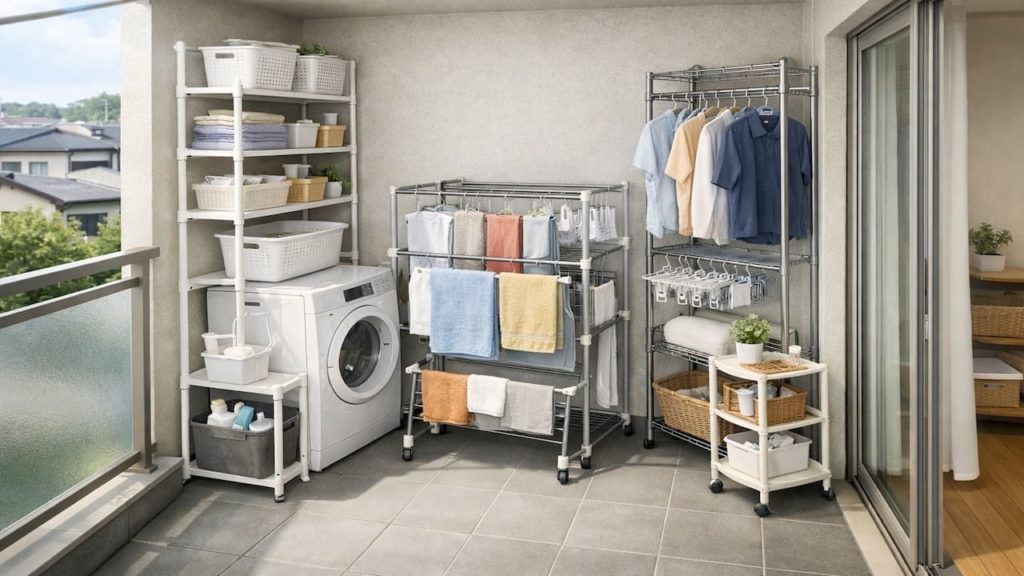
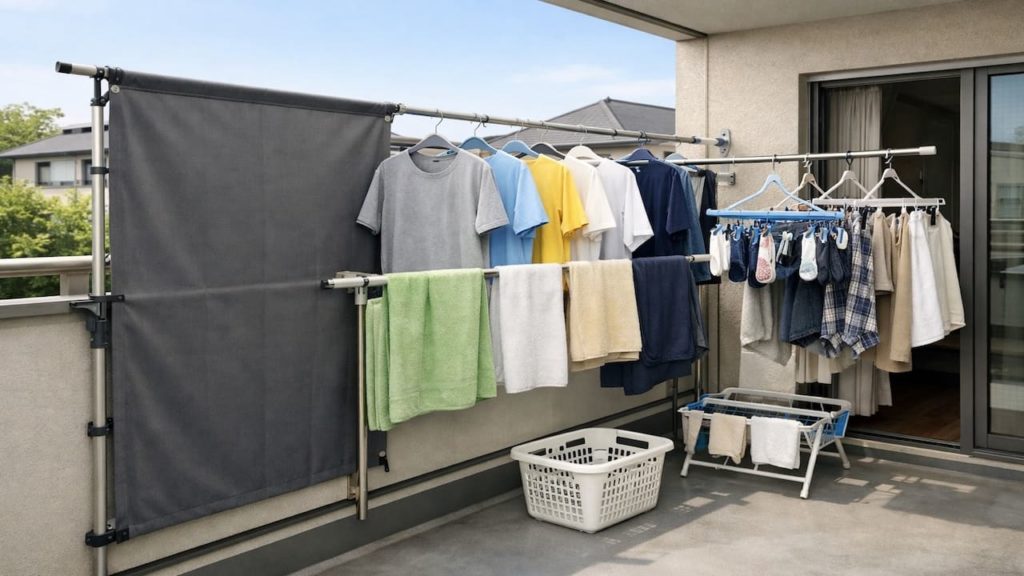
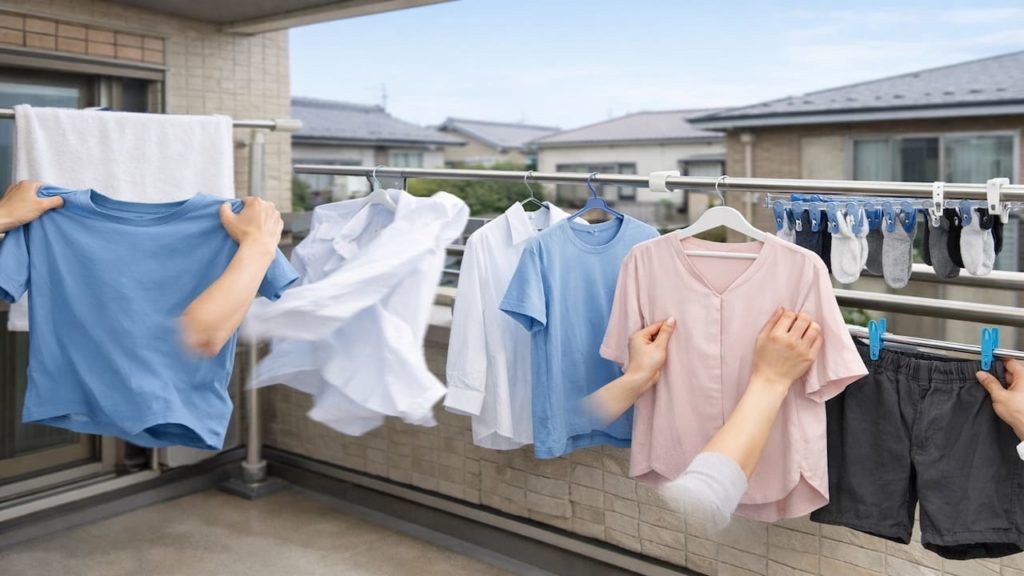
You hang laundry on the balcony, the wind picks up, and suddenly everything looks like it’s trying to escape. Hangers spin, shirts flip, and you start doing emergency clip work with one hand.
In Japan, strong wind can funnel between buildings and hit balconies at weird angles, so “it looked calm” can turn into chaos fast. If laundry falls or bangs around, it’s not just annoying—it's risky.
In this guide, you’ll learn 5 checks for strong-wind balcony laundry so you can lock hangers, secure rails, balance weight, and keep your setup stable without turning your balcony into a wind test lab.

Hi, I’m Ken — I’m Japanese, and I live in Malaysia long-term, so I explain everyday life in Japan from a practical ‘from abroad’ perspective.
I hold a building design qualification and I’ve been on site for 20+ years across hundreds of jobs. I turn Japan’s unspoken rules into simple checks, so you can avoid costly mistakes and take the next step with clear actions that feel safe.
1. Strong wind Balcony laundry 5 checks
In strong wind your goal is stability not speed.
Wind can help drying, but only if your laundry stays in one predictable shape—otherwise it becomes a flapping knot. When items twist, they create thick folds and stop drying evenly. Worse, movement increases the chance of clips popping off and clothes touching rails or walls. Strong wind days are “secure first, dry second.”
- Check hangers cannot rotate around the hook
- Confirm rack legs cannot slide on the floor
- Keep hems clipped so they cannot flip up
- Move the rack inward away from the railing
- Hang heavier items low to lower the center
You might think “it’s fine, I’ll just use more clips.” More clips help, but only if the whole system is stable. If your hanger spins freely or your rack walks on the floor, clips won’t save you.
2. Hanger locks rail clips and weight
Lock the hanger then anchor the load.
Start with the top: if the hanger hook rotates, the whole item twists like a propeller—then sleeves wrap and hems whip. Next, anchor to the rail/rack: use rail clips where the wind hits first, not randomly on fabric. Finally, weight: heavy items should sit low and toward the center so the rack doesn’t tip or wobble. One good anchor beats five weak ones—every time.
- Use hanger hooks with anti rotation grips
- Clip both hem corners to prevent flipping
- Rail clip the hanger bar at two points
- Place towels low to stabilize the rack
- Keep one fist gap between hanging items
“I don’t have special hangers.” You don’t need fancy stuff to start. Twist the hanger hook into a stable direction, clip the hem corners, and rail-clip the bar—then you’ve already removed the biggest failure modes.
3. Why strong wind messes up balcony laundry
Wind creates torque and sudden load spikes.
Strong wind doesn’t push evenly—it hits in bursts, and those bursts add twisting force to hangers and racks. When fabric flaps, it acts like a sail and multiplies force at the hook and clip points. Balconies can amplify this with tunnel effects, so the wind hits sideways and lifts hems upward. That’s why items flip and why racks “walk” across smooth floors—physics wins unless you plan for it.
- Gusts twist hangers and fold sleeves inward
- Flapping fabric increases force on clip jaws
- Side wind lifts hems and flips shirts up
- Racks slide when legs lack floor grip
- Dead air zones cause uneven drying patches
“But wind should dry faster.” Only if the fabric stays open and controlled. If wind turns your laundry into a folded ball, it actually dries slower and gets dirtier from contact.
4. How to dry laundry safely in strong wind
Use a wind mode setup and shorten exposure.
Make a quick “wind setup” routine—lock hangers, anchor rails, lower weight, and keep everything inward. If you need to buy anything, basic rail clips, stronger clothespins, or non-slip pads are usually ¥300–1,500 depending on what you pick. Then shorten outdoor time: when wind is gusty, do a partial balcony dry and finish indoors with airflow so you’re not gambling for hours. Strong wind is useful until it becomes violent movement.
- Hang inside out and clip hems immediately
- Rail clip the bar so it cannot bounce
- Lower the rack height if it wobbles
- Rotate thick items once mid dry
- Bring in early and finish indoors quickly
“I want to keep drying outside all day.” That’s how things fall or get contaminated. If the wind is strong enough to whip hems, treat it as a safety day and finish indoors—your time is worth more than re-washing.
5. FAQs
Q1. How do I know wind is too strong for balcony laundry?
If hangers rotate on their own, hems flip upward, or the rack shifts position, it’s already too strong for a relaxed setup. Switch to a secured “wind mode” or finish indoors.
Q2. What’s the biggest single fix on windy days?
Stop hanger rotation and stop hem flipping. If the top doesn’t twist and the bottom doesn’t whip, most wind chaos disappears.
Q3. Should I use a cover in strong wind?
Only if it’s breathable and clipped like a screen with side gaps. A tight cover can turn into a sail and make the force worse.
Q4. What should I prioritize if I can only do one thing fast?
Clip the hems and rail clip the bar. That prevents flipping and bouncing, which are the two moves that trigger most falls and contact stains.
Q5. When should I bring laundry in even if it’s not raining?
If the wind becomes gusty enough to slap fabric against rails or pull clips loose, bring it in and finish indoors. Strong wind alone can ruin drying quality and increase risk.
Pro's Tough Talk

I’ve spent 20+ years working around Japanese homes, so I’ve seen what tends to work—and what tends to go wrong—in everyday use. Strong wind turns balcony laundry into a sailboat race, and your shirt is the sail. In Japan, that wind can hit sideways like it’s aiming for your clips.
Here’s the cold breakdown in three parts. First, rotating hangers create twist, and twist creates folds, like wringing a wet towel and expecting it to dry faster. Second, flapping hems are basically a whip, and they keep testing your clip jaws until something gives. Third, a wobbly rack is like a shopping cart with one bad wheel—once it starts moving, it never stops at a good time.
Lock the hanger hook so it can’t spin. Today. Clip both hem corners so they can’t flip. This weekend, build a wind setup: heavy items low, rack inward, bar rail-clipped.
If the rack still wobbles after you secure it, your load is too top-heavy or your floor is too slick, so lower the rack height and reduce the load size. If hems keep snapping free, your clips are weak or placed wrong, so move them to seams and corners. If wind stays violent, finish indoors and stop trying to “out-stubborn” the weather.
You’ve stepped outside to find one shirt upside down like it lost a fight. You’ve also heard the snap of a clip and pretended you didn’t. Yeah, don’t make your balcony a chaos gym.
Summary
Strong wind balcony laundry is about preventing rotation, flipping, and rack movement. Check hanger locks, rail clips, and weight balance before you chase drying speed.
If things still move, shorten outdoor exposure and finish indoors with airflow instead of leaving laundry out for hours. When gusts spike or the rack shifts, treat it as a safety day and change the plan.
Today, lock hangers, clip hems, rail-clip the bar, and move the rack inward. Make stability your default and strong wind becomes manageable instead of a daily “laundry rescue mission.”
Weather warnings and advisories (including strong wind advisories/warnings) are issued by the Japan Meteorological Agency and should guide your outdoor decisions. According to jma.go.jp.
Public disaster guides note that advisories and warnings may be issued for heavy rain or strong winds and recommend checking the latest information and preparing accordingly. According to bousai.metro.tokyo.lg.jp.