You washed it, you hung it on the balcony, and the sweat smell still sticks. In Japan, that’s extra annoying because humid summers and rainy season drying can turn “fresh laundry” into “why though” fast.
If you’re searching this, you’re probably dealing with gym wear, undershirts, or towels that smell clean at first and then pop off again. That rebound smell is common in small apartments with limited airflow and strict balcony habits.
In this guide, you’ll learn how to kill sweat odor without overwashing using a simple 5 step routine that fits balcony laundry. You’ll also learn why the smell comes back, and what to change so it stays gone in Japan’s sticky season.

Hi, I’m Ken — I’m Japanese, and I live in Malaysia long-term, so I explain everyday life in Japan from a practical ‘from abroad’ perspective.
I hold a building design qualification and I’ve been on site for 20+ years across hundreds of jobs. I turn Japan’s unspoken rules into simple checks, so you can avoid costly mistakes and take the next step with clear actions that feel safe.
1. Sweat smell stays Balcony laundry 5 steps
Sweat odor stays because oils and bacteria stay in the fibers.
The balcony doesn’t “clean” anything—it only dries what the washer left behind. In Japan’s humid months, slow drying gives leftover bacteria extra time to wake up. Athletic fabric also traps skin oil like a sponge. Nasty combo.
- Smell the armpit area before you wash
- Separate gym wear from towels and sheets
- Turn shirts inside out for better wash
- Use enough water for full fabric movement
- Dry fast with air moving across fabric
You might think “It’s just my sweat, so it’s normal.” Sure, sweat happens, but the stink is bacteria eating what’s left behind. You don’t need harsher soap, you need a cleaner process. Do the 5 steps and the smell stops being a repeat offender.
2. Pre soak quick wash and dry
Pre soak beats rewashing because it breaks odor at the start.
Use a warm soak first—think of it as loosening the greasy lock before you turn the key. In Japan, oxygen bleach or enzyme boosters are easy to find, and they work well on sweat funk. Expect ¥300–1,200 for basic oxygen bleach or an enzyme powder. Keep the soak short so you don’t waste your day.
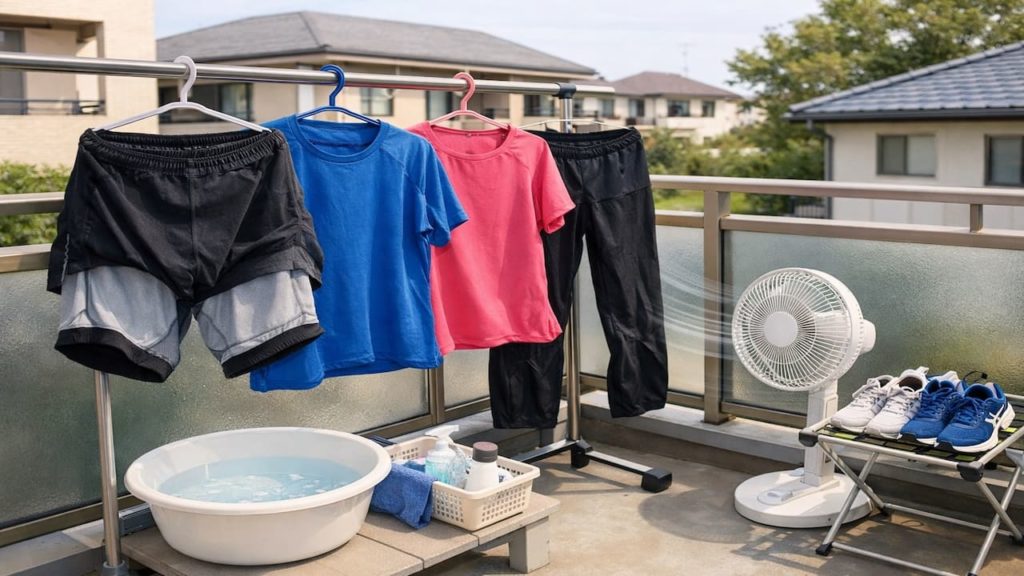
- Fill a bucket with warm water
- Add oxygen bleach and stir until dissolved
- Soak armpits and collars for 20 minutes
- Rinse once then run a quick cycle
- Hang immediately with max spacing on balcony
“Pre soak is extra work” is the usual complaint. True, but it’s less work than rewashing twice and still losing. Also, soaking targets the exact area that stinks, not the whole load. Do it once, then your normal wash actually works again.
3. Why sweat smell stays in balcony laundry
The smell comes back when residue stays and drying is slow.
Even if clothes look clean, tiny residues feed bacteria, especially in Japan’s humid air. Fabric softener can leave a coating that traps funk. Overloading the washer also reduces friction, so oil stays stuck. The cost is mostly time/effort, because the fix is about habits, not gadgets.
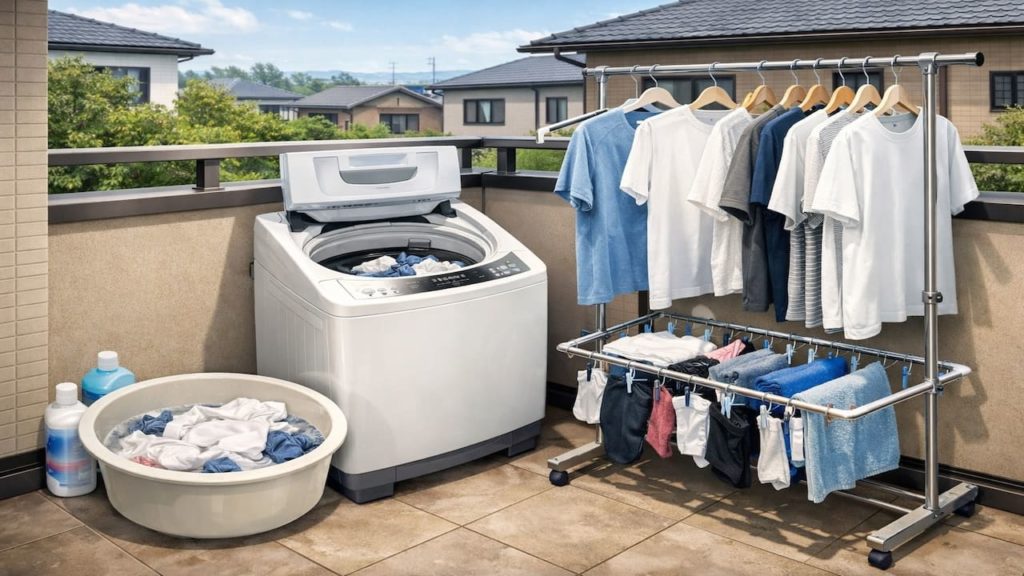
- Stop overpacking the drum with heavy loads
- Measure detergent instead of free pouring it
- Skip softener on sportswear and undershirts
- Clean the washer gasket and soap drawer
- Run an empty hot cycle monthly
“Yeah but it smells fine when it dries outside” is a trap. Sun and breeze can mask odor, then humidity brings it back later. If you don’t remove the source, you’re just perfume spraying a garbage bag. Fix residue and drying speed, and the rebound smell disappears.
4. How to remove sweat smell fast without redoing everything
Fast drying locks in the win after washing.
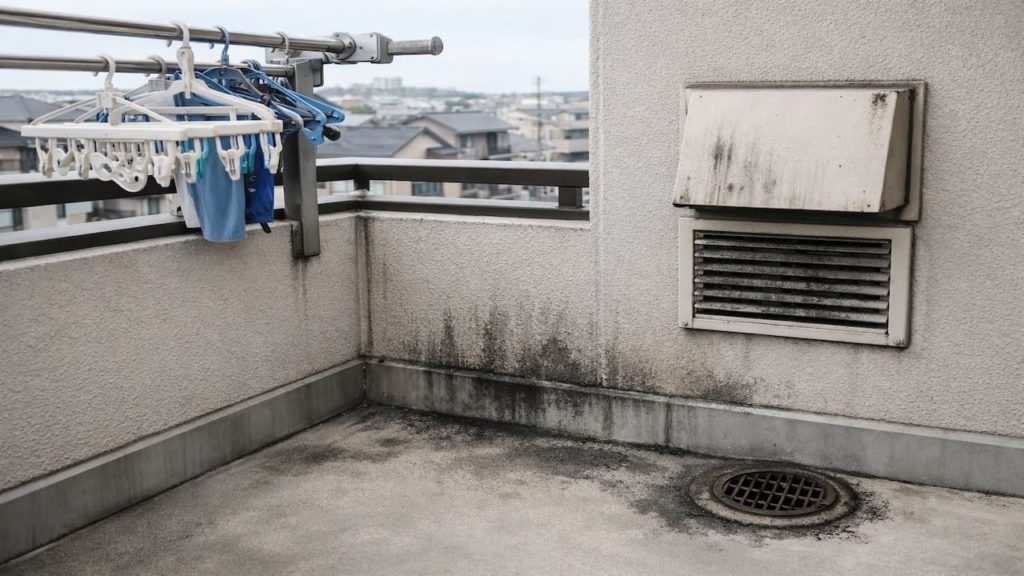
In Japan apartments, balcony airflow can be weak, especially with high walls and close neighbors. Add a simple airflow assist so the fabric dries before bacteria can party again. A small clip fan or a dehumidifier setup can run ¥2,000–15,000 depending on what you choose. You’re not buying comfort, you’re buying time.
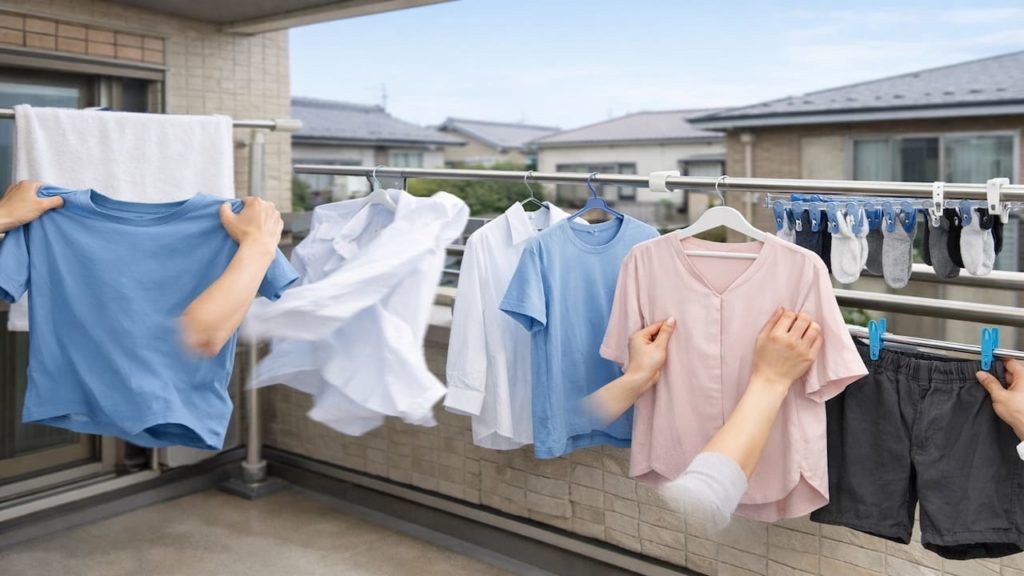
- Wring once then snap fabric to open fibers
- Hang each item with two finger spacing
- Aim a fan across the line not at one spot
- Move thick items indoors near ventilation flow
- Bring in laundry before evening humidity rises
You might say “I can’t use a fan outside.” Fair, some places hate noise and cords. Then use indoor airflow for the last hour, or shift thick items inside from the start. The rule is simple: dry fast, or smell later. Choose your pain.
5. FAQs
Q1. Why does sweat smell stay even after washing?
Most sweat odor comes from bacteria feeding on body oil. Cold wash plus slow drying lets that funk bounce back, especially in Japan humidity. Break the oil first, then dry fast.
Q2. Should I use vinegar to remove sweat smell?
Vinegar helps a little but it is not a full reset. Use it only as a short soak or rinse aid, then wash normally. Do not mix it with bleach or random cleaners.
Q3. Why does it smell worse on rainy days in Japan?
Rainy season makes odor worse because drying slows down. High humidity in Japan keeps fabric damp longer, so bacteria keep working. Add airflow or finish thicker items indoors.
Q4. Is it okay to hang sweaty clothes overnight on the balcony?
Overnight balcony drying can stall and bring the smell back. Evening humidity and lower air movement make synthetics especially risky. If you must hang overnight, keep wide spacing and bring it in early.
Q5. Do I need to wash everything on hot to remove sweat smell?
You do not need hot water on everything to remove sweat smell. Some fabrics hate heat and lose shape fast. Use a warm pre soak on the smelly zones, then a normal wash with enough water movement.
Odors after laundering are often linked to microorganisms that survive washing and produce malodor when conditions allow growth. According to American Society for Microbiology.
Oxygen bleach is commonly used to soak fabrics to help remove odors by addressing odor-causing bacteria when used per directions. According to The Spruce.
Pro's Tough Talk

I’ve spent 20+ years working around Japanese homes, so I’ve seen what tends to work—and what tends to go wrong—in everyday use. You’re not “bad at laundry,” you’re just fighting a boring little science problem. And yeah, if you ignore it, that smell will keep showing up like an uninvited relative.
Here’s the cold truth in 3 pieces. One, sweat oil is sticky, and synthetic fabric grabs it like Velcro. Two, detergent residue can become frosting on a rotten cake, so the stink gets trapped instead of removed. Three, slow drying is basically a tiny bacteria motel, and they check in fast when the air is damp.
Do this now: Pre soak the armpits for 20 minutes. Do this today: Run a quick wash with the load half full. Do this on the weekend: Clean the gasket and the detergent drawer.
If the smell returns after fast drying and a clean washer, then your detergent choice is the next suspect. Swap to an enzyme or oxygen booster for sportswear, and stop using softener on those items. If that still fails, the fabric may be permanently loaded with oil, and it’s time to retire it.
You know the scene: you hang gym shirts at night, wake up, and they smell “kinda okay,” then the moment you put them on the funk blooms. And you know the other one: you add extra softener to “fix it,” and the smell comes back stronger like it leveled up. Bro, that shirt is not a petri dish. Treat the cause, not your pride.
Summary
Sweat smell that stays after balcony laundry is usually leftover oil plus bacteria plus slow drying. Fix those three, and the problem stops repeating.
If pre soak and faster drying don’t help, clean the washer parts that hold residue and rethink softener. When nothing changes after that, the fabric itself may be the culprit.
Do the 5 steps once and test one shirt. Then apply the same routine to the worst items, and keep rolling through the next laundry problems with the same logic.