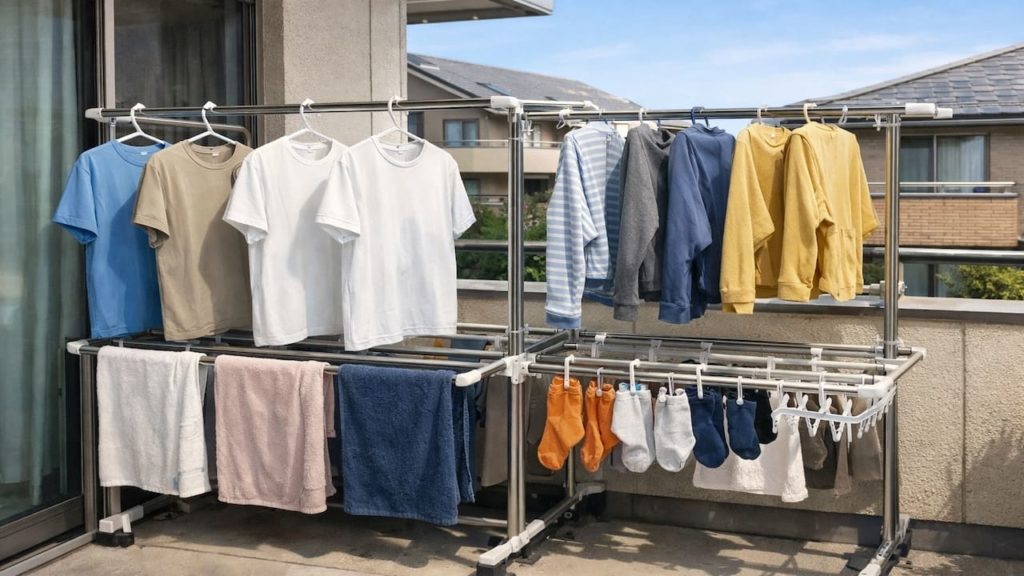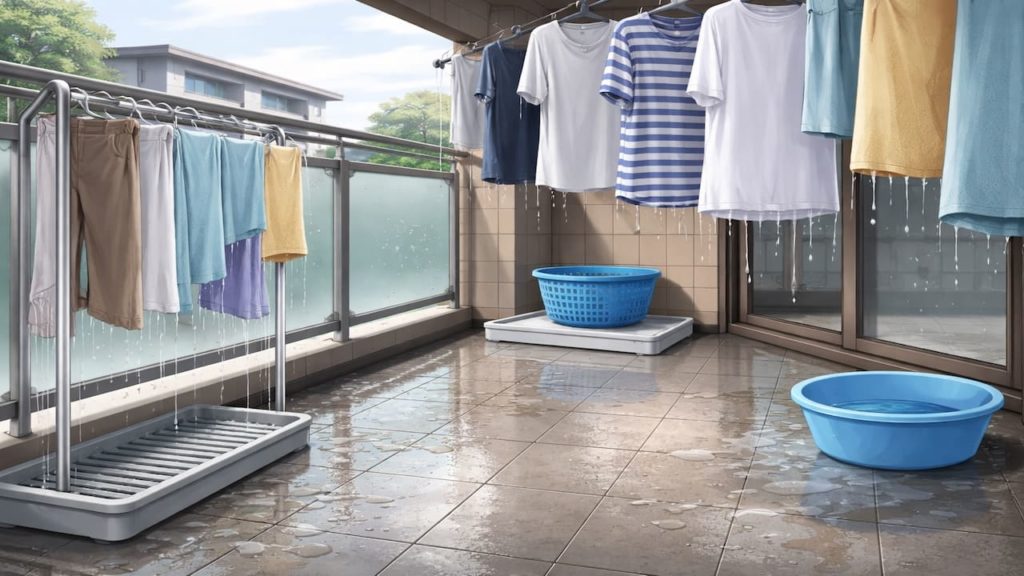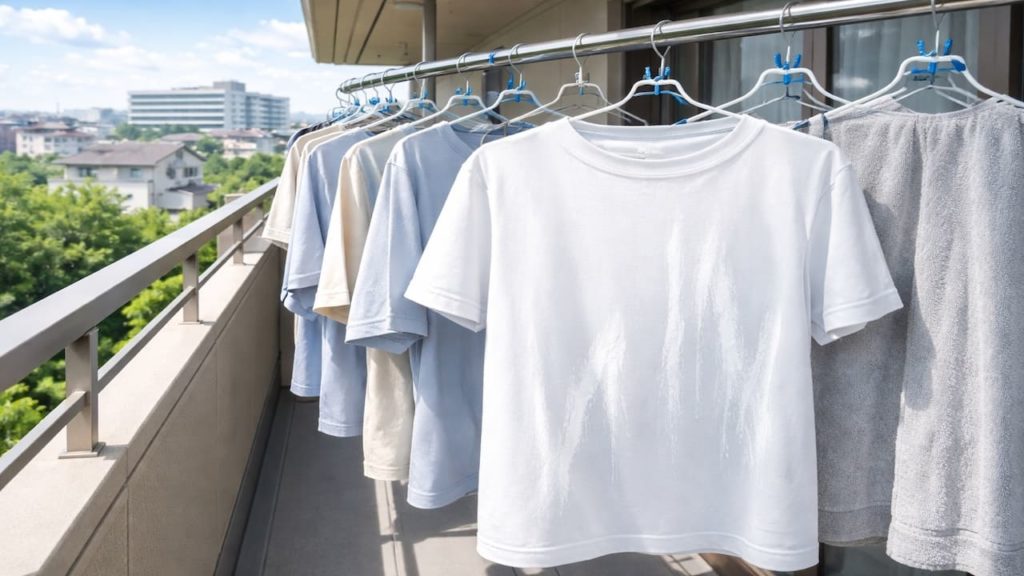
You dry balcony laundry, then notice white streaks or chalky lines on fabric. It looks like soap, but it sometimes feels like powder that won’t brush off.
In Japan, many homes have “soft-ish” tap water, yet apartment plumbing, old pipes, and cold-water washing can still leave residue. Add humid seasons and slower drying, and those streaks become easier to see.
In this guide, you’ll learn 5 checks to stop white streaks after balcony laundry by fixing detergent dose, improving rinse, and handling hard-water edge cases without turning laundry day into a science project.

Hi, I’m Ken — I’m Japanese, and I live in Malaysia long-term, so I explain everyday life in Japan from a practical ‘from abroad’ perspective.
I hold a building design qualification and I’ve been on site for 20+ years across hundreds of jobs. I turn Japan’s unspoken rules into simple checks, so you can avoid costly mistakes and take the next step with clear actions that feel safe.
1. White streaks after Balcony laundry 5 checks
Most white streaks are leftover detergent not dirt —.
If detergent doesn’t dissolve or rinse out, it dries into visible lines on dark fabric and stiff patches on light fabric. Overdosing is the #1 trigger, especially with concentrated detergents and small Japanese washers. Cold water and overfilled drums make it worse because suds stay trapped in folds. Humid balcony drying can “set” that residue as the last moisture evaporates.
Excess detergent can leave residue when the machine cannot rinse it out fully. According to electrolux.com.sg.
- Halve detergent dose for one test load
- Avoid packing the drum past two thirds
- Dissolve powder fully before adding clothes
- Check streaks appear more on dark items
- Rub a streak with warm water to confirm
You might think “I need more detergent to clean better.” Not with modern concentrates in a small Japanese drum. Slightly underdosing often cleans fine and rinses cleaner. Start with dose first, then adjust one variable at a time.
2. Detergent dose rinse and hard water
Your rinse quality decides if streaks show up —.
Even with good dosing, poor rinsing can leave lines on cuffs, collars, and waistbands where water flow is weaker. In Japan apartments, bathroom laundry spaces can be tight, and people tend to run quick cycles to save time, which reduces rinse strength. If your water is harder than average in your building, minerals can bond with detergent and make residue more stubborn. That’s why a simple “extra rinse” test is powerful.
Tap water hardness in Japan is generally classified as soft on average, though it varies by region and supply. According to pmc.ncbi.nlm.nih.gov.
- Add one extra rinse for streak prone loads
- Use more water setting if your washer allows
- Skip softener on loads that show white lines
- Rinse a single shirt again to compare results
- Check if streaks cluster on thick seams
“Extra rinse wastes water.” True, so don’t do it forever. Use it as a diagnostic for Japan-style small loads and concentrated detergent. If extra rinse fixes it, you can usually solve long-term by reducing dose and load size instead.
3. Why white streaks show up after balcony drying
Residue becomes visible when fabric dries still —.
During balcony drying, water evaporates and anything left in the fibers concentrates on the surface. If clothes dry with folds, cuffs rolled inward, or fabric touching fabric, the trapped areas dry last and “print” streaks. Japan’s humid rainy season makes the last stage of drying slower, which gives residue more time to migrate and settle. The result is lines that appear only after drying, not right after washing.
Excess detergent and incomplete rinsing can leave residue that becomes obvious as fabric dries. According to electrolux.com.sg.
- Streaks concentrate where fabric folds during drying
- Seams and cuffs trap suds longer than flat
- Cold washes leave undissolved detergent behind
- Humid air slows drying and sets residue
- Overloading prevents rinse water reaching inner layers
You might blame the balcony air itself. The balcony is just the final reveal. The real cause is usually rinse plus how the garment dried. Fix the wash and the drying shape together.
4. How to remove streaks fast and prevent them next time
Re-rinse first then reset your routine —.
For existing streaks, don’t scrub dry and grind residue deeper. Re-wet the area, rinse from the back, then re-rinse the whole item or run a short rinse-and-spin. If you need supplies, a basic laundry brush or stain sponge is usually ¥100–500, but most fixes are just water and better rinsing. In Japan condos, finishing indoors with airflow after a short balcony dry can also prevent late-stage residue setting.
Excess detergent creates residue that can be removed by re-rinsing and prevented by using the recommended dose. According to electrolux.com.sg.
- Rinse streaked area from the back side
- Run rinse and spin with no detergent added
- Reduce dose and switch to smaller load size
- Shake items before hanging to open folds
- Finish indoors before evening humidity returns
“I want a perfect fix without changing habits.” Not happening. White streaks are a routine problem, not a mystery curse. Once you lock in clean rinsing and a lighter dose, the problem usually disappears even in Japan’s humid months.
5. FAQs
Q1. Why do streaks show more on dark clothes?
Because residue contrast is higher on dark fabric, so even a small amount becomes obvious. Dark synthetics also show lines where folds dried tight.
Q2. Powder or liquid detergent, which is safer?
Liquids dissolve more easily in cold water, while powders can leave undissolved grains if water is cold or loads are packed. Either works if you dose correctly and rinse well.
Q3. Could it be hard water even in Japan?
Yes, some areas and buildings run harder than the national average, and mineral content can change by supply source. If an extra rinse fixes it quickly, your water and rinse combo is the issue.
Q4. What’s the fastest single test to stop streaks?
Cut detergent in half and add one extra rinse. If streaks vanish, you just proved it was residue and not fabric damage.
Q5. When should I suspect the washing machine itself?
If streaks appear even after indoor drying and rinsing, or if the dispenser area is gunky, the machine may be leaving buildup. Clean the dispenser path and run a maintenance wash, then re-test one load.
Pro's Tough Talk

I’ve spent 20+ years working around Japanese homes, so I’ve seen what tends to work—and what tends to go wrong—in everyday use. White streaks are not “bad laundry luck,” they’re your detergent and rinse routine snitching on you. Japan’s humid air just makes the evidence show up louder.
Here’s the cold breakup. One, you overdosed detergent, so the washer couldn’t rinse it all out. Two, you packed the drum, so rinse water never reached the inner folds. Three, you dried it folded or stuck together, so residue dried into lines like chalk on a board.
Cut the dose. Today. Add one extra rinse for the streak load. This weekend, stop overstuffing and shake items open before hanging.
If streaks still show after a no-detergent rinse, you’re dealing with minerals or machine buildup, so clean the dispenser and run a maintenance cycle. If it only happens on certain fabrics, treat those as low-dose loads and keep them spaced on the rack. Don’t keep “fixing” it by adding more soap.
Seriously.
You’ve pulled a shirt off the rack, saw the streaks, and tried to brush it like you’re cleaning chalk off a wall. And the classic move: you add extra detergent next time because “it must be dirty.” Yeah, that’s how you level up the streak problem.
Summary
White streaks after balcony laundry usually come from detergent residue and weak rinsing, not from the balcony itself. Check dose, load size, and whether folds and seams are trapping suds.
If it doesn’t improve, run a no-detergent rinse-and-spin, add one extra rinse as a test, and reduce the load so water can move. In Japan’s humid seasons, finish drying before evening moisture returns.
Today, run one test load with less detergent and better rinse, then adjust your rack spacing so fabric dries open. Clean rinse beats more soap and the streaks stop showing up.