You step onto the balcony at night, and every little sound feels loud. You worry it is bothering neighbors, or waking your family.
The noise might come from loose items, hard contact points, or door gaps that whistle. In Japan, tight apartments, windy rain, and thin exterior surfaces make night noise feel sharper.
In this guide, you’ll learn how to quiet balcony noise without making the space feel sealed. You’ll use soft pads, smarter placement, and door gap checks to cut the annoying sounds fast.

Hi, I’m Ken — I’m Japanese, and I live in Malaysia long-term, so I explain everyday life in Japan from a practical ‘from abroad’ perspective.
I hold a building design qualification and I’ve been on site for 20+ years across hundreds of jobs. I turn Japan’s unspoken rules into simple checks, so you can avoid costly mistakes and take the next step with clear actions that feel safe.
1. Balcony noise at night: 5 tips
Stop hard-to-hard contact and the noise drops.
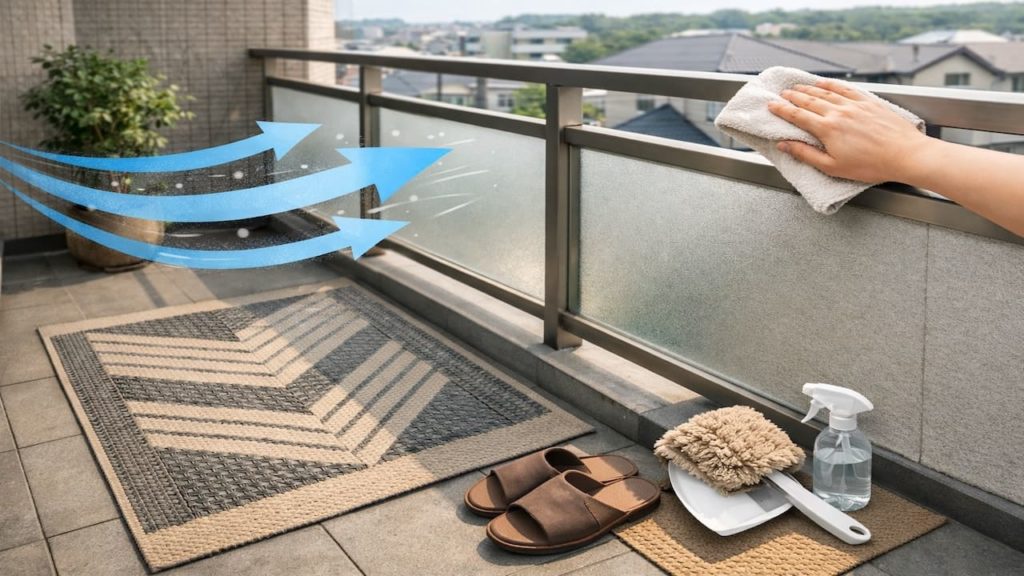
Most balcony noise is impact noise, not “mystery building noise”—metal taps metal, plastic knocks concrete, and it echoes. Wind makes it worse, and Japanese balconies often act like a small drum box. Quiet starts with removing direct contact points. Simple.
- Add felt pads under planters and racks
- Tie loose hooks so they cannot swing
- Move metal items away from the railing
- Put rubber feet under chairs and tables
- Store lightweight items before windy nights
You might think you need expensive soundproofing, but most balcony noise is just sloppy contact. Fix the small hits first, then decide if you need more. Noisy nights.
2. Soft pads placement and door gaps
Use pads where things tap and seal only the whistle gaps.
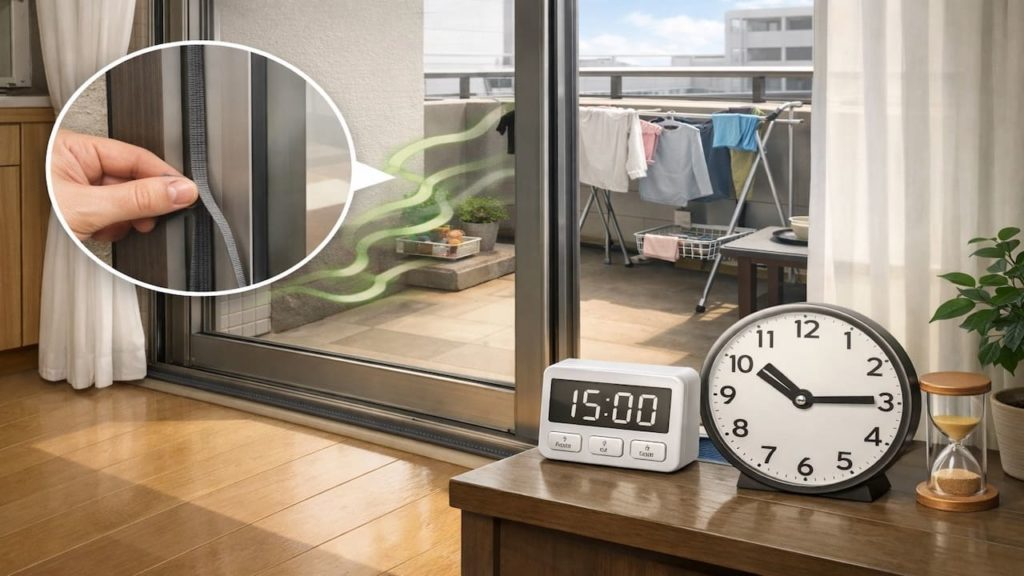
Soft pads work best at “tap points,” not everywhere—under legs, at rail contact, and where storage leans. Door gaps are different: you are stopping air movement that carries high-pitch sounds. In Japan’s winter wind and summer storms, tiny gaps can hiss and rattle. Annoying.
- Pad the bottom of balcony storage legs
- Pad contact points where racks touch walls
- Use silicone bumpers on swinging door handles
- Check door latch tightness and alignment weekly
- Seal small gaps with removable foam strips
You might want to tape every gap like a bunker, but that can trap humidity and cause musty smells. Target only the whistle spots, then keep airflow reasonable. Calm wins.
3. Why balcony noise gets worse after dark
Night makes wind and vibration feel louder.
At night, traffic noise drops, so small balcony sounds jump to the front. Temperature changes can also shrink metal parts a little, making gaps looser and rattles easier. Wind gusts hit railings and screens, and the whole balcony can buzz. That is why “it only happens at night.”
- Listen for rattles when wind shifts direction
- Check screen frames for tiny loose corners
- Test rail panels by pushing gently and listening
- Notice clinks after you close the balcony door
- Find plastic parts that vibrate against concrete
You may blame “bad building quality,” but many noises are just loose parts plus wind. Tighten, pad, and remove swing zones, and the night gets quiet again. Problem mapped.
4. How to quiet the balcony in 15 minutes
Do a quick sweep then lock down the top three noise sources.
Start with a wind test: open the balcony door, wait for a gust, and listen for the first rattle. Then touch that item and stop it, so you know it is real. For basic supplies, expect roughly ¥500–2,000 for felt pads and door gap tape in Japan. According to monotaro.com. According to rakuten.co.jp.
- Remove hanging items that can swing in wind
- Pad three loudest contact points you can find
- Tighten loose screws on racks and chairs
- Seal only the whistling door edge gap
- Do a second wind test to confirm silence
You might think 15 minutes is too short, but this is a triage job, not a renovation. Kill the loudest three sources and the whole balcony feels calmer. Fast relief.
5. FAQs
Q1. What is the easiest first fix if I do not know the source?
Do a wind test and follow the first rattle you hear. Then hold the item and confirm the sound stops, so you do not chase ghosts.
Q2. How do I reduce noise without annoying neighbors with bright lights?
Use a small warm light and focus on quiet contact points so you can work without blasting the whole balcony. Quiet fixes are mostly touch and placement, not power tools.
Q3. Are door gap tapes safe to use on rental balconies?
Many are removable, but some adhesives leave residue, so test a tiny spot first. Also avoid sealing every gap, because humidity needs a path out.
Q4. Why does my balcony door rattle only when it is windy?
Wind pressure flexes the door and makes the latch area chatter. Tighten the latch, add a small bumper, and check if the door is slightly misaligned.
Q5. When should I stop DIY and call building management?
If the railing itself feels loose, or you hear structural creaks when you push gently, stop and report it. Loose rails are not a “pad” problem.
Pro's Tough Talk

I’ve spent 20+ years working around Japanese homes, so I’ve seen what tends to work—and what tends to go wrong—in everyday use. When the night gets quiet, your balcony noise gets spotlighted hard.
Here’s the brutal setup: wind turns loose stuff into a tiny percussion band, hard surfaces make sharp clicks, and door gaps whistle like a cheap flute. The balcony is basically a drum skin, and your storage rack is the drummer. You’re not “too sensitive,” the physics is just rude.
Grab the loudest loose item and stop it now. Today, pad the top three tap points and tighten anything wobbly. This weekend, fix the door rattle and remove swingy hangers.
If the noise is still there after you kill three sources it is structural. That is your line in the sand, no hero moves. Report the loose rail or frame issue and let the pros handle it.
You finally sit down with a drink and a gust makes the hook go clink-clink for five minutes. Seriously. Then you tiptoe back inside, close the door, and it does the tiny rattle like it is mocking you.
Summary
Most balcony noise at night comes from hard contact points and wind-driven rattles. Find the damped zones, then pad and tighten the loudest three sources.
Seal only the small door gaps that whistle, and keep airflow reasonable for Japan’s humid seasons. If the railing or frame feels loose, stop DIY and report it.
Do a quick wind test tonight and fix the first rattle you hear. After that, reuse the same method for screens, hooks, and any balcony storage.