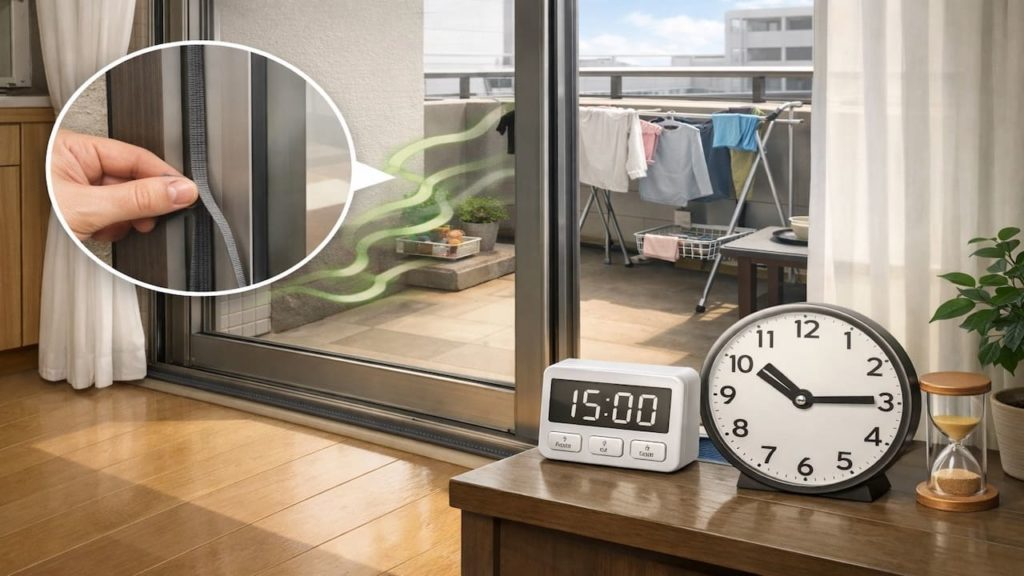
You open the balcony door for a minute, then a weird smell slides into your room. It can be trashy, smoky, or just “stale outdoor air” that clings to curtains.
The source might be your own balcony items, nearby cooking, or air pressure pulling odors inside. In Japan, humid summers and tight apartment corridors can make smells travel faster than you’d expect.
In this guide, you’ll learn how to stop balcony odors from drifting indoors. You’ll fix door sealing, control airflow, and time ventilation so fresh air comes in without the stink.

Hi, I’m Ken — I’m Japanese, and I live in Malaysia long-term, so I explain everyday life in Japan from a practical ‘from abroad’ perspective.
I hold a building design qualification and I’ve been on site for 20+ years across hundreds of jobs. I turn Japan’s unspoken rules into simple checks, so you can avoid costly mistakes and take the next step with clear actions that feel safe.
1. Balcony odors drift indoors: 5 tips
Control the air path and the smell loses its ride.
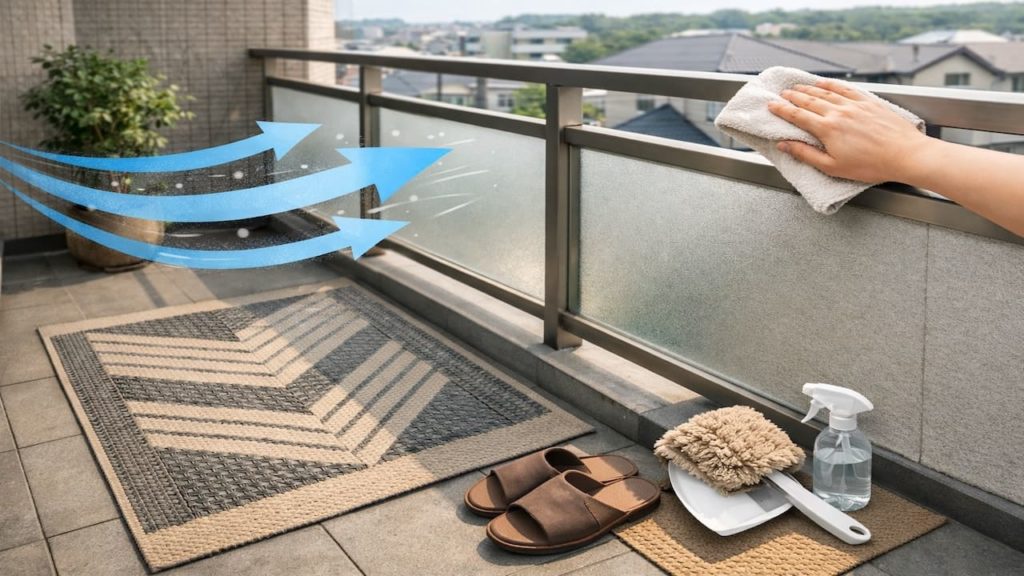
Odors move with airflow, so you do not “fight smell,” you reroute air—simple. In Japanese apartments, small rooms and sliding doors make pressure changes noticeable. One open window can pull balcony air straight through your living space. Draft behavior.
- Vent the room first then open the balcony door
- Keep the balcony door opening small and brief
- Move smelly items away from the door zone
- Close interior doors to block odor travel lanes
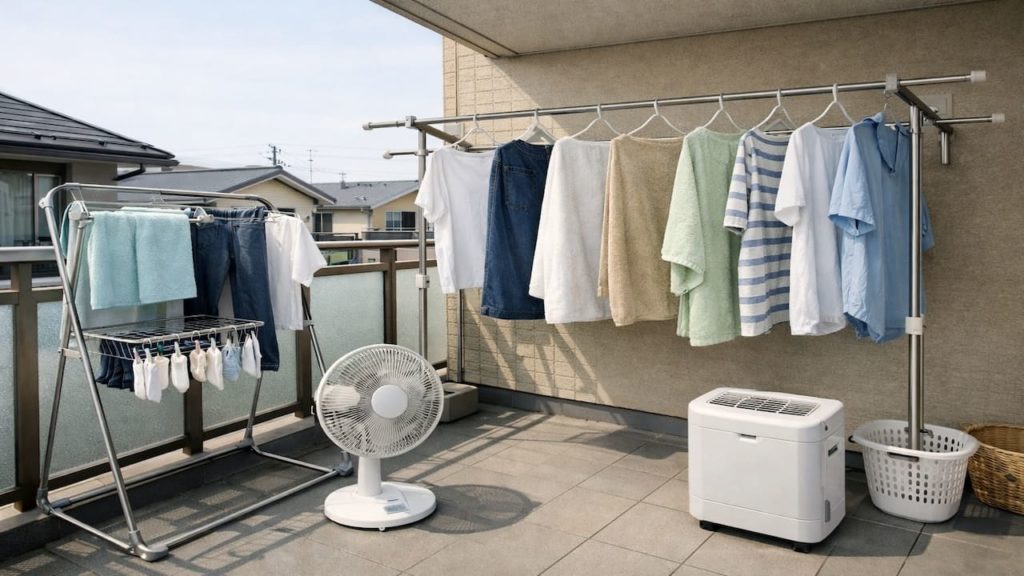
- Use a fan to push air outward not inward
You might think you need to mask it with fragrance, but that just stacks smells. Fix the flow and the air clears faster. Clean air.
2. Door seals airflow and timing
Seal the gaps that suck air and ventilate at the right moment.
Sliding doors often leak at the edges and bottom, and that leak becomes a smell pipeline. Wind direction matters too, because balcony air can get pressed against the door and pushed inside. In Japan’s rainy season, damp air carries odor longer and lingers on fabric. Timing is the cheat code.
- Check the bottom gap with a paper strip test
- Wipe the door tracks so it closes fully
- Open windows on the opposite side first
- Vent after rain stops and surfaces start drying
- Avoid midnight ventilation when air is still damp
You may think “a tiny gap can’t matter,” but a tiny gap plus pressure does a lot. Seal the suction points, then pick better timing. Less drift.
3. Why balcony odors drift indoors
Pressure differences pull balcony air through the easiest crack.
When kitchen fans, bathroom fans, or AC run, they change indoor pressure and pull replacement air from wherever it can enter. If your balcony door leaks, that is the fastest entry route. Add nearby cooking, trash, or wet concrete smell, and it rides right in. Same culprit.
- Notice odor spikes when the bathroom fan runs
- Smell near the door frame to find leak zones
- Check if odor worsens when AC turns on
- Look for damp balcony surfaces after evening dew
- Spot airflow by holding tissue near door edges
You might blame neighbors and give up, but the pull mechanism is usually inside your own unit. Stop the pull, and outside odors struggle to enter. Physics.
4. How to block odors without killing fresh air
Seal drafts, stage ventilation, and keep the balcony dry.
Start with the door: clean tracks, tighten closure, then add removable sealing where air leaks most. Next, stage airflow so air moves outward when you open the balcony door, not inward. Keep the balcony floor and drains clean so you are not importing your own odor source. Basic door draft tape and small sealing supplies often land around ¥500–2,000 in Japan. According to rakuten.co.jp.
- Install foam tape on the leaking door edge
- Add a bottom draft strip that stays removable
- Run a fan facing outward before opening doors
- Vent in short bursts then close and reset
- Clean balcony drains so damp odor does not form
You might worry sealing makes the room stuffy, and that can happen if you seal everything. Target the leak spots and keep controlled ventilation windows. Better air, fewer smells.
5. FAQs
Q1. How can I tell if the smell is coming from my balcony?
Stand near the door frame and sniff along the edges, not the middle of the room. If it spikes right at the frame or track, airflow is pulling it in.
Q2. What if odors get worse when I use the bathroom fan?
The fan can create suction that pulls air from the balcony side. Try cracking an opposite window first so the fan pulls fresh air from there instead.
Q3. Should I use an air freshener to cover it?
Fix airflow first then use scent only if you want. Covering odor without sealing the pull just mixes smells and makes it harder to notice real sources.
Q4. When is the best time to ventilate a Japanese apartment?
Vent when outdoor air is drier and moving, not when the air is still and damp. Short bursts with a reset beat leaving the door open for long periods.
Q5. What if the smell is clearly from neighbors cooking?
You cannot control their cooking, but you can control your entry points. Seal the door leaks and time ventilation away from peak cooking hours.
Pro's Tough Talk

I’ve spent 20+ years working around Japanese homes, so I’ve seen what tends to work—and what tends to go wrong—in everyday use. In humid summer air, smells stick to fabric like gossip at a family dinner.
Here’s the harsh truth: your place is sucking air like a cheap vacuum, and the balcony door gap is the hose. If the track is dirty, the door doesn’t seal, and that crack becomes a scent highway. Odor plus suction equals indoor stink, and you don’t win by spraying perfume on it.
Start a fan facing outward right now. Today, clean the track and seal the obvious leak edge. This weekend, set a ventilation rhythm and stop leaving the door open “just because.”
If the smell still enters with the door fully shut the seal is failing. That’s your signal to redo the draft strip and check alignment, not to buy a stronger fragrance. If it only happens when fans run, give the air a better intake path.
You open the door to “get fresh air,” then your curtains smell like last night’s yakiniku. Yeah, sure.
Summary
Balcony odors drift indoors because airflow carries them through gaps and pressure pulls. Fix the air path and the smell loses momentum.
Seal the suction points and ventilate in short staged bursts, especially when air is drier. If odor spikes when fans run, give them an alternate intake route.
Clean the track today and seal one leak edge first. Then time ventilation so fresh air enters without dragging balcony funk inside.