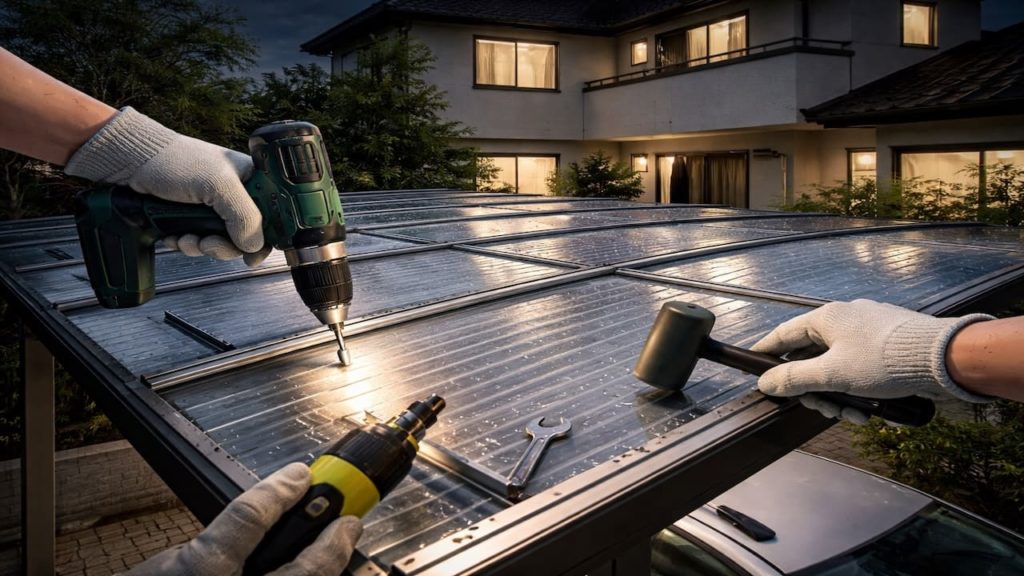
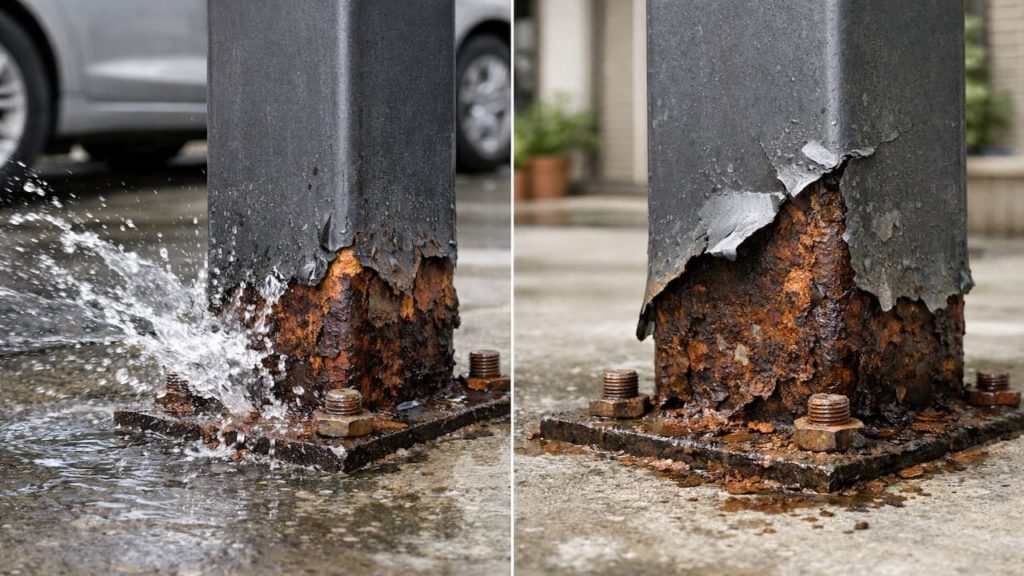
You park your bicycle under the carport, but it still feels unstable or risky. You worry one gust or one sloppy lock will ruin your day.
In Japan, open-sided carports face hard rain, sudden wind, and sticky humidity, especially in rainy season and typhoon months. The problem can be theft, tipping, rust, or just bad daily flow, so it helps to sort the cause first.
In this guide, you’ll learn how to park and lock a bike under a carport safely. You’ll set anchors for wind, choose lock points that actually matter, and stop rain splash from turning your setup into a rust farm.

Hi, I’m Ken — I’m Japanese, and I live in Malaysia long-term, so I explain everyday life in Japan from a practical ‘from abroad’ perspective.
I hold a building design qualification and I’ve been on site for 20+ years across hundreds of jobs. I turn Japan’s unspoken rules into simple checks, so you can avoid costly mistakes and take the next step with clear actions that feel safe.
1. Carport bicycle parking tips: 5 checks
Stability comes from three contact points not one.
A carport is not a garage, so wind can push from the side and back. Expect ¥1,000–5,000 for straps, hooks, and basic bumpers if you want it solid. If the bike rolls or pivots, the lock follows and the rack twists, so the whole setup fails. Always lock your bicycle even for a short time, and double-lock if you can. According to npa.go.jp.
- Add wheel chock to stop rolling forward
- Tie down frame to fixed post point
- Keep rear wheel against a hard bumper
- Face handlebars away from common wind path
- Park same spot daily for faster routine
Some people say the kickstand is enough because it works on calm days. Calm days are not the days that break parts—wind and careless bumps do. If you want peace, treat the parking spot like a mini dock with repeatable positions. Wind does not negotiate—give it nothing to grab.
2. Wind locks racks and rain
Match your locks to the strongest rack point.
Wind is not just “tipping,” it is twisting, and twisting loosens cheap racks fast. In humid Japanese summers, wet locks and wet racks invite rust, then the key starts feeling gritty. Budget ¥2,000–12,000 for a real lock and a rack that does not wobble. Weather alerts matter because advisories and warnings are issued when strong winds may cause damage. According to jnto.go.jp.
- Lock frame and rear wheel to solid rack
- Avoid thin wire racks that flex easily
- Use drip loop on chain lock storage hook
- Keep lock off ground to prevent splash
- Add rain cover only when airflow stays open
Some people say a cover solves rain, so they stop thinking about rack strength. A cover can act like a sail and pull the bike over if it is loose. Keep the cover simple and tight, and never let it rub the frame all day. Rain finds gaps—your lock should not be one.
3. Why bikes tip or disappear under carports
Most failures start with one weak pivot point.
If the front wheel can turn freely, the whole bike can “walk” sideways under repeated wind nudges. Tight Japanese lots often force you to park close to walls, so pedals and bars snag and create sudden tipping force. Spend ¥1,500–8,000 for a wheel stopper or a wall hook system that fits your space. The real enemy is micro-movement, not one dramatic shove.
- Stop wheel rotation with a simple brake band
- Park with crank arm up to reduce hits
- Keep pedals clear of posts and bump zones
- Choose rack height that blocks handlebar swing
- Use two locks when parking overnight outside
People blame “bad luck” when a bike falls, but it is usually a repeatable geometry problem. Fix the pivot and the drama disappears. You do not need a fancy system, just a consistent one that removes slack. One pivot equals chaos—kill the pivot.
4. How to build a 60-second park-and-lock routine
Make parking a sequence you can repeat fast.
A routine beats motivation because you will do it even when tired. In Japan, sudden showers plus night wind can hit right when you get home, so speed matters. Set aside ¥1,000–6,000 for hooks, a small tray, and one strap so everything is where your hands expect it. One place for the lock, one place for the strap, one place for the bike.
- Roll in and seat wheel into the chock
- Turn bars straight and set kickstand firmly
- Clip frame lock to rack at same height
- Add strap from frame to post anchor
- Hang lock on hook to dry quickly
Some people say routines are overkill and you will remember anyway. You will not, not every day, not when you are carrying groceries or rushing inside. A routine also makes it obvious when something changed, like a loose rack bolt. Make it boring—boring is safe.
5. FAQs
Q1. Do I really need two locks under a carport?
Double locking is the easiest theft deterrent when the bike sits outside overnight. Lock the frame to a fixed point, then add a second lock to the rear wheel or battery.
Q2. Should I use a full cover under a carport?
Use it only when rain splash is heavy, and keep vents open so moisture does not sit on the metal. If wind is strong, skip the cover and focus on a tighter lock and strap.
Q3. My rack wobbles a little, is that fine?
No, wobble grows with daily twisting—tighten bolts, add braces, or switch racks before it bends. A flexy rack also makes locks easier to defeat.
Q4. What if my carport spot is narrow?
In many Japanese homes, space is tight, so park at the same angle and keep pedals away from posts. Reduce handlebar swing and you cut surprise tip-overs.
Q5. How do I stop rust on the lock?
Keep it off the ground, wipe water after rain, and store it where air can dry it fast. A quick wipe beats a stuck key later.
Pro's Tough Talk

I’ve spent 20+ years working around Japanese homes, so I’ve seen what tends to work—and what tends to go wrong—in everyday use. A bike under a carport can look safe, then it ends up on the ground like a kite on a string. You only need one bad night to learn that lesson.
Here is the cold truth: the bike tips because it pivots, not because it is “light.” The rack fails because it flexes, not because it is “old.” The lock fails because you lock the wrong part, like a wet cardboard box pretending to be a safe.
Move the bike so the wheel sits in a stopper. Add a strap from frame to a fixed post. Mount a real rack and retire the wobbly junk.
If it moves it will eventually break or vanish, so remove slack and make the setup repeatable. If you do all that and it still feels sketchy, your next move is changing the rack location or adding a hard anchor point.
Yeah, keep betting your bike on a kickstand.
Summary
Check your contact points, your rack strength, and your lock points before you blame the weather. A carport is exposed, so the setup has to be deliberate.
If the bike still tips or the rack still shifts, upgrade the anchor and remove the pivot first. If theft risk still feels high, change where you park and increase visibility.
Do the 60-second routine today and stop the slow failures. Once it feels stable, keep reading nearby fixes so the rest of your outdoor gear stays calm too.