You spot a crack in the concrete around your carport posts and your stomach drops. You wonder if it is just cosmetic or the start of real movement.
Cracks can come from settlement, water pushing under the slab, or rusting rebar expanding inside. In Japan, rainy season moisture and humid summers make small problems grow if drainage is off.
In this guide, you’ll learn how to read carport foundation cracks before they get expensive. You’ll spot warning signs, track change, and decide when a quick fix is fine and when you need a pro.

Hi, I’m Ken — I’m Japanese, and I live in Malaysia long-term, so I explain everyday life in Japan from a practical ‘from abroad’ perspective.
I hold a building design qualification and I’ve been on site for 20+ years across hundreds of jobs. I turn Japan’s unspoken rules into simple checks, so you can avoid costly mistakes and take the next step with clear actions that feel safe.
1. Carport foundation cracks: 5 signs
Cracks matter when they change or show movement.
One hairline crack can be harmless, but widening, offset, or staining is a different story—especially after heavy rain or winter cold snaps in Japan. Expect ¥500–3,000 for a marker, small ruler, and cleaning brush to start tracking properly. You are not guessing, you are watching patterns. A simple log beats panic.
- Measure crack width with a simple feeler gauge
- Mark crack ends with date and arrow
- Check for height offset using straight edge
- Look for rusty streaks near the crack
- Tap for hollow spots around the base
Some people say “all concrete cracks” and stop thinking. True, but not all cracks behave the same. If the crack grows, stains, or shifts, treat it like a signal, not a decoration. Your job is to catch change early.
2. Settlement water and rebar
The cause decides the fix more than the crack shape.
Settlement usually shows as diagonal cracking or one side dropping, while water issues show damp edges and recurring stains—common during Japan’s long rainy season. Plan ¥1,000–8,000 for a basic sealant, patch material, and a cheap moisture check setup if you are doing minor cleanup. Rebar problems show up as rust bleed, spalling, or expanding cracks near edges. If you see exposed steel, it is no longer “just a crack.”
- Check soil washout at slab edge after rain
- Look for puddles that sit beside posts
- Inspect rebar exposure at chipped concrete corners
- Watch for rust stains spreading after wet weeks
- Confirm post base plate stays flat and tight
Some people try to fill every crack with whatever tube is on sale. That can trap water or hide active movement. Find the source first, then pick the lightest fix that matches it. Fixing the wrong cause is wasted money.
3. Why cracks get worse around carport posts
Posts concentrate load and water into one zone.
Carport posts push weight into small footings, and that area also gets tire splash, gutter overflow, and wind-driven rain—so it lives in a harsher world than open slab. Budget ¥3,000–25,000 if you add drainage tweaks, gravel, or a small regrading to change how water hits the base. In Japan, humidity keeps the base damp longer, and damp concrete invites staining and corrosion faster. Inspection standards for housing defects often flag larger cracks and deeper defects as items to point out. According to mlit.go.jp.
- Check gutter drip line hitting near the footing
- Look for algae growth showing constant dampness
- Measure crack again after big temperature swings
- Watch for concrete flaking near bolt washers
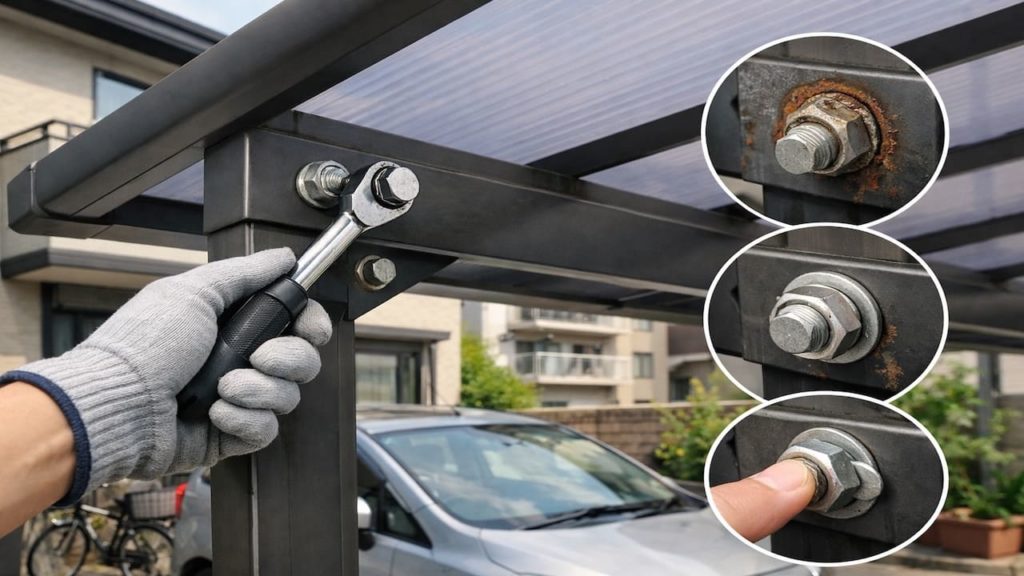
- Verify bolts do not loosen between seasons
Some people blame the installer immediately, and sometimes that’s fair. But water patterns and soil behavior can change over time. If you stop splash and stop movement, cracks often stop acting dramatic. The post zone is where small neglect becomes big noise.
4. How to check and respond without making it worse
Track first, then repair only what is stable.
Start with cleaning and marking, then check after rain, then check again after a dry week—Japan’s wet-dry cycles reveal what is active. Set aside ¥5,000–40,000 if you might need a minor repair kit, bolt replacement, or a short inspection visit. If the crack widens fast, shows offset, or keeps weeping rust, stop DIY. If it stays stable, you can clean, seal, and improve drainage with confidence.
- Clean crack with brush and water only
- Mark width points and photograph same angle
- Seal only after crack stays stable two weeks
- Improve drainage so splash never hits the base
- Call pro if offset or spalling appears
Some people rush to patch because they hate seeing the line. A patch on a moving crack just breaks again and looks worse. The smart move is boring: observe, confirm stability, then repair. If the crack is telling you the ground is moving, listen.
5. FAQs
Q1. Are hairline cracks always harmless?
No they are fine until they start changing in width, length, or staining. If they stay the same across seasons, they are usually just shrinkage.
Q2. What is the easiest way to tell if it is active?
Mark the crack and recheck after heavy rain and a dry week—movement shows itself when conditions change. Photos from the same angle make it obvious.
Q3. When is rust a serious warning?
Rust streaks near cracks can suggest steel corrosion inside. If you also see flaking concrete or exposed steel, treat it as urgent.
Q4. Can I seal cracks to stop water?
You can seal stable cracks after tracking them, but sealing a moving crack is temporary. Fix drainage and splash first so water stops feeding it.
Q5. When should I call a professional?
Call if there is offset, widening that keeps progressing, spalling, or post base movement. Also call if doors or roof alignment suddenly feels different.
Pro's Tough Talk

I’ve spent 20+ years working around Japanese homes, so I’ve seen what tends to work—and what tends to go wrong—in everyday use. Cracks don’t jump out of nowhere, they train up in silence.
A crack is like a warning light, not a scratch on your phone screen. Water is a slow thief, it steals strength one wet day at a time. You pull in during a downpour, splash the base, and never look down. Next week you hear a tiny tick when wind hits, and you pretend it’s a ghost.
Clean the crack and mark it. Check it after rain. Photograph it from the same spot.
If it grows or offsets you stop DIY and get it checked. If it stays stable, seal it and fix splash so the base can actually dry.
Yeah, ignoring it is not maintenance.
Summary
Foundation cracks around carport posts are a problem when they change, offset, or stain. Track width, watch water paths, and look for rust or flaking.
If the crack stays stable, you can clean, seal, and improve drainage. If it keeps growing, shows movement, or exposes steel, switch to inspection and repair.
Do one mark and photo today then keep building your seasonal check habit. Small tracking beats big surprise bills, and it keeps your carport calm.