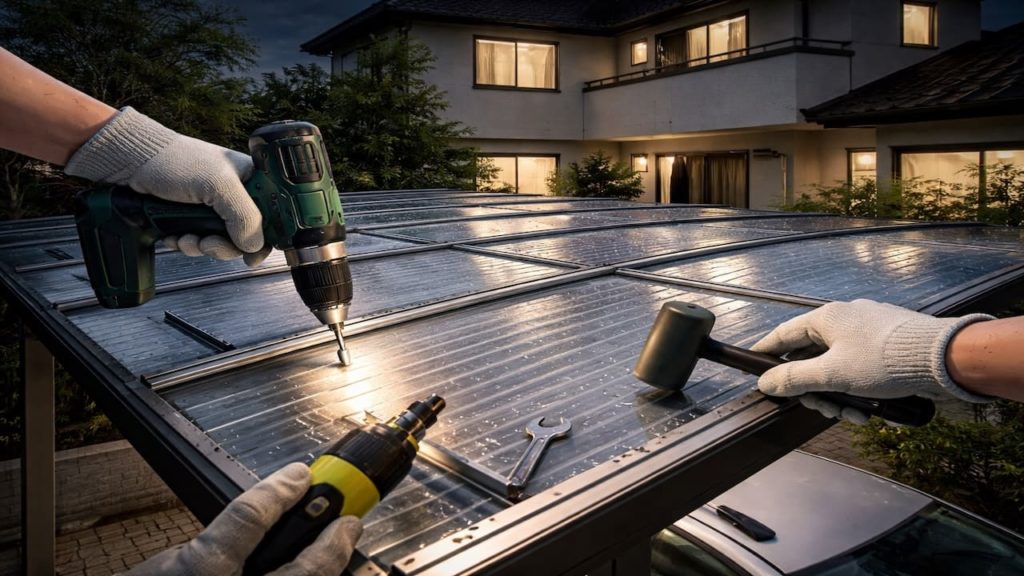
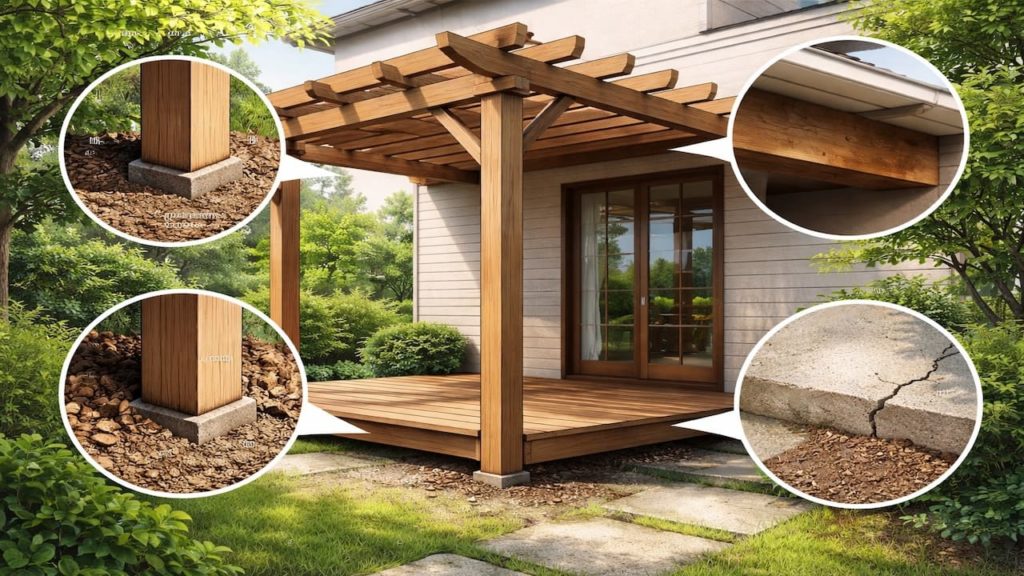
You notice a carport drip only when rain turns aggressive and loud. You wipe the hood, then spot new drops on the seat or floor mat.
You are not sure if it is a roof leak, splashback, or a warped joint. In Japan, tsuyu humidity and sudden squalls push water sideways under light roofs.
In this guide, you’ll learn how to read leak clues and stop storm drips. You will narrow the entry point, fix the weak joint, and avoid repeat leaks.

Hi, I’m Ken — I’m Japanese, and I live in Malaysia long-term, so I explain everyday life in Japan from a practical ‘from abroad’ perspective.
I hold a building design qualification and I’ve been on site for 20+ years across hundreds of jobs. I turn Japan’s unspoken rules into simple checks, so you can avoid costly mistakes and take the next step with clear actions that feel safe.
1. Carport leaks during heavy rain: 5 signs
Look for five leak patterns before blaming the whole roof—stains usually map the entry point.
Heavy rain often comes with gusts, so water can run along the frame before it finally drops. Drips may show far from the real gap because water rides the beam first. Quick check. This matters in Japan where carports sit close to walls and fences.
- Mark drip spots with tape after storms
- Check underside for lines not random drops
- Look for wet bolts on cross beams
- Inspect caps where panels end at gutter
- Compare left and right during same rainfall
“It only leaks in big storms” sounds harmless, but storms are exactly when damage starts. Repeated wetting can stain coatings and rust fasteners. Tight parking layouts also increase splashback and sideways spray. Find the pattern now, then fix the exact joint.
2. Seam gaps warping and loose caps
Most storm leaks come from seams that open slightly—caps lift when wind shakes the sheet edge.
Polycarbonate and metal rails expand and shrink with seasons, and Japan swings from hot, wet summers to cold, dry winters. That movement can pull seams apart a few millimeters. Thermal movement. Loose end caps also let water ride under the sheet like a wick.
- Check seam overlap for daylight at noon
- Press cap ends and feel any movement
- Look for warped sheet edges near fasteners
- Find cracked washers around screw heads today
- Watch drip start points during first minutes
You might say “the panels look straight,” but seams can open only under load. Wind pushes, the sheet flexes, and the cap edge lifts for a second. That second is enough. Treat seams and caps as moving parts, not fixed walls.
3. Why heavy rain exposes weak carport joints
Wind driven rain finds the smallest pressure gap first—and joints are where pressure changes.
When wind hits a roof edge, it creates suction underneath and drives water into overlaps. Capillary action can also pull water through hairline gaps, even without a visible hole. Physics. In Japanese homes, carports often sit beside fences and walls, which can funnel gusts and spray.
- Wind pushes water under overlaps and caps
- Suction lifts edges and breaks sealing contact
- Clogged gutters backflow onto panel seams fast
- Vibration loosens screws and crushes washers over time
- Heat cycles warp rails and shift alignment
Some people blame “bad panels,” but the panel face rarely leaks by itself. The weak point is where two parts meet and move. If you fix only the drip spot, water may shift and appear elsewhere next storm. Fix the cause at the joint.
4. How to stop leaks with a targeted reseal
Fix the joint in layers so water has no path—clean, tighten, then seal only what stays dry.
Use only sheet-compatible accessories and sealing materials. According to palram.com. Pick tapes and sealants labeled polycarbonate-compatible. According to rodeca.de. Expect ¥500–3,000 for basic supplies, and clean and dry the joint before sealing. Prep.
- Wash seams, then dry with clean cloth
- Reseat caps, then tighten screws evenly today
- Replace crushed washers with fresh ones now
- Seal overlap edges with compatible roofing tape
- Test with hose from low to high
You might want to smear silicone everywhere, but that often traps moisture and peels. If you seal over dirt, the tape lifts and water sneaks back under. In Japan, humid air slows drying, so wait for a clear window. A neat joint beats a messy blob.
5. FAQs
Q1. How do I tell a roof leak from splashback?
Put one dry towel under the suspected seam and another near the wall side, then check which one wets first. If the seam towel wets from above, it is a leak. If only the wall-side towel wets, it is mostly splash and wind spray.
Q2. Can I keep using the carport if it leaks?
You can park, but do not ignore active dripping onto wiring, outlets, or sensors. Stop leaks before they reach the beam joints because hidden rust starts there. Use a temporary tray or tarp until you can reseal.
Q3. What is the safest way to inspect during rain?
Stay off ladders when wind is strong, and never step on a wet plastic roof. Check from inside the carport with a bright light and a long pointer—your neck will hate you, but it is safer. Mark the drip line and inspect properly when it clears.
Q4. Why does it leak only in certain storms?
Gust direction changes how water hits overlaps, and tsuyu humidity keeps joints slightly swollen and soft. Some storms hit at a low angle, so water rides under caps that look fine from above. That is why the first 10 minutes of rain matter most.
Q5. When is it time to call a pro?
If the frame is bent, the posts wobble, or the leak comes from multiple seams, get help. A pro can re-square the rail lines and replace caps without cracking panels. If you see cracks spreading, stop DIY and switch plans.
Pro's Tough Talk

I’ve spent 20+ years working around Japanese homes, so I’ve seen what tends to work—and what tends to go wrong—in everyday use. You’re not crazy for missing a tiny leak. But water is a patient thief, and it always comes back for seconds. In rainy season humidity, that “small drip” can turn into a soggy surprise fast.
Here’s the cold truth: seams move, caps wiggle, and screws loosen, even when the roof looks perfect. Heat makes parts grow, cold makes them shrink, and the joint is the punching bag. A random silicone smear is like painting rust and calling it “fixed.” It looks brave, then flakes off.
Dry the seam and frame first. Tighten screws evenly and replace bad washers today. Tape or seal only the clean overlap on the weekend.
Win by fixing the joint not the drip and you stop chasing towels every storm. If you still get drips after a clean tighten and a proper tape, the frame alignment is off, so that is the next step. You do not need a rebuild, you need the roof to sit square.
You hear thunder, you sprint out in socks, and you still step in a puddle. You open the car door and get a cold drip on your neck. Yeah, of course it does. Next storm, make it leak-proof and let the rain do the complaining.
Summary
Storm leaks usually come from seams, caps, and fasteners, not the panel face. Track the drip pattern once, then inspect the joint that feeds it.
If resealing does not change the pattern, suspect frame alignment or gutter backflow. Use your next heavy rain as a test, not a surprise.
Pick one seam and fix it the right way on a dry day. Then check a related joint so you prevent the next leak instead of reacting.