You look at the carport posts and notice rust streaks that weren’t there before. The posts still feel solid, but the color change makes you uneasy.
Rust can be cosmetic, or it can be the start of deeper pitting at the base and joints. In Japan, tsuyu humidity and long wet cycles keep metal damp, and coastal salt can speed everything up.
In this guide, you’ll learn how to tell if rusty carport posts are getting serious. You’ll spot the warning signs, understand the triggers, and know when it is time to repaint, repair, or escalate.

Hi, I’m Ken — I’m Japanese, and I live in Malaysia long-term, so I explain everyday life in Japan from a practical ‘from abroad’ perspective.
I hold a building design qualification and I’ve been on site for 20+ years across hundreds of jobs. I turn Japan’s unspoken rules into simple checks, so you can avoid costly mistakes and take the next step with clear actions that feel safe.
1. Carport posts look rusty: 5 signs to watch
Rust that changes month to month is the real warning—stable stains are less scary than spreading damage.
Start by checking whether the rust is just surface staining or active corrosion that keeps growing. Posts take splash, runoff, and vibration, so they show problems early. In Japan, narrow lots can trap moisture along walls, slowing drying and making posts stay damp. Track the change, not the mood.
- Photograph the same spot weekly under daylight
- Look for fresh orange streaks after rain
- Check for flaking layers not just discoloration
- Tap the post and listen for dull tone
- Feel for rough raised rust ridges by hand
You might think “it looks rusty so it’s doomed,” but surface rust can be managed if the metal is still sound. The problem is rust that creeps outward or thickens in layers. If it changes fast, moisture is feeding it. That’s when you act.
2. Scratches salt air and pooling
Most post rust starts where coating is broken and water sits—scratches and pooling are the fuel.
A tiny scratch exposes bare metal, then splash water and grit do the rest. Salt air accelerates corrosion because it increases conductivity and keeps surfaces wet longer, especially in windy coastal weather. Pooling near base plates keeps the bottom zone damp, and damp beats paint. Corrosion is strongly influenced by environment like chloride exposure and wet time. According to nace.org.
- Find scratch lines at bumper and door height
- Check base plate edges for trapped grit rings
- Look for salt like white residue on surfaces
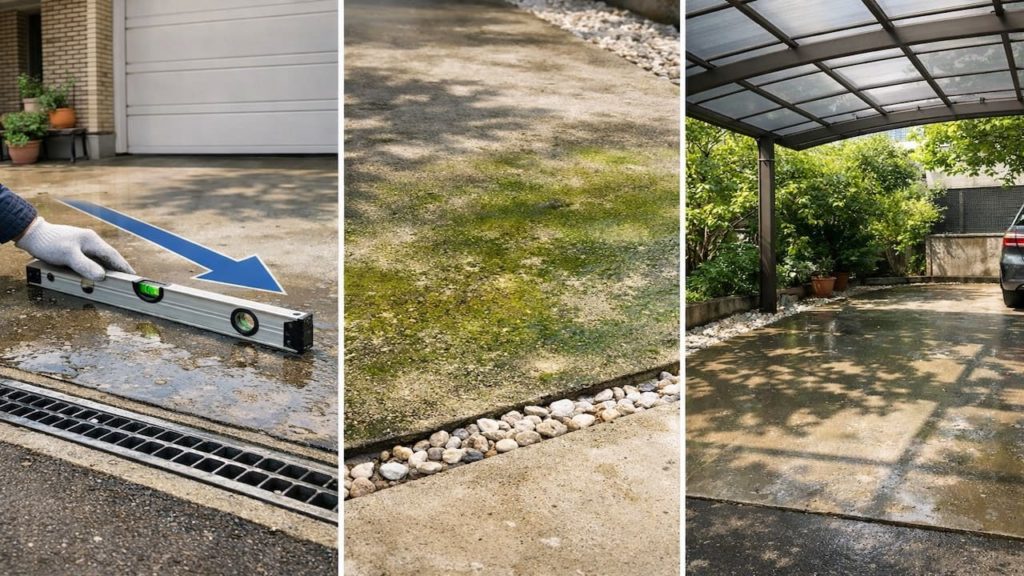
- Confirm puddles form near posts after storms
- Inspect drip lines that hit one post repeatedly
You might say “I don’t live by the sea,” but salt can still show up from winter de-icing areas or carried spray on windy days. Pooling is the bigger universal issue. If the base stays wet, rust will keep winning. Fix the water habit and you cut the rust speed.
3. Why post rust spreads faster than roof rust
Posts live in the splash zone and the grime zone—they get wet, then stay wet.
Roof panels shed water, but posts catch runoff, splashback, and mud. Dirt clings at the base and holds moisture like a sponge, then oxygen and water do their thing. In Japan, humidity slows drying, so damp stays damp even after the rain stops. That is why bases corrode first.
- Splashback hits posts during heavy rain bursts
- Soil and dust cling and hold moisture longer
- Runoff lines repeatedly wet the same side
- Small scratches become corrosion starting points
- Vibration at joints cracks coatings over time
Some people repaint only the visible face, but the base and backside matter more. If you ignore pooling and dirt, the new paint will still fail. Rust is not just chemistry, it is routine. Keep the base dry and clean, and you slow the whole process.
4. How to slow rust now and decide next steps
Clean the base zone and seal the small wounds—then you can judge if rust is active.
First wash off grime, then dry fully, then treat scratches and early rust spots. For small supplies, plan ¥1,000–5,000 for rust remover, primer, and touch-up paint if you decide to buy them. If you do sanding or wire brushing, use eye protection because debris can fly. According to osha.gov. In Japan’s wet seasons, do this on a dry stretch so coatings can cure.
- Scrub base area and remove mud buildup
- Dry completely before applying any coating
- Touch up scratches with primer then paint
- Redirect runoff so one post is not soaked
- Record photos to confirm if rust slows
You might want to repaint everything, but you can often stabilize it with targeted touch-ups first. If the rust keeps spreading after cleaning and touch-up, the environment is still feeding it. Then you consider bigger repaint or replacement. Fix the conditions first, then spend money.
5. FAQs
Q1. Is orange streaking always serious?
No, streaks can be surface staining from runoff carrying rust dust. But streaks that reappear fast after cleaning suggest active corrosion. Track how quickly it returns after a dry week.
Q2. Where is the highest risk rust spot on a post?
Near the base plate and any joint seams, because water and grime collect there. That area also affects structural load paths. Inspect the backside too, not only the face you see.
Q3. How can I tell if it is pitting?
Run your finger or a coin edge across the spot and feel for craters. If it keeps catching, the metal may be thinning. Pitting plus a wet base is a replace or repair signal, not just a repaint trigger.
Q4. Can I stop rust by sealing the bottom with caulk?
Be careful, because trapping water can make corrosion worse. It is better to improve drainage and keep the base clean and dry. Seal only when you know the water path is controlled.
Q5. When should I call a professional?
If the post feels loose, the base plate lifts, or you see deep pitting, call someone. If rust is near anchor bolts or cracks, do not guess. Stability beats cosmetic fixes.
Pro's Tough Talk

I’ve spent 20+ years working around Japanese homes, so I’ve seen what tends to work—and what tends to go wrong—in everyday use. Rust on posts is common, but ignoring it is how you end up with a “surprise wobble.” In tsuyu humidity, metal stays damp like it’s holding a grudge.
Three triggers run the whole show: scratches that expose bare steel, salt or dirty water that keeps things conductive, and pooling at the base that never dries. You’re not careless and the installer isn’t always a clown, it’s just water plus time plus the wrong habits. A scratch is a paper cut, pooling is the infection, and salt is the caffeine.
Clean the base zone now. Touch up scratches today. Fix the runoff path this weekend.
If rust returns fast after cleaning you have a moisture problem and paint alone won’t save you. Your decision line is simple: if the base stays wet, rust will keep winning. Make it dry, then choose repaint or repair with confidence.
Yeah, sure.
You wash the car, admire the shine, then glance at the post and see that orange streak again. You sigh like it’s fate, then you step into the puddle next to the base and act surprised. Come on.
Summary
Rusty carport posts are usually driven by broken coating, salt exposure, and pooling at the base. Watch for change over time and focus your inspection on the bottom zone and joints.
If rust keeps spreading after cleaning and touch-up, the environment is still feeding it, especially standing water and repeated drip lines. Fix drainage and drying conditions before spending big on repainting.
Today clean one base and photograph one rust spot so you can track whether it is active. Then reduce pooling and protect scratches so the rust slows instead of growing.