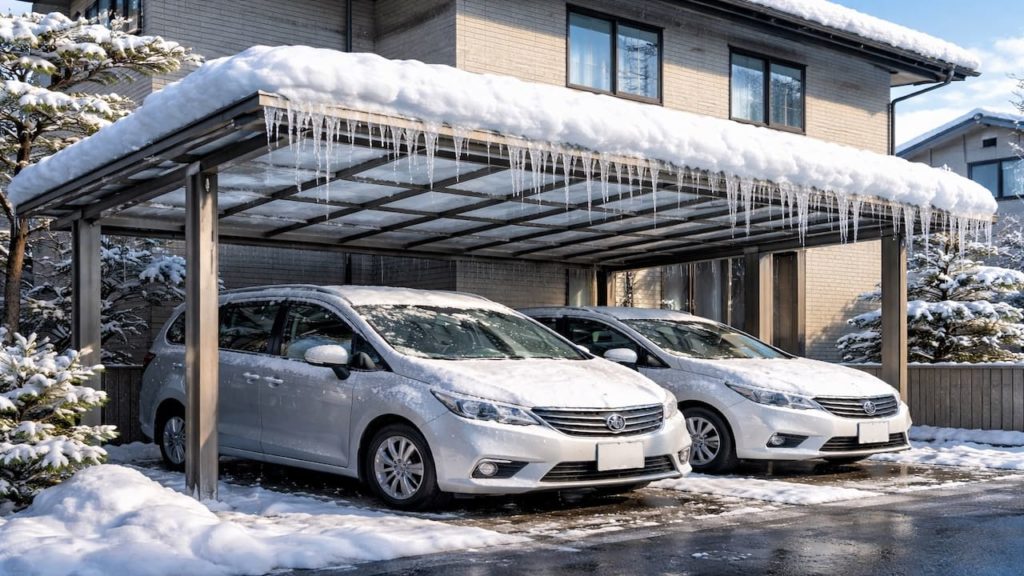
You come home late and the carport feels like a dark pocket next to the house. Even if nothing has happened, the quiet and shadows can make you feel exposed.
Night security is usually about reducing blind spots and making your routine predictable. In Japan, close neighbors, narrow lots, and wet reflective nights can make sightlines feel worse.
In this guide, you’ll learn how to make your carport feel safer at night. You’ll use light, simple locks, and clear sightlines so you can park, unload, and enter without that uneasy pause.

Hi, I’m Ken — I’m Japanese, and I live in Malaysia long-term, so I explain everyday life in Japan from a practical ‘from abroad’ perspective.
I hold a building design qualification and I’ve been on site for 20+ years across hundreds of jobs. I turn Japan’s unspoken rules into simple checks, so you can avoid costly mistakes and take the next step with clear actions that feel safe.
1. Carport security at night: 5 tips
Security starts by removing places someone can stand unseen—shadows are the real problem.
You don’t need to turn the carport into a fortress, you need clarity. If you can see the ground and the corners, your brain relaxes and your routine speeds up. In Japan, fences and walls sit close, so corners become deep shadows fast. Fix the pockets first.
- Light corners and the path to your door
- Keep the floor clear so footsteps are obvious
- Trim plants that block view from windows
- Set a consistent parking position every night
- Use one habit check before you unlock door
You might think “it’s safe here,” but security is also about your comfort. If you feel tense, you rush, and rushing creates mistakes like dropped keys and open doors. A simple layout that lets you see clearly reduces both risk and stress. Make it boring and visible.
2. Lights locks and sightlines
Use light to see and locks to slow—sightlines are what keep both effective.
Lights should illuminate the walking route, not blind you with glare. Locks should secure items that are easy to grab, like bikes, tools, and ladders, not only the car. Sightlines mean you can see the carport from inside the house, at least from one window or door peephole zone. In Japan, rain glare can hide movement, so angled down-lighting helps.
- Install motion light aimed down not outward
- Add manual override so it stays on while unloading
- Lock bikes and ladders to a fixed anchor point
- Keep one window view line free of tall clutter
- Place reflectors on posts to reduce blind zones
You might say “I have a bright light already,” but if it creates glare, you actually see less. You might also think locks are pointless, but they buy time and create noise. A thief loves quick and quiet. Light plus delay plus visibility is the combo.
3. Why carports feel risky at night
They create a sheltered zone with limited escape routes—and your attention is split.
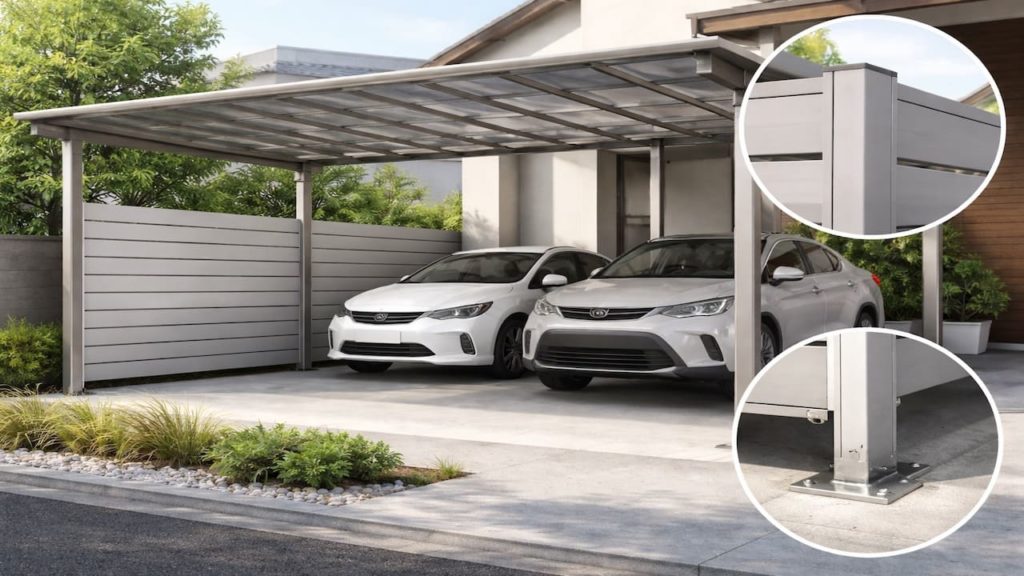
You’re carrying bags, dealing with kids, or looking for keys, so you’re not fully aware. Carports also hide movement behind posts, cars, and storage items. In Japan, narrow approaches and tall fences can reduce street visibility and make it feel isolated. A safe setup supports your routine when you’re distracted.
- Posts create blind wedges beside parked cars
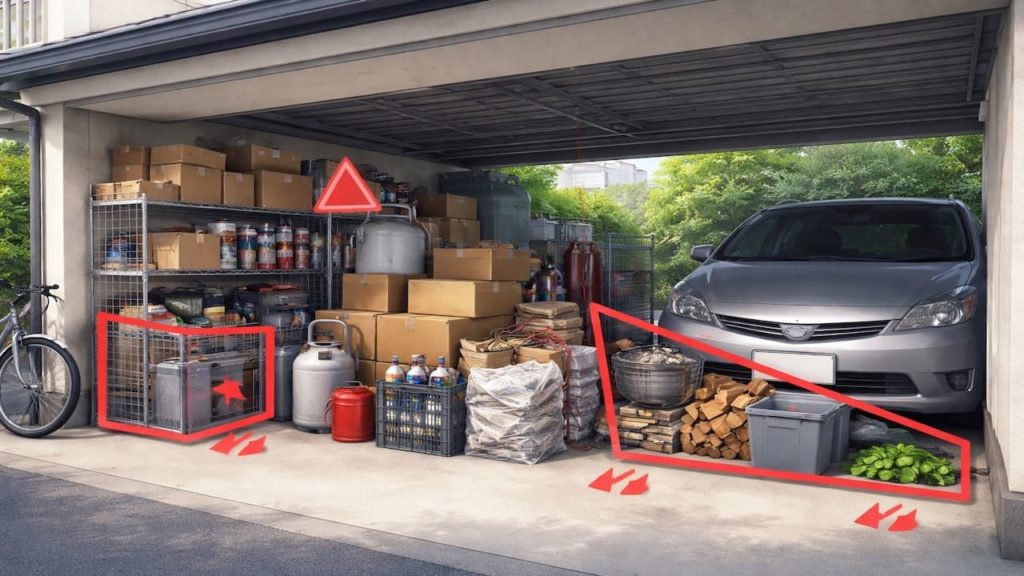
- Storage piles create hiding spots behind shadows
- Rain noise masks footsteps and small sounds
- Wet ground reflects glare and reduces depth cues
- Door unlocking moment is when focus drops
Some people try to “stay alert,” but alertness is not reliable after a long day. Design beats discipline. If you remove hiding pockets and reduce task load, you move through the space smoothly. That’s real safety, not paranoia.
4. How to upgrade security without turning it into a project
Start with visibility then add simple delay points—you want quick wins you’ll keep using.
First, improve light placement and remove clutter that blocks sightlines. Then add a couple of anchors for locking high-theft items. If you buy basic supplies, expect ¥1,000–8,000 for motion lighting add-ons, anchors, and lock hardware depending on what you already have. In Japan’s wet seasons, choose weather-rated gear and keep cords off the ground.
- Move storage off the floor to a wall shelf
- Re-aim light to cover corners and door path
- Add one fixed anchor point for chains
- Use a timer or sensor delay for unloading
- Practice your entry routine once and repeat it
You might want cameras first, but cameras don’t stop trips, drops, or awkward moments. Start with visibility and habit flow, then add recording later if you want. If you keep the area tidy and bright, you remove most low-effort threats. Make it easy to maintain or it won’t last.
5. FAQs
Q1. What is the first thing to improve for night security?
Lighting on the walking path and corners, because it removes shadows and reduces stress. Place it so you see the ground texture and the post edges. Avoid glare that blinds you as you park.
Q2. Do motion lights help or annoy neighbors?
They help if aimed down and set to a reasonable sensitivity. If aimed outward, they can trigger on street movement and become annoying. Adjust range and angle so it activates for your carport only.
Q3. What items should I lock in the carport?
Bikes, ladders, tools, and anything easy to carry. Locking the easy grab items buys time and reduces opportunistic theft. Anchor locks to something fixed, not a loose shelf.
Q4. How do I improve sightlines fast?
Remove tall clutter near the posts and keep one clear view from a window or door. Trim plants that block the line. The goal is to make the space visually “open,” even if the lot is narrow.
Q5. Should I add a camera?
A camera can help with awareness and evidence, but it works best after you fix lighting and sightlines. A dark blurry camera view is not useful. Do visibility first, then decide.
Pro's Tough Talk

I’ve spent 20+ years working around Japanese homes, so I’ve seen what tends to work—and what tends to go wrong—in everyday use. Carport security is mostly about not giving the night a place to hide things. In Japan, tight lots and fences can make a calm home feel like a blind corner maze after dark.
Three issues repeat: bad lighting that creates glare, clutter that makes hiding pockets, and no “delay” for grab-and-go items. You’re not paranoid and your neighborhood isn’t automatically dangerous, but thieves love low effort. A dark corner is a free cloak, a ladder is a free tool, and your distracted key moment is the opening.
Light the corners now. Clear the floor today. Add one anchor lock this weekend.
If you still feel tense after that you need better sightlines, not a bigger lock. Your rule is simple: if you can’t see the path and corners clearly from where you stand, redesign the view. Make the space readable and the fear drops fast.
Yeah, sure.
You walk out, the motion light triggers late, and you do that awkward half-jog while holding grocery bags like a penguin. Then you drop your keys in the dark corner you never lit. Perfect security plan.
Summary
Carport night security is about visibility, simple delay, and clean sightlines. Light the walking route and corners first so you can see without glare.
Lock high-theft items to a fixed anchor and remove clutter that creates hiding pockets. If you still feel uneasy, improve sightlines from inside the house so the space feels open.
Tonight re-aim one light and clear one corner so the carport becomes readable and calm. Then keep improving your routine with related carport safety guides across seasons.