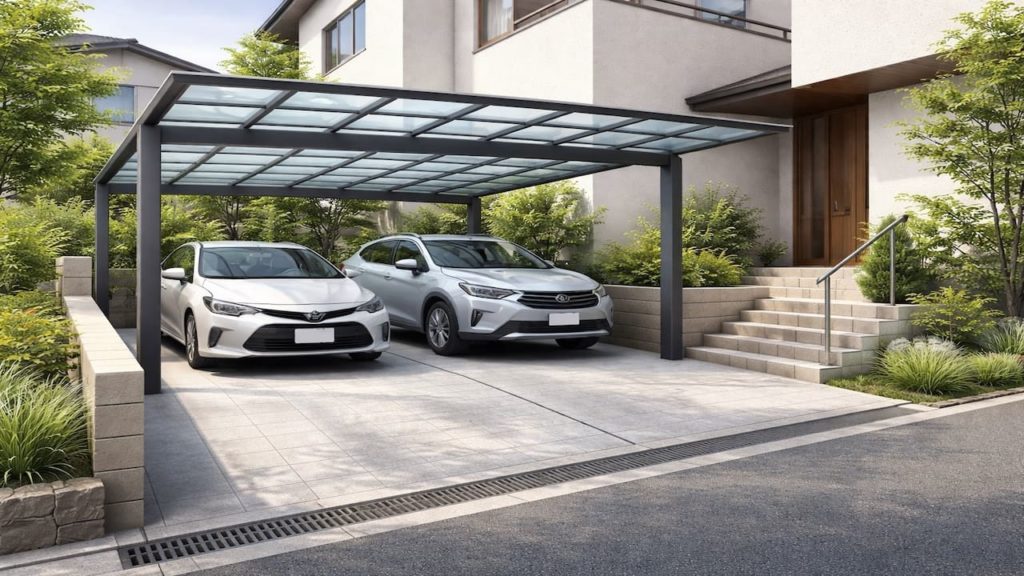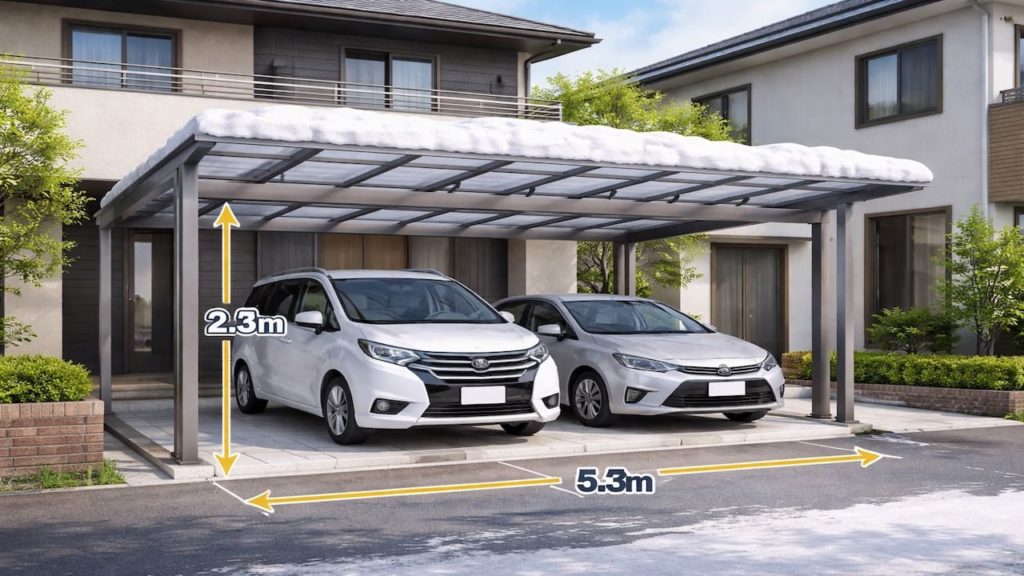
You’re planning a carport size and it feels simple until you imagine daily use. One wrong choice and every night becomes a tight squeeze.
Japanese homes often have narrow approaches, close fences, and seasonal weather that changes how you park and move. A “standard size” that works on paper can fail in real rain, wind, or snow.
In this guide, you’ll learn how to plan a carport size that fits real Japanese life. You’ll check width, height, snow, and door swing so the space stays easy even on bad-weather days.

Hi, I’m Ken — I’m Japanese, and I live in Malaysia long-term, so I explain everyday life in Japan from a practical ‘from abroad’ perspective.
I hold a building design qualification and I’ve been on site for 20+ years across hundreds of jobs. I turn Japan’s unspoken rules into simple checks, so you can avoid costly mistakes and take the next step with clear actions that feel safe.
1. Carport size planning: 5 checks for Japanese homes
Plan for the worst daily moment not the best day—that’s how a carport stays usable.
A carport is not just parking, it is loading, unloading, and walking around a vehicle. Japanese lots often force you to enter at an angle, and your door swing space gets stolen fast. Rain gear, umbrellas, and bags need extra clearance you never measure. If you size only for the car body, you will feel it every single day.
- Measure door swing with groceries and child seat
- Confirm walking lane from car to front door
- Check mirror clearance at the tightest post
- Plan for bike storage without narrowing entry
- Test parking line with cones before committing
You might think you can “just park better,” but that’s a nightly stress tax. Tight sizing also makes scratches, bump taps, and wet shoes more likely. If you add even a small buffer, your routine becomes calm. A carport should remove friction, not create it.
2. Width height snow and doors
Width is comfort height is freedom and snow is survival—doors decide whether you hate it.
Width controls whether you can open doors without twisting your body. Height controls whether your vehicle clears safely and whether the roof feels oppressive. Snow matters because accumulation and sliding can change clearance and drip patterns in winter zones. Door swing is the real test because it is the thing you do every day, even in rain.
- Check SUV door arc at full open
- Verify roof height for hatch and roof box
- Allow space for snow drip and icicle lines
- Keep post placement away from door corners
- Plan umbrella use without hitting roof edge
You might focus on roof height and ignore width, but cramped doors are misery. You might focus on width and ignore snow behavior, then winter creates new drip traps. If your area gets snow, your roof choice and clearance planning must respect it. Size is not one number, it’s daily movement.
3. Why carport sizing fails on narrow Japanese lots
It fails because you forget the human space—cars fit, people don’t.
Most planning is done with a tape measure around the vehicle, not around your body and your habits. Narrow Japanese lots also force posts into awkward positions that eat door clearance. Snow and heavy rain push you to hug the car closer to stay dry, which makes tightness worse. A small mistake becomes permanent because you can’t move posts later.
- Posts steal clearance at the exact door corner
- Walls reflect rain spray into the walking zone
- Tight turns force crooked parking and reduce space
- Storage creeps in and shrinks the lane
- Snow season changes drip and walking patterns
You might say you’ll keep the area clear, but life always adds stuff. You might think you’ll adjust your parking position, but tired nights don’t cooperate. If you plan for a human lane first, sizing becomes obvious. Your carport is a mini hallway, treat it like one.
4. How to choose the right size before you buy
Mock it up on the ground and live-test it—real movement beats guessing.
Use tape, cones, and chalk to mark posts, roof edge, and your walking lane. Park the car like you normally do, then open doors fully and walk the route with bags. cost is mostly time/effort, because the smartest step is testing your real routine before spending money. In Japan, do at least one test in rain or after rain so you feel the slippery and tight moments.
- Mark post locations and roof edge with tape
- Park twice using your normal approach angle
- Open doors fully and check body twist space
- Walk the unloading route with real bags
- Adjust marks until the routine feels smooth
You might want a quick decision based on a catalog, but catalogs don’t know your lot. If the mock-up feels tight, it will feel worse at night and in rain. If you need to compromise, protect door clearance and walking lane first. Comfort is not luxury, it is safety and sanity.
5. FAQs
Q1. Should I size for my current car only?
Not if you expect to change vehicles or add a roof box later. A carport lasts longer than most cars. Plan for flexibility so you do not rebuild your routine.
Q2. What matters more, width or length?
Width usually matters more because it controls door opening and your walking lane. Length helps for bumper clearance and storage, but you can live with a tighter front edge more than a tight door. Daily comfort is mostly side space.
Q3. How do I think about height in a normal neighborhood lot?
Consider vehicle height plus hatch opening and any accessories. Also consider how the roof edge feels when you walk under it with an umbrella. You want headroom that feels natural, not like ducking.
Q4. I live where snow falls sometimes, what changes?
Snow can change drip behavior and reduce clearance under the roof edge. You also end up walking where meltwater drops, so the dry path matters more. Plan the walking lane so it stays usable in winter.
Q5. What is one simple rule that prevents regret?
Make door swing and walking lane the first priority—everything else is secondary. If you can open doors calmly and walk cleanly to the house, you will like the carport in every season. If you can’t, you will complain forever.
Pro's Tough Talk

I’ve spent 20+ years working around Japanese homes, so I’ve seen what tends to work—and what tends to go wrong—in everyday use. People measure the car, then forget the human, then act shocked when it feels cramped. In Japan’s rainy tsuyu months, you don’t “take your time,” you rush under cover.
Three reasons sizing goes wrong. One, you ignore door swing because the car “fits.” Two, you place posts where the tape measure says yes, but your elbow says no. Three, you forget seasons, so snow drip or sideways rain steals the lane you thought you had. A tight carport is like a narrow collar, and posts in the wrong spot are like furniture in a hallway.
Mark the footprint now. Park the way you really park today. Walk the route this weekend with bags.
If you have to twist your body to exit it is too small. If you need two corrections to park straight, the lane is wrong. If you can’t open the hatch without thinking, the height is wrong. Fix it on the ground with tape, not after you paid for steel and concrete.
Nope.
You come home in the rain, juggling bags, trying to squeeze out, and your umbrella flips inside out right as you bang your hip on the post. Then you stand there under the roof like it’s supposed to apologize to you.
Summary
Carport sizing for Japanese homes is about real movement: door swing, walking lane, and how weather changes your routine. Width and post placement usually decide comfort more than length.
If you have snow or strong seasonal rain, plan where meltwater and spray will land and keep a usable dry path. Test the layout on the ground so mistakes show up before installation.
Tonight mock up the post line and door swing space so you stop guessing and start feeling the right size. Then keep exploring related carport layout checks to make every season easier.