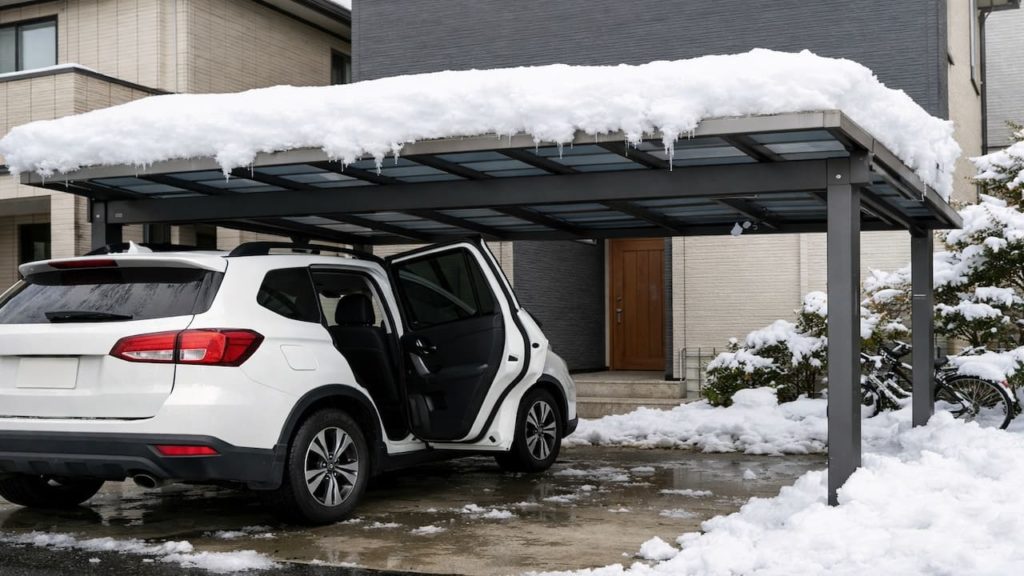
You want the carport close to the house so you stay dry. But you also worry about constant drips, dirty walls, and the roof edge turning into a water cannon.
In Japan, tsuyu rain and humid summers keep walls damp, then winter winds push water sideways. When spacing is too tight, small runoff mistakes become stains, moldy grime, and slippery paths.
In this guide, you’ll learn how to set the right carport gap from your house. You’ll check eaves runoff, splash zones, maintenance access, and the fire-safety rules that can change what is allowed.

Hi, I’m Ken — I’m Japanese, and I live in Malaysia long-term, so I explain everyday life in Japan from a practical ‘from abroad’ perspective.
I hold a building design qualification and I’ve been on site for 20+ years across hundreds of jobs. I turn Japan’s unspoken rules into simple checks, so you can avoid costly mistakes and take the next step with clear actions that feel safe.
1. Carport spacing from house: 5 checks
Leave a gap that keeps walls dry and accessible.
When the carport hugs the wall, you lose cleaning space and you trap moisture where it never dries. In Japan, narrow side yards already run humid, so the shaded strip between roof and wall turns into a grime lane. Think about how you will wash, repaint, and inspect bolts, not just how it looks. Clearance matters—daily comfort depends on it.
- Measure wall-to-post clearance for cleaning and repairs
- Check window opening and shutter travel space
- Confirm door swing clears posts and side frames
- Look for splash marks on existing exterior walls
- Plan a safe walking strip along the house
Some people chase “zero gap” so rain never touches them, but that often trades comfort for hidden damage. If you can’t fit your hand, a brush, and a hose line, you can’t maintain it. Make the gap boring and workable, then you stop fighting the house.
2. Eaves runoff and fire rules
Control eaves runoff and confirm fire related requirements.
Eaves and gutters decide where water lands, and a tight gap concentrates splash on one ugly line. Japan’s sudden downpours can overflow gutters, so you want runoff to drop where it won’t rebound onto siding. Also, don’t assume “carport is outside so no rules” because fire-related districts can change what materials and details are required. Quiet check—big payoff.
The common guidance is to keep a small separation from walls so water and movement don’t grind things together. According to ex-shop.net.
- Stand in rain and trace the drip line
- Add a downspout extension to move splash away
- Keep gutter overflow from hitting siding directly
- Confirm your area is a fire prevention district
- Check openings near the boundary for restrictions
People say “fire rules are only for big buildings,” but local conditions can still matter for exterior parts near boundaries. The Building Standards Act defines “parts liable to catch fire” by distance from boundary lines, which affects exterior requirements in those contexts. According to japaneselawtranslation.go.jp. If you treat it as a quick checkbox now, you avoid a painful redo later.
3. Why tight spacing causes damp walls and faster corrosion
Tight gaps trap moisture and accelerate metal and wall wear.
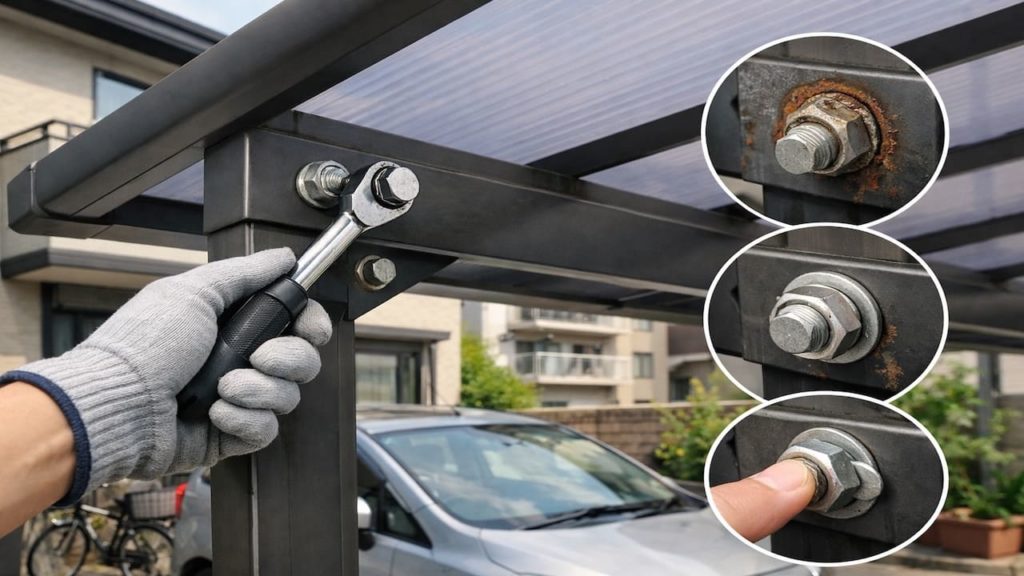
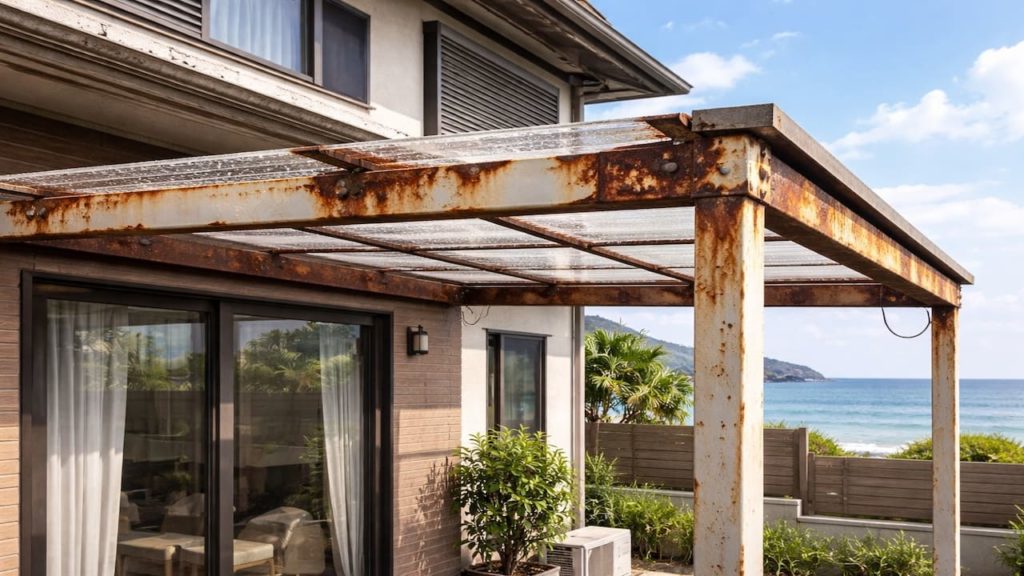
When the carport blocks sun and wind, the wall stays wet longer after rain. In Japan’s humid shoulder seasons, that means algae, sealant fatigue, and stains that never fully reset. Metal parts also suffer because damp air hangs around base plates and fasteners. Slow damage. Predictable damage—once you see the pattern.
If you expect to buy small add-ons, budget ¥500–2,000 for a splash block, hose nozzle, or simple brush kit. Keep it simple and consistent.
- Notice green streaks where shade blocks drying
- Check sealant lines for soft spots and gaps
- Look for rust blush around anchors and bolts
- Spot paint bubbling on siding near drip zones
- Smell for damp odor near the wall strip
You might think “it’s just cosmetic,” but damp walls turn cosmetic into maintenance debt. If you can’t dry the strip, you’ll keep cleaning the same spot forever. Give the wall air and light, and the whole system behaves better.
4. How to set the gap and redirect runoff safely
Set clearance first then tune water and heat flow.
Start by choosing a gap you can actually work in, then align posts and roof edge so runoff drops where you want. Japan’s tight lots make compromises normal, but you still need a service lane for cleaning and inspection. If the roof edge is close, use a planned drip path and a catch strategy. Not vibes.
Plan ¥1,000–5,000 for a downspout extension, simple leaf guard, or sealant touch-up supplies if you’re fixing splash and overflow.
- Mark a service lane you can walk comfortably
- Place posts so doors open without scraping
- Route downspouts away from the wall strip
- Use splash blocks where water rebounds hard
- Keep vents and outdoor units from trapping heat
Some folks try to solve everything with one long gutter, but overflow still happens in a real storm. If water keeps hitting the wall, shorten the fall distance or move the discharge point. Build a controlled path, and the mess stops repeating—simple engineering, not luck.
5. FAQs
Q1. How close is too close to the house?
If you can’t clean the strip, inspect bolts, or open windows safely, it’s too close. In Japan’s humid months, a tight shaded gap stays wet and dirty longer.
Q2. Do I need to match the carport roof edge to the eaves?
No but you must control where runoff lands. If the roof edge sits under an overflow point, you’ll get splash and stains even with a small gap.
Q3. What if gutter overflow is the main issue?
Fix the gutter first, then confirm the drip line during rain. A leaf guard and a better discharge point can change everything fast.
Q4. Are fire rules the same everywhere in Japan?
No, they can vary by district and site context. If your area is a fire prevention or quasi-fire prevention district, details may be stricter near boundaries.
Q5. When should I ask for a professional check?
If you’re unsure about local fire-related requirements or your layout forces the roof edge right over a walkway, get a quick site review. Small mistakes here become daily annoyance.
Pro's Tough Talk

I’ve spent 20+ years working around Japanese homes, so I’ve seen what tends to work—and what tends to go wrong—in everyday use. In tsuyu humidity, a tight gap turns into a permanent wet sock against your wall. And yeah, that smell sticks.
Three reasons this goes sideways: runoff hits the wall and rebounds, shade traps moisture so grime bonds, and you lose access so maintenance never happens. You’re not lazy, you’re busy. Installers aren’t monsters either, they just build what fits and move on. But the physics doesn’t care.
Walk the drip line right now.
Today, run water from a hose and watch splash.
This weekend, extend the downspout and set a real service lane.
If you cannot clean and inspect the gap it is too tight. If overflow keeps soaking the wall after you redirect drainage, the roof edge placement is wrong. If you’re stuck between “dry walkway” and “tight fit,” prioritize safety and access first.
You park after work, it’s pouring, and you hop over a puddle with a grocery bag. Then you scrape algae off the same wall strip again next month.
Come on.
Don’t build a rain trap and call it convenience.
Summary
Check access, drip lines, and splash zones before you set carport spacing from the house. In Japan’s wet seasons, tight shaded gaps stay dirty and damp.
If runoff keeps hitting the wall, fix gutters and redirect discharge, then reassess the roof edge location. If fire-related requirements apply on your site, confirm them early so you don’t rebuild later.
Mark a workable service gap today and test the drip line. Then keep going with nearby home checks so you solve the whole water path, not just one wet spot.