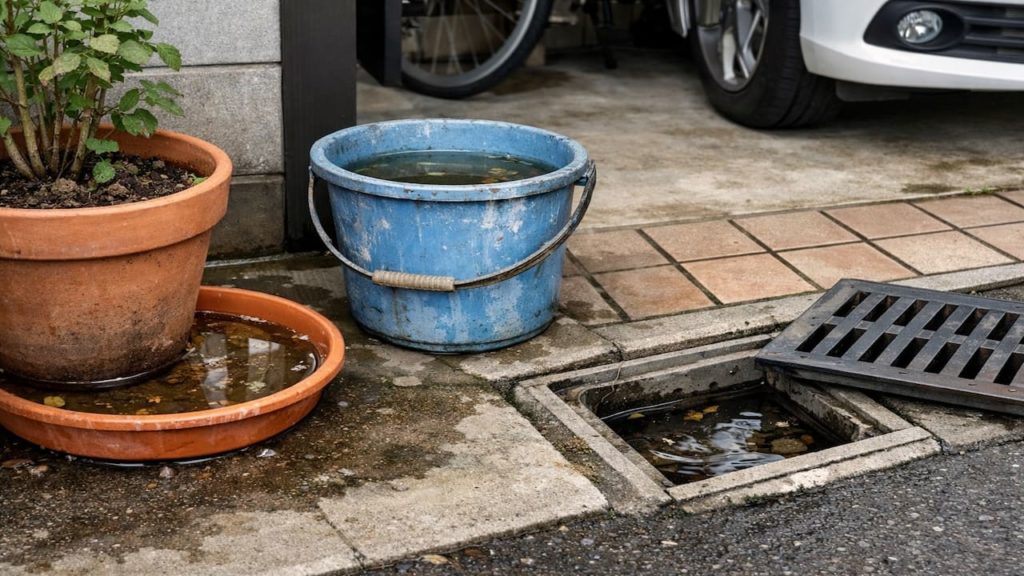
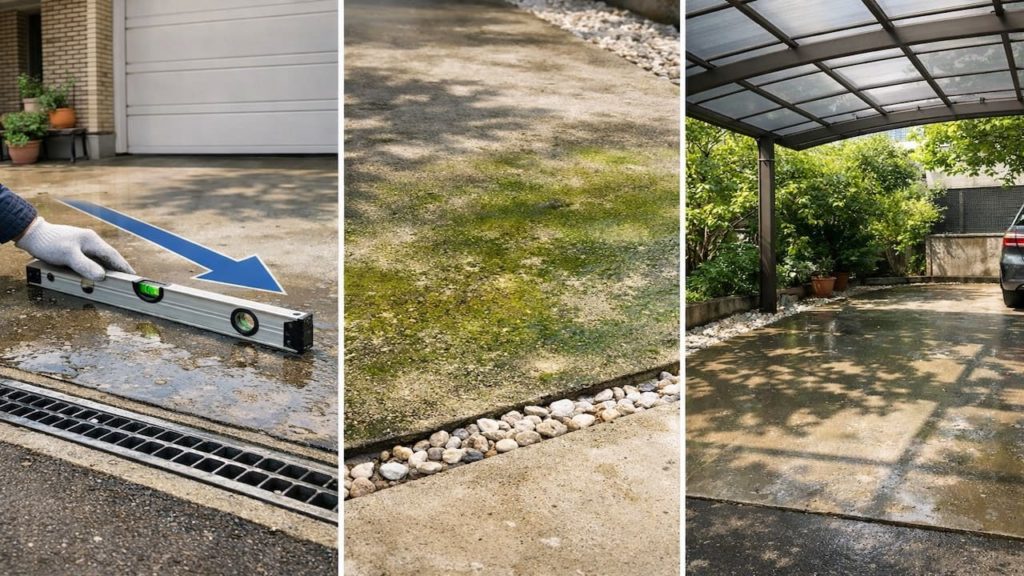
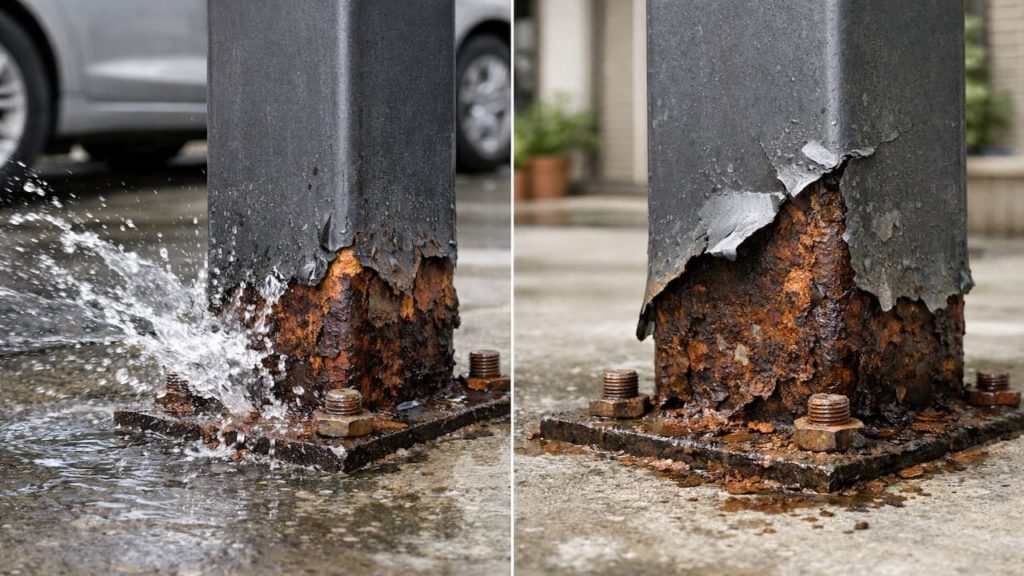
You notice rain splash hitting the wall under your carport, and the stains keep coming back. Even when the roof is fine, the wall strip looks dirty and damp.
It could be roof edge drip, a short overhang, hard ground bounce, or runoff that has nowhere to go. In Japan, tsuyu downpours and humid shoulder seasons make that wet zone hang around longer than you expect.
In this guide, you’ll learn how to stop carport rain splash from hammering your walls. You’ll tweak edge length, ground finish, and simple drainage so the wall dries faster and stays cleaner.

Hi, I’m Ken — I’m Japanese, and I live in Malaysia long-term, so I explain everyday life in Japan from a practical ‘from abroad’ perspective.
I hold a building design qualification and I’ve been on site for 20+ years across hundreds of jobs. I turn Japan’s unspoken rules into simple checks, so you can avoid costly mistakes and take the next step with clear actions that feel safe.
1. Carport rain splash hits walls: 5 tips
Splash damage stops when you control where water lands.
Most splash is not “rain” hitting the wall, it’s roof drip hitting the ground and bouncing back. In Japan’s tight home spacing, the wall is close, so rebound has an easy target—right at your siding. Also, smooth concrete acts like a drum, throwing droplets higher than gravel would. Fix the landing zone first.
- Watch drip points during real heavy rain
- Mark the splash height with removable tape
- Check ground surface hardness under the roof edge
- Look for runoff lines along the wall base
- Confirm downspouts discharge away from wall strip
Some people keep scrubbing the stain and call it “maintenance,” but that’s a loop. If you change where the water hits, the wall stops getting punched. Do the simple checks, then pick the smallest fix that changes the splash pattern. That’s how you win.
2. Edge length gravel and drains
Longer drip distance and softer ground kill most rebound.
If the roof edge sits too close to the wall line, the drip hits near-vertical and rebounds straight back. In Japan, narrow side yards trap wind and keep surfaces damp, so splash marks turn into algae streaks fast—annoying. Budget ¥2,000–10,000 for a bag or two of gravel, a splash block, and a simple edging strip, then test again after the next storm.
- Add a gravel strip where drip lands
- Use edging to keep gravel from spreading
- Extend downspout to a safer discharge spot
- Install a splash block at the drop point
- Cut a shallow drain line to redirect flow
People say “just add more gravel,” but placement beats volume every time. If the drip line is wrong, gravel alone just gets blasted and scattered. Move the landing zone, then soften it, then give runoff a route. That order keeps it stable.
3. Why splash rebounds and stains walls in Japan
Rebound happens because hard surfaces fling droplets upward.
Concrete and pavers bounce water like a trampoline, especially when the drip falls from roof height. In Japan, tsuyu rain often comes in sheets, so drip becomes a steady stream, not random drops. That stream hits one line, digs a tiny groove, and keeps splashing the same wall zone. Repetition makes the stain look “mysterious,” but it’s just physics.
- Notice staining only near specific drip points
- Check for a groove where water always hits
- Look for moss starting at the base line
- Watch wind push drip toward the wall
- Spot muddy splash after storms with runoff
Some folks blame the siding material, but even tough walls stain if you keep spraying them daily. The real driver is the impact point plus rebound angle. Once you identify that point, you can change the outcome fast. Clean less, enjoy more.
4. How to cut splash with edging gravel and drainage
Build a drip landing strip and a runoff exit.
Start by mapping the drip line in heavy rain, then mark where it strikes the ground. In Japan, small lots mean you can’t “just move the carport,” so you solve it at the edge and ground. Budget ¥3,000–20,000 if you add edging, gravel, and a basic channel drain section, then keep the wall strip airy so it dries between storms. Small work, big relief.
- Lay gravel strip at the drip impact line
- Set edging so gravel stays put
- Slope the strip slightly away from the wall
- Connect runoff to a drain path outward
- Leave inspection space to clean and adjust
Some people try to seal everything tight and hope water disappears, but it just finds a new weak point. You want controlled flow, not trapped moisture. If splash still reaches the wall after the strip, extend the downspout and shift discharge. Keep tuning until the tape mark stops rising.
5. FAQs
Q1. Is splash worse with a shorter roof edge?
Yeah, because the drip hits closer to the wall and rebounds higher. In Japan’s narrow side spaces, that rebound has nowhere else to go.
Q2. What is the simplest first fix?
Add a gravel strip right under the drip line—then watch the next rain. If the stain line stops growing, you know you targeted the real cause.
Q3. Will cleaning the wall solve it long term?
Cleaning helps the look, but it won’t stop new splash marks. If the drip impact point stays the same, the wall gets hit again.
Q4. Do I need a drain even if water flows downhill?
Sometimes, because flow can still cross the wall base line and splash mud upward. Give water a clear exit so it doesn’t linger and rebound.
Q5. When should I call a pro?
If runoff is pooling near the foundation or you see water entering under siding, get a site check. That’s not just “splash,” that’s a water path problem.
Pro's Tough Talk

I’ve spent 20+ years working around Japanese homes, so I’ve seen what tends to work—and what tends to go wrong—in everyday use. In tsuyu, splash is like a tiny fire hose you didn’t order. It keeps painting the same ugly stripe.
Three causes, no sugar: drip falls from height, hard ground rebounds it, and wind pushes it sideways. You’re not doing anything “wrong,” you just got stuck with a layout that lets water bounce. Installers aren’t trash either, they just leave once it stands. Meanwhile your wall takes the hits like a punching bag.
Find the drip line now. Today, tape the stain height and mark impact points. This weekend, lay gravel with edging and give runoff a way out.
If the stain line keeps climbing after your gravel strip you must move discharge. If water pools at the base, add drainage before you touch cosmetics. If the wall feels wet for days, open the space and stop trapping air.
You park at night, it’s raining sideways, and your shoes slap into a splash puddle. Then you wipe the wall again while holding a delivery box.
Nope.
Fix the landing zone, or enjoy your new hobby: wall scrubbing.
Summary
Stop rain splash by controlling the drip landing zone, not by chasing stains. Watch the drip line in real rain, then soften the impact area.
If splash still hits the wall, shift discharge and give runoff a clear exit. If pooling reaches the foundation area, treat it as drainage work, not cleaning.
Mark the drip line today and add a gravel landing strip. Then keep moving through nearby water-path checks so the whole carport area stays dry and easy.