You’re choosing a deck color and you want two things at once: hide dirt and avoid turning the surface into a hot plate. One wrong shade and every footprint shows up.
Old boards, strong sun, and a patchy finish can make the “same color” look totally different in real life. In Japan, humid summers and sudden rain also change how stain dries and reflects light.
In this guide, you’ll learn 5 checks to pick a deck color that stays practical and feels comfortable underfoot. You’ll learn how to avoid glare, reduce the “always looks dirty” effect, and test before you commit.

Hi, I’m Ken — I’m Japanese, and I live in Malaysia long-term, so I explain everyday life in Japan from a practical ‘from abroad’ perspective.
I hold a building design qualification and I’ve been on site for 20+ years across hundreds of jobs. I turn Japan’s unspoken rules into simple checks, so you can avoid costly mistakes and take the next step with clear actions that feel safe.
1. Deck color choice: 5 checks to hide dirt and reduce heat
Pick a color based on what you actually see day to day.
Decks don’t fail on a color chart, they fail on a busy weekend with wet shoes and pollen. In Japan, fine dust, yellow pollen, and rainy-season grime can show up fast, especially near sliding doors. Real use beats perfect photos—every time.
- Check dirt color from shoes and nearby soil
- Compare shade against your wall and trim
- Look at boards at noon and late day
- Notice glare near doors and windows outside
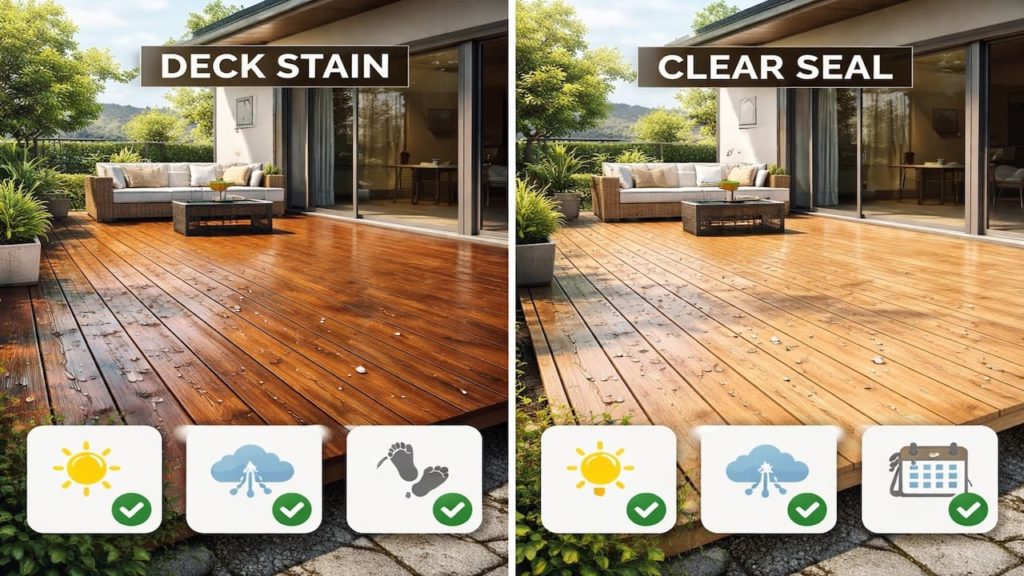
- Test color on wet and dry boards
You might think darker always hides dirt better. Sometimes it does, but dark also shows pale dust and dries into visible swirl marks. A balanced tone usually wins for daily life.
2. Light tone glare
Light colors can feel cooler but they can also blind you.
Pale stain reflects more light, so the surface can feel less harsh in strong sun, but glare is the trade. On Japanese homes with big glass doors and low eaves, a bright deck can bounce light right into your eyes and into the room—annoying. Headache territory.
- Stand at door and check eye level glare
- View deck from inside through the glass
- Compare matte samples not glossy finish coats
- Pick warm light tones instead of icy white
- Check photos with flash to reveal hotspots
You might assume “light equals modern and clean,” so you go as pale as possible. Then you spend summer squinting like a detective under interrogation. Choose light, but choose soft.
3. Why deck colors look wrong on old boards
Old boards absorb stain unevenly and change color fast.
Sun, foot traffic, and old coatings create zones that drink stain and zones that reject it, so the same can reads as two colors. Humidity swings in Japan can also slow drying, leaving lap marks if you work too slowly. That’s why “nice warm brown” becomes “random stripes.”
- Weathered grain soaks stain deeper in patches
- Old sealer blocks stain and shifts tone
- Different boards age differently in sun shade
- Moisture changes color while stain is curing
- Lap lines appear when edges dry first
You might blame your taste or your eyes. It’s not you, it’s the surface history showing through. Wood memory.
4. How to choose the right deck color with less regret
Test small in real light then commit to one system.
Buy sample sizes, test on the actual deck, and judge it after it dries fully, not while it looks wet and “rich.” Basic supplies often run ¥1,500–8,000 for sample stain, sanding sheets, and brushes, and that’s cheaper than recoating a whole deck. In Japan’s rainy stretches, pick a dry window and give the test patch a full day to settle—then decide.
- Sand two small spots to match real prep
- Apply two candidate colors in clean rectangles
- Label the back edge so you remember
- Check barefoot comfort after sun hits boards
- Choose one brand system and follow recoat rules
You might want to mix brands and “average the color.” That can mess with adhesion and sheen, and the patchwork look gets worse over time. Test, choose, finish. Done.
5. FAQs
Q1. Do darker deck colors always run hotter?
Darker tones usually absorb more sun, so the surface can feel hotter. Mid tones often balance dirt hiding and comfort without turning into a glare mirror.
Q2. What color hides dust best?
Very dark shows pale dust, and very light shows muddy smears. Mid browns and weathered grays tend to hide both better than extremes.
Q3. Is gray stain safer for hiding wear?
Gray can hide fading and scuffs well, but it can also look flat if your house exterior is cool toned. Match undertone first, then worry about trend.
Q4. Should I pick glossy to make cleaning easier?
Glossy can highlight scratches and glare, and it can look plastic on old wood. Matte or low-sheen usually stays calmer and more forgiving—especially in strong daylight.
Q5. How many test patches do I need?
Two is the minimum: one in sun, one in shade. If your deck has old blotches, add a third patch on the worst area.
Pro's Tough Talk

I’ve spent 20+ years working around Japanese homes, so I’ve seen what tends to work—and what tends to go wrong—in everyday use. Deck color choice looks like “style” until you live with it, then it becomes survival. Light can glare, dark can scorch, and mid tones can save your sanity.
Here’s the cold breakdown: your eyes judge color by surrounding walls, your feet judge it by heat, and your weekend judges it by dirt. Wood is a sponge with a memory, so old boards will twist your “perfect” shade. Painful, but predictable.
Test two colors right now. Check them at noon today. Decide after a full dry cycle this weekend.
Pick the color that stays calm in real use and you’ll stop thinking about it every time you step outside. If you still can’t decide after testing, go one step darker than your safest pick and keep the sheen low. That’s a solid line.
Deck color is like choosing sunglasses that you can’t take off. Bruh. One day you’re barefoot with a drink, and the glare makes you squint like you’re solving a crime. Another day you sweep, turn around, and the deck already looks dusty again, like it’s trolling you.
Summary
Choose a deck color by checking glare, dirt visibility, and comfort in real light, not in a perfect photo. Mid tones often hide daily mess better than extremes.
Old boards can warp color because absorption and weathering are uneven, so testing is non-negotiable. If a test still looks wrong, adjust prep or go to a lower sheen before changing the whole plan.
Paint two test patches today and judge them after full dry and sun exposure. Once you lock the right tone, you can move on to sealing and maintenance with less drama.