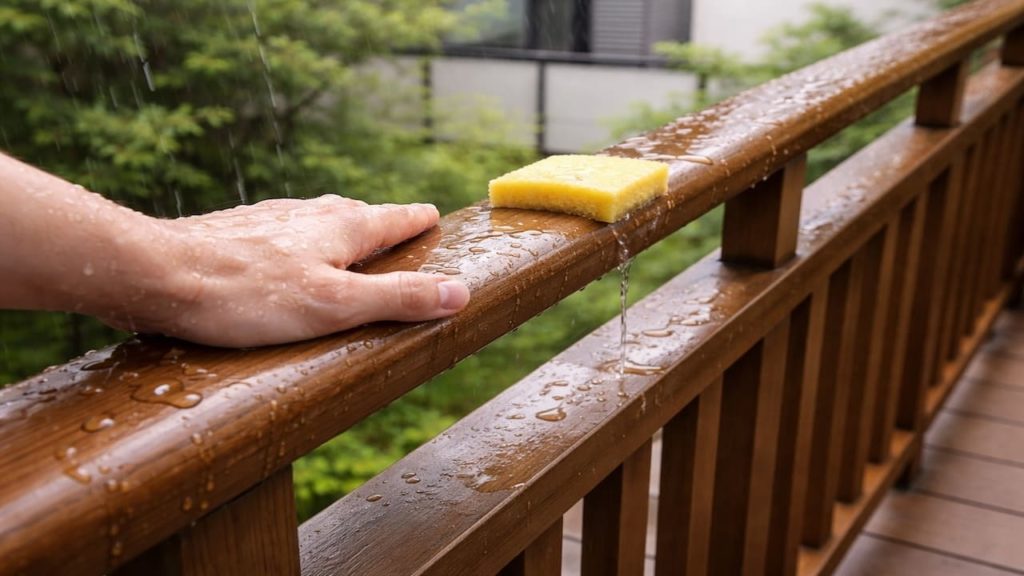
You grab your deck handrail on a wet day and it feels sketchy, either too slippery or too rough. Comfort turns into safety real fast.
Grip depends on rail width, surface texture, splinters, and how water sits on the top edge. In Japan, rainy seasons and high humidity can keep rails damp, so small flaws show up more.
In this guide, you’ll learn 5 checks to make your deck handrail safer to grip when it is wet. You’ll also learn what changes give the biggest comfort boost without rebuilding the whole railing.

Hi, I’m Ken — I’m Japanese, and I live in Malaysia long-term, so I explain everyday life in Japan from a practical ‘from abroad’ perspective.
I hold a building design qualification and I’ve been on site for 20+ years across hundreds of jobs. I turn Japan’s unspoken rules into simple checks, so you can avoid costly mistakes and take the next step with clear actions that feel safe.
1. Deck handrail comfort: 5 checks for grip on wet days
A good handrail feels secure even when your hand is wet
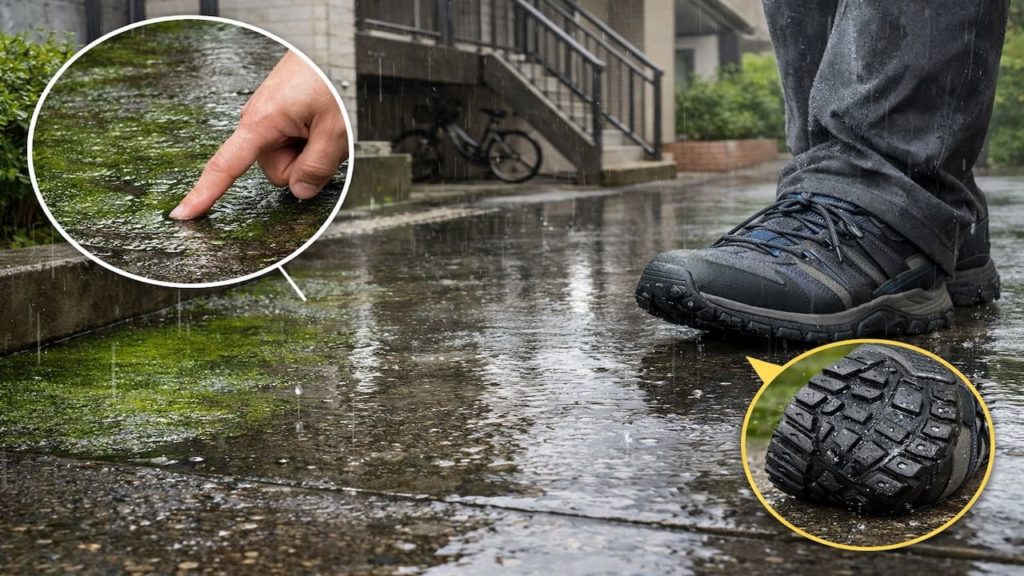
Start by using the rail the way you actually do: quick grab, one-handed, maybe while carrying something. If the top is too flat and wide, water films and your hand slides; if it is too rough, you hate touching it. In Japan, damp days can be frequent, so the rail should be built for wet use, not just dry photos. Real-world grip check.
- Grip rail with wet hand and light pressure
- Check if top holds water as a thin film
- Run palm along length to feel sharp fibers
- Inspect corners for chips and splinter starts
- Test stability by shaking rail at posts
You might assume discomfort is normal and you just tough it out. But a rail is a safety interface, not decor, and small tweaks can make it feel dramatically better. Fix comfort and you reduce slips.
2. Width splinters
Width and splinters decide whether the rail feels safe or nasty
If the top is very wide and flat, it is hard to “wrap” your hand around it, and wet skin can slide. If the wood is weathered, fibers lift and create micro-splinters that catch skin even when you do not see them. In Japan’s humid months, wet fibers swell and feel rougher, so your grip gets worse right when you need it most. Basic supplies like sandpaper, a small rasp, and exterior finish can run ¥800–3,500 depending on what you already have.
- Measure rail top width and compare to your grip
- Check if edges are sharp instead of rounded
- Look for fuzzy grain where hands usually rest
- Test for splinters using a cloth swipe
- Check end grain caps for cracking and roughness
You might want to slap a thick coat on without sanding. That can lock splinters in place like tiny needles under clear plastic. Sand and round first, then protect. Better feel.
3. Why handrails get slippery and painful in wet weather
Water films plus rough fibers create both slip and sting
When a rail top is flat, water spreads into a smooth film, reducing friction like a thin lubricant. When wood weathers, fibers lift and catch skin, especially along edges and near joints where water sits. In Japan, frequent rain and humidity keep the rail cycling wet-dry, which accelerates checking and fiber lift. That cycle is the enemy.
- Flat top holds water and reduces friction
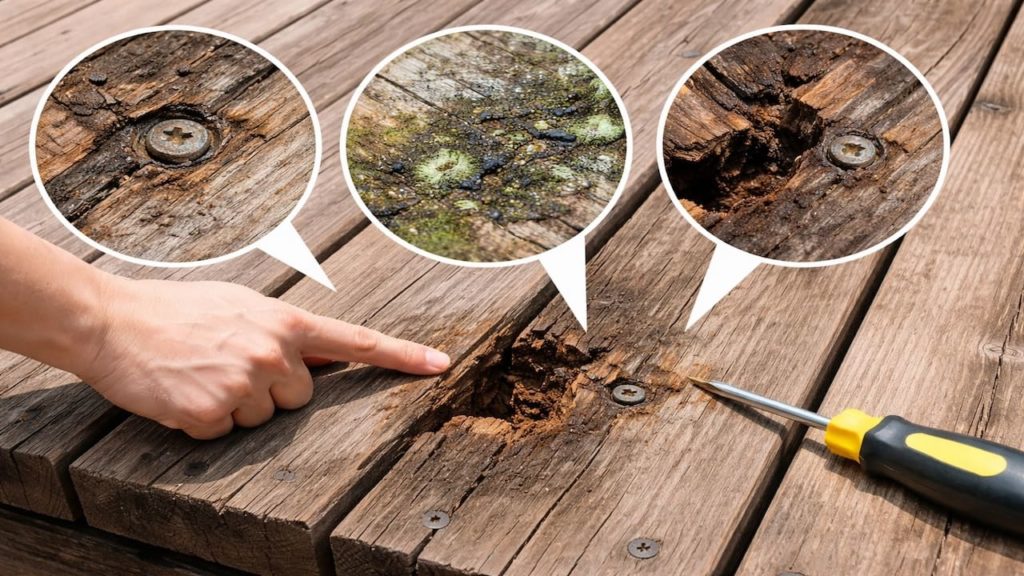
- Weathered grain lifts fibers and creates splinters
- Cracks collect water then reopen when drying
- Old finish peels and leaves sharp transitions
- Loose posts amplify fear even if grip is ok
You might think adding a non-slip tape is the first move. Tape can work, but if the wood underneath is rough or decaying, tape becomes a bandage on a deeper issue. Fix the surface condition first, then add grip aids if needed.
4. How to improve grip and comfort without replacing the rail
Round the edges smooth the surface and choose a grippy finish
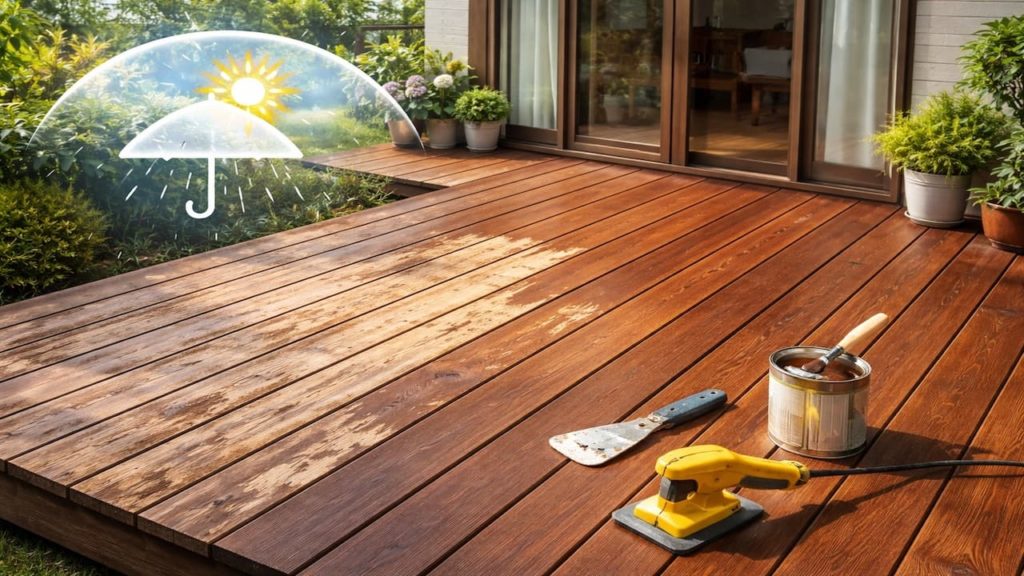
Start by rounding the top edges slightly so your hand can hook and water has less reason to cling. Then sand the grip zone until it feels smooth, wipe off dust, and apply a thin exterior finish that does not turn glossy-slick when wet. In Japan’s rainy stretches, choose a dry window so the finish cures, or it will stay tacky and grab dirt. If you add grip sleeves or non-slip strips, keep them limited to the grip zone so water can still drain.
- Round top edges with sandpaper or rasp
- Sand grip zone with grain until smooth
- Seal end grain caps to reduce checking
- Add a low sheen finish that is not slippery
- Retest grip after misting water on rail
You might want to over-sand and make it perfectly smooth like furniture. Too smooth can reduce wet grip, and it can expose soft fibers that weather faster. Aim for smooth without glossy, rounded without mushy. That sweet spot.
5. FAQs
Q1. What handrail shape feels best on wet days?
Rounded edges and a shape you can wrap your fingers around usually feel safest. A slightly rounded top grips better than a flat plank when it is wet.
Q2. How do I check for tiny splinters fast?
Swipe the rail with a clean cloth or paper towel and see if it snags. If it catches, your skin will catch too.
Q3. Should I use a glossy clear coat to protect it?
Glossy finishes can feel slick when wet, even if they look nice. A lower-sheen exterior finish often feels more secure and hides wear better.
Q4. Can I add grip tape to a wooden handrail?
You can, but clean and smooth the surface first so tape actually bonds and does not trap moisture. Use it in small sections where hands grab, not as a full wrap.
Q5. When is replacement the smarter choice?
If the rail is loose, posts wobble, or the wood is soft and crumbling, comfort fixes are not enough. Replace or repair structure before you chase texture.
Pro's Tough Talk

I’ve spent 20+ years working around Japanese homes, so I’ve seen what tends to work—and what tends to go wrong—in everyday use. A handrail is not a fashion accessory, it is the thing you trust when your foot slips. If it feels sketchy on wet days, your body already knows the truth.
Here’s the cold breakdown: flat rails hold water films, weathered wood throws splinters, and glossy coats can turn into slip sauce. You are not being picky, you are reacting to bad interface design. Most rails were built to look straight, not feel safe, and wet weather exposes that gap. Every time.
Mist the rail and test grip now. Sand and round the grip zone today. Recoat and retest this weekend.
Round edges and remove splinters before you add anything sticky and the rail becomes comfortable again. If the rail wobbles or the wood feels soft, stop sanding and fix structure first. That is the line.
Wet handrail grip is like holding a bar of soap while walking stairs. Bruh. You know that moment you grab it, it feels slick, and your brain goes full alert like a car alarm. Or when you get a tiny splinter and spend the next hour doing surgery with tweezers like you are in a drama.
Summary
Handrail comfort on wet days depends on shape, width, and surface condition, not just looks. Check grip with wet hands, watch for water films, and hunt for splinters and sharp edges.
Improve comfort by rounding edges, sanding the grip zone, sealing end grain, and using a low-sheen finish that does not get slick. If the rail is loose or wood is soft, treat it as a structural repair first.
Test grip and fix splinters today so wet days stop feeling risky. Once the rail feels secure, the whole deck becomes more usable and relaxed.