After rain, you step onto the deck and a damp odor hits you, like wet towels or old wood. It fades later, but it keeps coming back.
That smell can come from mildew on boards, wet soil under the deck, trapped moisture under mats, or debris rotting in gaps. In Japan, humid rainy seasons can keep those sources active longer than you expect.
In this guide, you’ll learn 5 checks to pinpoint deck odor after rain and reset the source instead of masking it. You’ll know where to sniff, what to lift, and what to dry first.

Hi, I’m Ken — I’m Japanese, and I live in Malaysia long-term, so I explain everyday life in Japan from a practical ‘from abroad’ perspective.
I hold a building design qualification and I’ve been on site for 20+ years across hundreds of jobs. I turn Japan’s unspoken rules into simple checks, so you can avoid costly mistakes and take the next step with clear actions that feel safe.
1. Deck odor after rain: 5 checks to find the source
The smell source is usually a damp trap not the whole deck
Start right after rain and use your nose like a detector, moving zone by zone: surface, gaps, under mats, and understructure edges. Odor is strongest at the source, so do not wait until midday when everything dries and lies to you. In Japan, humid air can keep shaded corners wet longer, so odor hotspots often repeat in the same places. cost is mostly time/effort.
- Smell along edges where air movement is weakest
- Sniff board gaps for rotting debris buildup
- Check corners near walls for lingering damp
- Lift furniture feet areas and smell underneath
- Compare sunny zones versus shaded zones quickly
You might assume the boards are “just wet” and that is normal. Wet wood does not have to stink, and odor usually means something is feeding microbes. Find the damp trap and the smell usually drops fast.
2. Mildew soil mats
Mildew biofilm wet soil and trapped mats are the top suspects
Mildew lives on surface grime and grows when drying is slow, while wet soil under the deck can release an earthy smell that rises after rain. Mats and rugs can trap moisture and create a sealed damp layer that turns funky fast, especially in Japan’s humid seasons. Check each suspect by isolating it: lift mats, clear debris, and see which change reduces odor. If you need basic supplies like a stiff brush and mild cleaner, plan ¥500–2,500.
- Lift mats and let boards dry fully
- Check underside of mats for slimy film
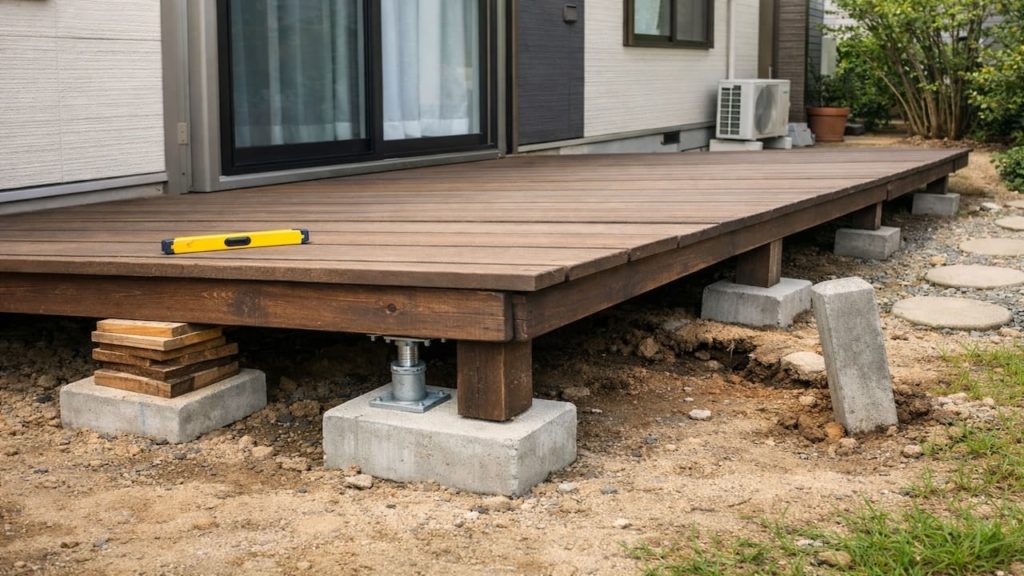
- Inspect soil under deck for standing water
- Smell near posts for damp earth odor
- Clean gaps where leaf dust collects and rots
You might want to spray fragrance and call it solved. That just mixes perfumes with mildew and it gets worse in heat. Fix the wet trap, then the smell disappears without tricks.
3. Why the odor spikes right after rain
Rain activates microbes and pushes trapped air upward
When rain wets grime and organic debris, microbes wake up and produce odor compounds, and the smell releases into the humid air. Wet wood and wet mats also hold moisture on the surface longer, so the odor window is strongest right after the rain stops. In Japan, warm humid nights can amplify this, because drying is slow and airflow is weak. Odor is timing.
- Organic debris becomes food when it gets wet
- Humid air holds smell and slows drying
- Mats trap a wet layer that turns sour
- Soil vapor rises when under deck warms slightly
- Shaded joints stay wet and keep producing odor
You might blame the rain itself. Rain is just the trigger, the real issue is what stays wet and dirty after the rain. Remove that and rain stops being a problem.
4. How to reset the odor source and keep it from returning
Remove the food layer then improve drying and airflow
Start with debris removal and gap cleaning, then scrub the surface lightly to remove biofilm, and rinse thoroughly. Next, change the drying conditions: lift mats, open airflow, and fix any under-deck drainage that keeps soil wet. In Japan’s rainy season, small habits like lifting mats weekly and keeping gaps clean can prevent odor from rebuilding. cost is mostly time/effort unless you add mats or drainage fixes.
- Sweep and pull debris from board gaps
- Scrub slimy zones with stiff outdoor brush
- Rinse until runoff is clear and odorless
- Improve airflow by moving stored items away
- Use breathable mats and dry them regularly
You might want to blast it with high pressure. That can roughen fibers and make the deck hold more grime later, which makes odor return faster. Gentle scrub plus consistent drying beats aggressive washing.
5. FAQs
Q1. Is deck odor after rain always mildew?
No, it can also be wet soil vapor or rotting debris in gaps. Lift mats and sniff gaps first to isolate the most common sources.
Q2. Why does it smell worse near the wall?
Walls block airflow and keep that edge damp longer. Runoff and splash can also concentrate there, feeding microbes in the same strip.
Q3. Can I prevent odor with sealant?
A finish can reduce water absorption and help cleaning, but it will not fix trapped moisture under mats or wet soil below. Fix drying conditions first, then seal if needed.
Q4. What kind of mat is safest in humid weather?
Breathable outdoor mats that drain and dry quickly are best. Avoid thick rugs that seal the boards and stay wet underneath.
Q5. When should I worry about rot instead of just smell?
If wood feels soft, stays wet for days, or smells musty even when dry, inspect the understructure and ledger areas. That is when odor can be a warning, not just annoyance.
Pro's Tough Talk

I’ve spent 20+ years working around Japanese homes, so I’ve seen what tends to work—and what tends to go wrong—in everyday use. Rain smell is not magic, it is biology plus trapped damp. Your deck is not haunted, it is just hosting a tiny damp party.
Here’s the cold breakdown: microbes feed on grime, mats trap moisture, and wet soil under the deck breathes up earthy funk. You are not doing anything wrong, most people never look under mats or clean gaps until it stinks. In Japan’s humid season, that stink shows up faster because drying is slow and air is heavy. That is the whole mechanism.
Lift the mats now. Clean the gaps today. Dry everything out this weekend.
Remove the food layer and the smell fades fast without perfumes or hacks. If odor comes back in the same spot after cleaning, the next step is checking under-deck drainage and airflow in that zone.
That odor is like opening a gym bag you forgot in the corner. Bruh. You know that moment you step out after rain and instantly scan for “what died out here.” Or when you lift a mat and find a perfect damp outline like the deck made its own stink stamp.
Summary
Deck odor after rain usually comes from mildew biofilm, rotting debris in gaps, wet soil under the deck, or mats trapping moisture. Check right after rain and isolate the strongest smell zone first.
Reset odor by removing debris, scrubbing biofilm, rinsing well, and improving drying and airflow, especially under mats and along walls. If odor repeats, check for under-deck drainage issues and persistent damp zones.
Lift mats and clean gaps today so the deck dries cleaner after the next rain. Once odor is gone, maintenance becomes quick instead of a repeating problem.