You repaint the deck, it looks great for a week, then the paint starts peeling after the next rain. It feels like the deck is rejecting the coating on purpose.
Fast peeling usually means the surface was still damp, the old layer was not fully removed, or the product was the wrong type for outdoor wood. In Japan, rain cycles and humid air make adhesion problems show up faster.
In this guide, you’ll learn how to make deck paint stick through wet seasons with simple checks and fixes. You’ll know what to prep, how to manage moisture, and how to slow UV breakdown.

Hi, I’m Ken — I’m Japanese, and I live in Malaysia long-term, so I explain everyday life in Japan from a practical ‘from abroad’ perspective.
I hold a building design qualification and I’ve been on site for 20+ years across hundreds of jobs. I turn Japan’s unspoken rules into simple checks, so you can avoid costly mistakes and take the next step with clear actions that feel safe.
1. Deck paint peeling fast: 5 fixes that last through rain
Paint lasts when the wood is clean dry and correctly bonded
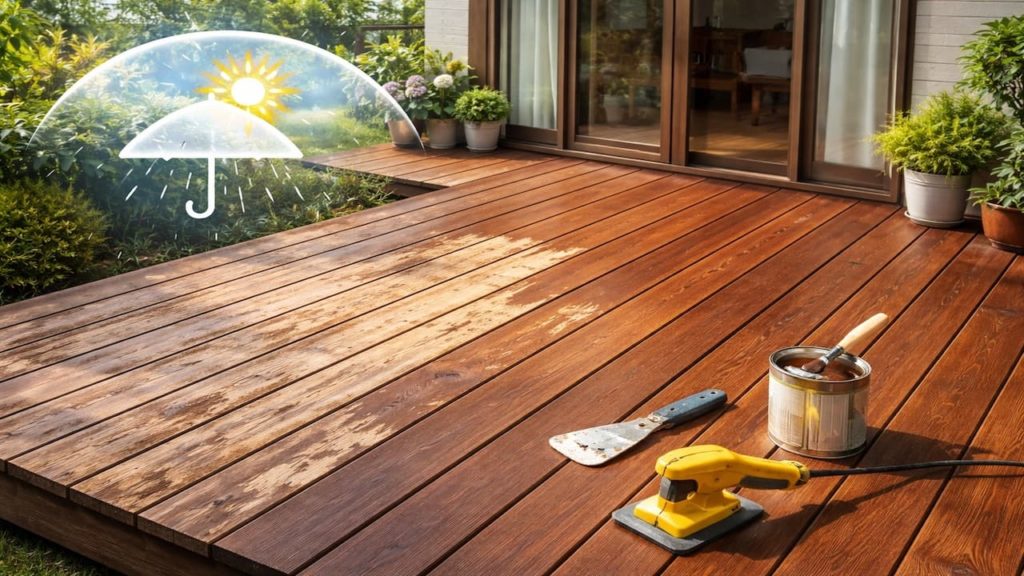
Peeling is not random—your deck is telling you the bond failed somewhere. The fastest fixes are boring: remove weak layers, dry the wood, and rebuild the coating system in the right order. In Japan, rainy weeks can shorten your dry window, so timing and airflow matter as much as technique. No shortcuts.
- Scrape every loose edge until only solid film remains
- Wash grime off so paint bonds to wood
- Dry the boards fully before any primer
- Prime bare spots so topcoat grips evenly
- Topcoat thinly so water cannot creep underneath
You might think you just need a thicker coat. Thick paint over weak prep peels like a sticker on dusty glass, and rain gets under it fast. Fix the base first, then build layers that cure properly.
2. Prep moisture UV
Prep and moisture control beat expensive paint every time
Think of prep as building a clean tooth for paint to bite—smooth glossy film is the enemy. Moisture is the silent killer because it pushes vapor through wood and lifts paint from below. In Japan’s humid seasons, you may need more drying time than you want, especially in shaded decks. Many exterior wood coatings sold in Japan range roughly ¥500–10,000 per can depending on size and type. According to CAINZ.
- Sand feather edges so no sharp paint ledges remain
- Remove chalky residue until wipe cloth stays clean
- Check underside airflow so boards can dry out
- Avoid painting after rain even if surface looks dry
- Choose UV resistant topcoat for full sun zones
You might want to paint the moment the rain stops. If the wood is still holding moisture, the coating cures weak and peels again. Wait for real dryness, then paint like you mean it.
3. Why deck paint peels fast after rain
Peeling usually means moisture moved through the wood
When wood stays damp, pressure changes and vapor movement push against the paint film—then edges lift and water sneaks under. Old coatings also fail when the surface was not cleaned and deglossed, so the new layer never truly grabs. In Japan, dew and night humidity can re-wet boards even without rain, which delays curing and weakens adhesion. The most common driver of premature paint failure on wood is moisture.
- Water enters cracks then lifts paint at edges
- Old paint chalk blocks bonding to the surface
- Sun bakes film and makes it brittle faster
- Humidity slows curing and traps moisture under paint
- Shaded zones stay damp and peel first
You might blame the paint brand. Brand matters less than moisture and prep, because even premium paint cannot bond to wet chalky wood. Fix the condition, and most decent products hold up.
4. How to repaint so it survives wet seasons
Repaint by stripping weak layers then sealing bare wood
Work in zones so you can fully finish each zone before weather shifts—half-prepped decks get punished by rain. Strip to a firm edge, sand, wash, dry, then prime bare areas before the topcoat goes on. In Japan, pick a stretch of dry days so the primer and topcoat actually cure, not just “dry to touch.” Budget around ¥2,000–12,000 for basic prep tools and exterior coatings if you are rebuilding the system properly.
- Choose a dry window and protect from sudden rain
- Scrape and sand until only solid paint remains
- Clean with mild wash and rinse until clear
- Prime bare wood spots before any finish coat
- Apply two thin coats rather than one thick coat
You might want to repaint over peeling areas after a quick scrape. That leaves weak edges and trapped moisture pathways, so the peel line returns in the same shape. Do the full reset once, and maintenance becomes small later.
5. FAQs
Q1. Should I strip all paint or just the peeling spots?
Strip until you reach firmly bonded paint and sound wood, then feather the edges smooth. If peeling is widespread, spot repairs turn into endless whack-a-mole.
Q2. Can I paint when the deck feels dry but the air is humid?
High humidity can slow curing and leave the film softer for longer. If nights are damp, plan extra cure time and avoid late-day painting.
Q3. Is stain better than paint for decks?
Stain often fails less dramatically than paint because it soaks in instead of forming a thick film. Paint can still work, but it demands stricter prep and moisture control.
Q4. Why does peeling start near gaps and edges?
Edges and seams let water in first and they dry last, so the stress concentrates there. That is also where scraping and feather sanding must be extra thorough — one weak edge can restart peeling.
Q5. What is the biggest mistake that causes fast peeling?
Painting over chalky dirt or damp wood is the classic failure move. It looks fine at first, then rain exposes the weak bond fast.
Pro's Tough Talk

I’ve spent 20+ years working around Japanese homes, so I’ve seen what tends to work—and what tends to go wrong—in everyday use. Peeling deck paint is not “bad luck,” it is the wood and water teaming up to clown you. Think of paint like a sticker, and damp chalky wood like greasy plastic.
Here’s the cold breakdown: moisture moves, the film lifts, and UV turns the top layer brittle so it cracks and opens the door wider. You are not dumb and the product is not always trash, but the prep layer is either solid or it is a lie. In rainy humid Japan, the lie gets exposed faster.
Scrape loose paint now. Wash and dry today. Prime and coat this weekend.
Reset the bond once and the peeling stops repeating because you cut off the moisture pathway and the weak edges. If you still see fresh lifting after a proper dry window and primer, your next step is checking underside airflow and hidden wet traps.
This deck is acting like a sunburned snake shedding its skin. Bruh. You know that moment you put the brush down proud, then after the next rain you see curly flakes like the deck is laughing at you. Or when you step out in socks and pick up a paint chip on your heel like a free souvenir.
Summary
Fast peeling usually comes from moisture, weak prep, and a coating system that never bonded properly. Start by scraping to solid edges, cleaning off chalk and grime, and letting the wood truly dry.
Rebuild the layers in order with primer on bare spots and thin topcoats that can cure through a dry stretch. If peeling repeats in the same areas, look for trapped moisture, poor airflow, and re-wetting sources.
Pick one zone and do the full reset today so the next rain does not undo your work. Once the coating holds, you can move to the next zone and keep the deck usable.